
 Bitcoin News
Core Scientific’s AI pivot and the CoreWeave merger collapse

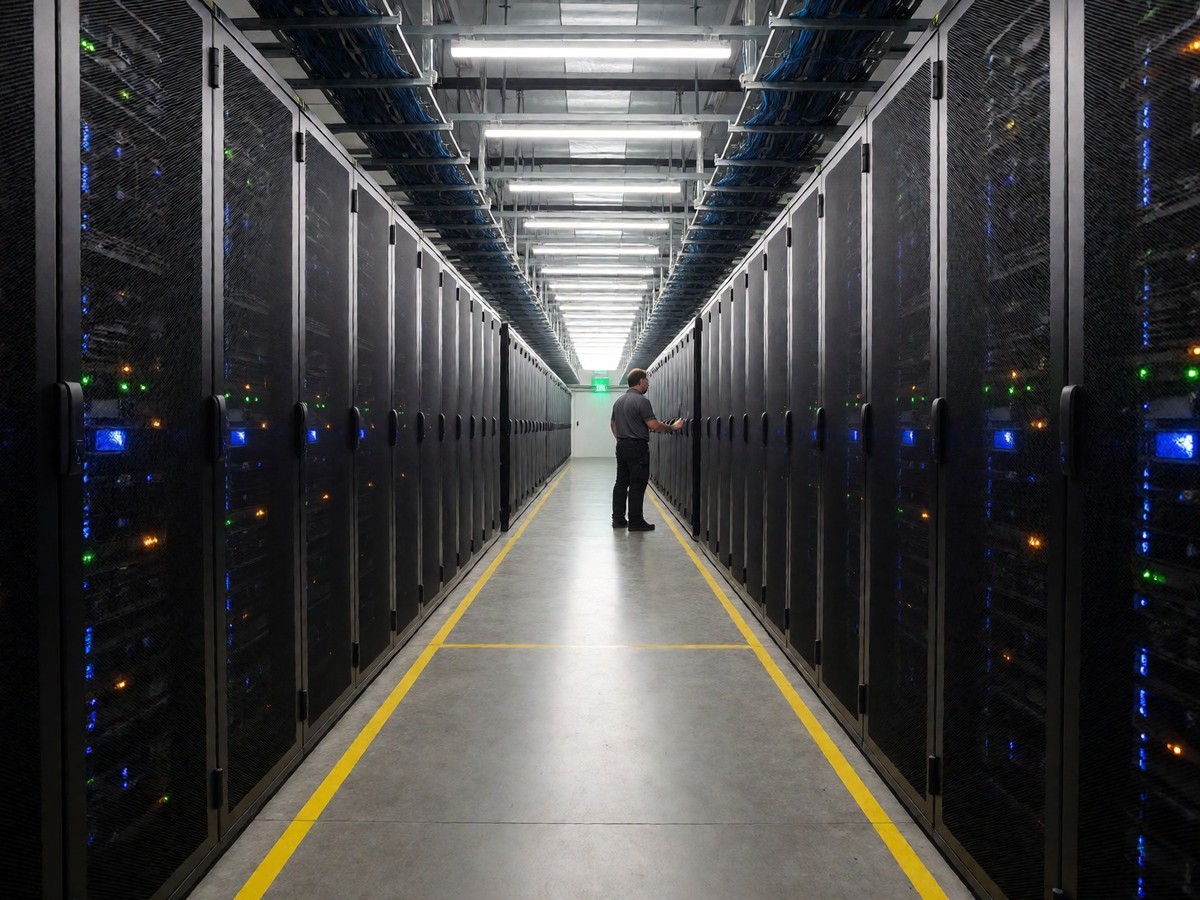
Core Scientific faces a massive capital gap following the $8.7 billion CoreWeave merger collapse in September 2026. The company now relies on its 900 megawatts of total leasable customer power capacity to drive growth. This capacity covers ten data centers across seven U.S. states including Georgia, Kentucky, North Carolina, North Dakota, and Texas. The company shifts focus from Bitcoin mining to high-density colocation for artificial intelligence and high-performance computing. The redeployment of 75 exahash of Bitcoin hash rate supports this transition. The pivot to AI hosting represents a high-risk, high-reward infrastructure play. Core Scientific uses its proprietary Minder fleet management software to combine colocation expertise with data analytics for uptime, alerting, monitoring, and management of all miners in its network. The company designs powered shells and sufficient fiber connectivity to high performance data center standards to support increasing power densities and evolving compute requirements. This current strategy follows the company’s emergence from Chapter 11 bankruptcy in January 2024. Following that reorganization, the company re-listed on the Nasdaq and reduced its debt by $400 million through the conversion of equipment lender and convertible note holder debt to equity. Chief Executive Officer Adam Sullivan previously oversaw more than $5 billion of transactions in the digital assets and infrastructure space.
The company’s financial results show extreme volatility as it builds out this infrastructure. Q2 2026 revenue reached $164.2 million, which doubled from the $78.6 million reported in Q2 2025. However, Core Scientific reported a net loss from ongoing operations of $1.08 billion, far exceeding the $13.3 million loss from the previous year. The basic earnings per share fell to a loss of $3.32, whereas the previous year saw a loss of only $0.04. This capital intensity creates a significant funding bridge for investors to watch. The company’s capital requirements remain massive because management expects $6 billion in capital expenditures for the initial 530 megawatt AMD commitment, while the company currently holds only $1.8 billion in liquidity. Can the company secure enough cash to complete these massive builds before its liquidity dries up? This massive gap between required spending and available cash explains why the stock price fell 12.65 percent in a single day after the earnings release.
| Metric | Q2 2026 | Q2 2025 |
|---|---|---|
| Revenue | $164.2 million | $78.6 million |
| Net Loss (Excl. extra items) | $1.081 billion | $13.3 million |
| Basic EPS | -$3.32 | -$0.04 |
Core Scientific manages 1.4 gigawatts of gross utility power capacity across its facilities. Colocation revenue reached $137 million in the second quarter, making up the majority of the $164.2 million total revenue. This growth comes from its pivot toward high-density workloads. The company’s infrastructure supports 1.1 gigawatts of contracted billable capacity. A new 15-year AMD partnership covers up to 2.5 gigawatts, with an initial 530 megawatts allocated to this deal. This contract includes 2.5 percent annual escalators. About 437 megawatts already bill as of mid-July 2026. While the company continues to operate its Bitcoin mining business, it focuses activity on offsetting power costs. The company’s Bitcoin mining business uses approximately 150,000 Bitcoin self-miner rigs. The company’s self-mining segment uses owned and leased computer equipment to process transactions on blockchain networks. The company’s hosting segment provides colocation and hosting services to customers’ miners by owning and operating data center facilities in the United States. The company targets sites with abundant, reliable, and cost-effective power and strong network connectivity. The AMD agreement provides the necessary power for high-performance computing workloads. The company’s total energized hash rate includes 21.8 exahash, with 19.7 exahash dedicated to self-mining and 2.1 exahash for hosting. The company’s hosting services cater to customers with more than 1,000 miners.
Analysts remain skeptical of the rapid transition to AI hosting. Keefe Bruyette downgraded the stock to market perform and cut the price target from $28 to $25. The firm noted elevated execution risk in the second half of 2026. Investors struggle with a balance sheet that shows $4.3 billion in total debt against negative equity near $2.42 billion. The company’s trailing twelve month revenue stands at $440.3 million. If you are watching the ticker, you see the high volatility in the share price. The company holds only $0.3 billion in cash as of late September 2026. The company’s LTM revenue also shows a 26.4 percent increase when comparing it to $348.4 million from the previous twelve month period. The stock price fell from above $24 on July 21, 2026, to roughly $17.34 by late September 2026. Chief Legal and Administrative Officer Todd M. Duchene sold 10,000 shares on June 29, 2026, for about $262,000. The company’s trailing twelve month net income shows a loss of $1.4 billion. The company’s current ratio remains below 1, and its market capitalization stands at $4.7 billion.