 Bitcoin News
Bitfarms energy expansion and the economics of its mining fleet

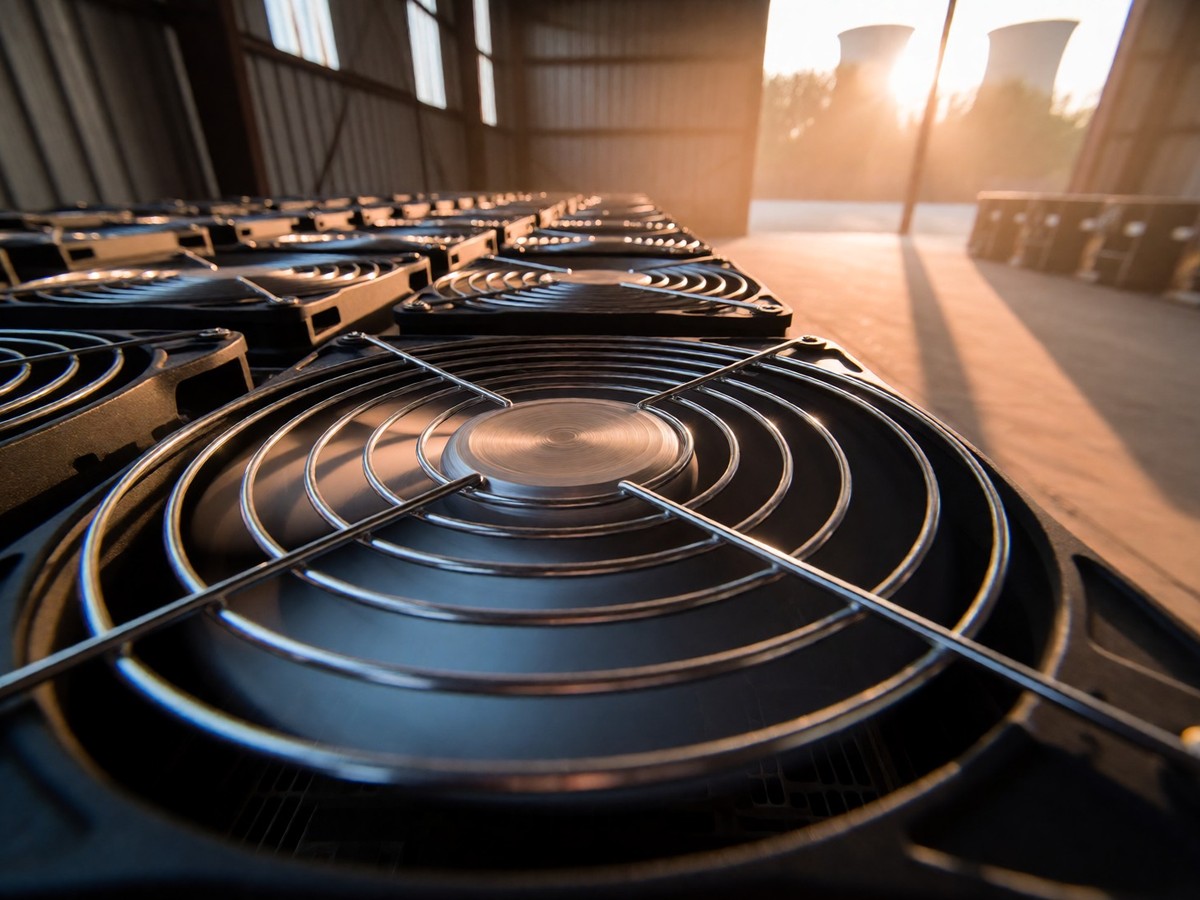
Bitfarms finalized its acquisition of Stronghold Digital Mining in March 2025, which made Stronghold a wholly-owned subsidiary. In the stock-for-stock merger, Stronghold shareholders received 2.52 Bitfarms shares for each share they owned, while Bitfarms issued approximately 59,678,164 common shares and 10,574,848 warrants. Bitfarms also paid $44.5 million at closing to retire outstanding Stronghold loans. This deal increases the company energy portfolio to 623 Megawatts Under Management. The acquisition adds 165 MW of active generating capacity from the Scrubgrass and Panther Creek facilities and 142 MW of immediately available import capacity. Bitfarms manages a massive scaling effort by integrating Stronghold’s assets, which includes the takeover of the Scrubgrass and Panther Creek facilities in Pennsylvania to secure a 1.1 GW growth pipeline. The company now controls three sites in Pennsylvania with land and fiber suited for both Bitcoin mining and high-performance computing. Strategic partners WWT and ASG are already prioritizing Stronghold sites for potential high-performance computing and artificial intelligence conversion. The addition of nearly 1 Exahash Under Management comes through existing Canaan hosting agreements with a 50% profit split, bringing the Bitfarms total to 18 EHuM. The company plans to rebalance its energy portfolio to 80% North American and 20% international by the end of 2025. This move shifts the company’s U.S. footprint away from the 6% presence seen in 2024. Stronghold owns 750 acres of land with options on 1,100 additional acres at the two sites, and current nameplate generated power capacity can expand up to 955 MW. The combination of Stronghold’s power assets and Bitfarms’ operational expertise aims to maximize shareholder value.
Electricity costs and hardware efficiency
Electricity prices dictate the profitability of every machine in the fleet. In Q1 2026, Bitfarms reported average energy costs of $0.058 per kWh, a 24% increase that pressured mining margins. The company operates 15 data centers across the United States, Canada, Paraguay, and Argentina. Modern hardware shows how much power consumption varies between models.
| Machine Model | Continuous Power Draw (kW) | Daily Energy Use (kWh) |
|---|---|---|
| Antminer S21 Pro | 3.51 | 84 |
| Antminer S21 XP Hydro | 13.6 | 136 |
| Antminer S23 Hydro | 5.18 | 124.32 |
I find the divergence between industrial rates and residential rates extreme. An S23 Hydro unit running at a Nigeria 7-year fixed rate of $0.0364 per kWh costs only $1,652 per year in electricity. The same machine costs $14,974 per year on European residential power. At the current $18.20 per day gross revenue for an S23 Hydro, the annual revenue is approximately $6,643. Even at the U.S. industrial average of $0.0885 per kWh, the annual cost for an S23 Hydro reaches much higher levels. You already know that electricity price determines if a mine stays open or closes. Because the company relies on high-tension infrastructure, it avoids the retail markups found in residential grids. The company anticipates that PJM demand response programs will reduce overall electricity costs. In Paraguay, the company can access power for roughly $0.03 per kWh.
Widening losses and capital requirements
Bitfarms faces intense financial pressure as it scales its physical footprint. The company reported a net loss of $145 million in Q1 2026, a significant increase from the $56 million loss in Q1 2025. Mining revenue fell 22% year-over-year to $37 million. Operating cash burn also accelerated, jumping from $19 million in Q1 2025 to $65 million in Q1 2026. Bitfarms now holds $357 million in cash against $573 million in long-term debt. The company must also cover $170 million in project commitments through 2027. I believe the massive capital requirements for scaling high-performance computing operations could force the company into dilutive equity raises or high-interest debt. The firm also faces potential liabilities from retrospective customs tariff assessments on imported equipment. This financial strain follows a period where Bitcoin production declined 41% from 4,928 BTC in 2023 to 2,914 BTC in 2024. In Q3 2024, the company mined 703 Bitcoins, a 14 percent increase from the previous quarter, as revenue hit $45 million. The company reached a 12.8 EH/s hashashrate at the end of 2024 after its 35% expansion to 324 MW. The company’s Synthetic HODL program generated $18 million in trading profits with a 135% return.
Empty data centers and legal threats
The pivot to high-performance computing and artificial intelligence introduces substantial execution risk. Bitfarms has secured 648 MW of data center capacity within a 2.2 GW power pipeline, but it has not yet signed any anchor tenants. Without these large customers, the company risks owning expensive, stranded infrastructure. Can the firm attract enough AI customers to offset the massive losses in its Bitcoin mining division? Litigation also adds to the uncertainty, as a putative class action lawsuit targets alleged misstatements about business operations through late 2024. The strategy to build gigawatt-scale power campuses relies entirely on the ability to attract hyperscalers to sites in Pennsylvania. This expansion also follows a period where Bitfarms defended against a $950 million unsolicited takeover bid from Riot Platforms. The company’s 1.1 GW growth pipeline in Pennsylvania, which includes current power generation capacity, current grid import capacity and future import capacity, provides a massive advantage in the PJM market. I conclude that Bitfarms’ 1.1 GW pipeline provides the scale to lead the PJM market, but the current cash burn and lack of signed lease contracts make the company’s long-term stability look shaky.