 Bitcoin News
Bitfarms vs Hut 8: The Race for Efficiency and Infrastructure

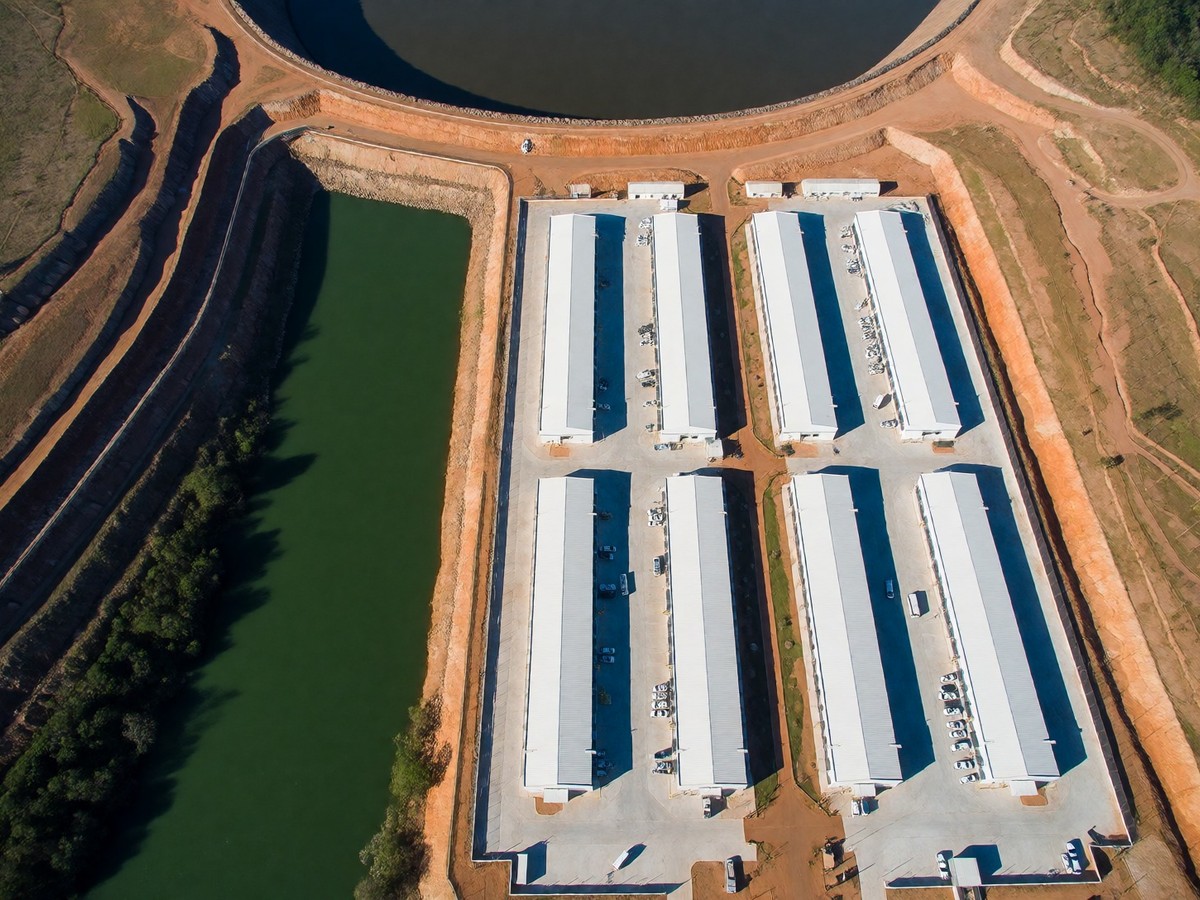
HIVE Digital Technologies leads the Paraguay expansion
HIVE Digital Technologies leads the expansion in Paraguay through its 400 MW Yguazu site. The company uses hydroelectric power from the Itaipu Dam to run its mining operations. Phase 1 went live in April 2025, and Phase 2 went live in September 2025. Phase 3 construction started in early 2026 and targets full commissioning in Q3 2026. This expansion brings HIVE’s total renewable capacity to 540 MW across Paraguay, Canada, and Sweden. HIVE targets 35 EH/s of global capacity by the end of 2026. The company produced 102 Bitcoin in April 2025, averaging 3.4 BTC per day. Fleet efficiency during that month reached 20.7 joules per terahash. HIVE manages 140 MW of capacity across Canada and Sweden. The company uses the redeployment of 30 MW of BUZZ Miners to save $27 million in capex. HIVE expects to add 1 EH/s of capacity every two weeks as new hardware arrives. The company also prepares its Valenzuela site for an extra 100 MW of air-cooled containers. HIVE scales its operations by utilizing hydroelectric power from the Itaipu Dam in Paraguay to support a global Bitcoin mining hashrate that aims to reach 35 exahash per second by the end of the year 2026.
Bitfarms shifts focus to North American markets
Bitfarms shifts its strategy toward North American data centers after selling its 70 MW Paso Pe site in Paraguay to the Sympatheia Power Fund for $30 million. This sale helps the company rebalance its portfolio toward North American energy and compute infrastructure. Bitfarms uses $800 million in capital, consisting of $500 million from convertible notes and $300 million from project financing, to develop the 350 MW Panther Creek campus. The first phase of Panther Creek goes live in late 2026. Bitfarms manages a 2.1 GW North American energy pipeline. This pipeline includes energy strategically located in Washington and Quebec. While the company reported $78 million in Q2 2025 revenue, its gross mining margins fell to 45% from 51% in the prior year. The company reported a net loss of $37 million for that quarter. Bitfarms held 1,188 BTC in its treasury as of October 31. The firm added 41 BTC to its treasury in October. In Q2, Bitfarms sold 1,052 BTC at an average price of $95,500, netting $100 million. The company also mines Bitcoin to cover all operating expenses. This expansion in the U.S. places the Panther Creek campus in close proximity to sites used by Amazon and CoreWeave.
Hut 8 and the efficiency competition
Hut 8 competes through its Highrise AI/GPU-as-a-Service offerings. The company reported $43.7 million in revenue for Q3, which beat estimates by $5.5 million. It operates a 205 MW Vega site where energy costs were $28.83 per MWh. Hut 8 holds 9,106 bitcoin in reserve with a market value of $576.5 million as of September 30. The company possesses $2.4 billion in total assets. It reported $72.9 million in total cash. Hut 8 reported $0.01 in GAAP earnings per share for the third quarter. The stock price appreciated more than 105% year to date. Hut 8 prioritizes modular data centers that switch between ASIC mining and AI workloads. You should consider how these companies manage the 18% efficiency divergence between older air-cooled machines and the new hydro-cooled models.
| Machine Model | Cooling Type | Efficiency (J/TH) | Hashrate (TH/s) |
|---|---|---|---|
| Bitmain Antminer S23 Hid | Hydro | 9.5 | 580 |
| XP Hyd | Hydro | 12 | 473 |
| Bitmain S21 XP | Air | 13.5 | 270 |
| Bitmain S21 Pro | Air | 13.5 | 234 |
The winner of the infrastructure race
HIVE Digital Technologies comes out ahead because its 400 MW expansion in Paraguay provides a massive scale advantage. The company’s low-cost hydroelectric power and high-efficiency machines create a significant cost lead. Bitfarms builds a large North American pipeline but faces margin pressure from rising hardware costs. Hut 8 maintains a presence in the AI market through GPU hosting but operates at a smaller revenue scale. The 18% efficiency divergence between new hydro machines and older air-cooled models favors HIVE’s liquid-cooled infrastructure. Will Bitfarms’ North American expansion match the scale of HIVE’s hydroelectric advantages?