 Bitcoin News
Foundry USA’s Bitcoin Mining Pool Dominance Explained

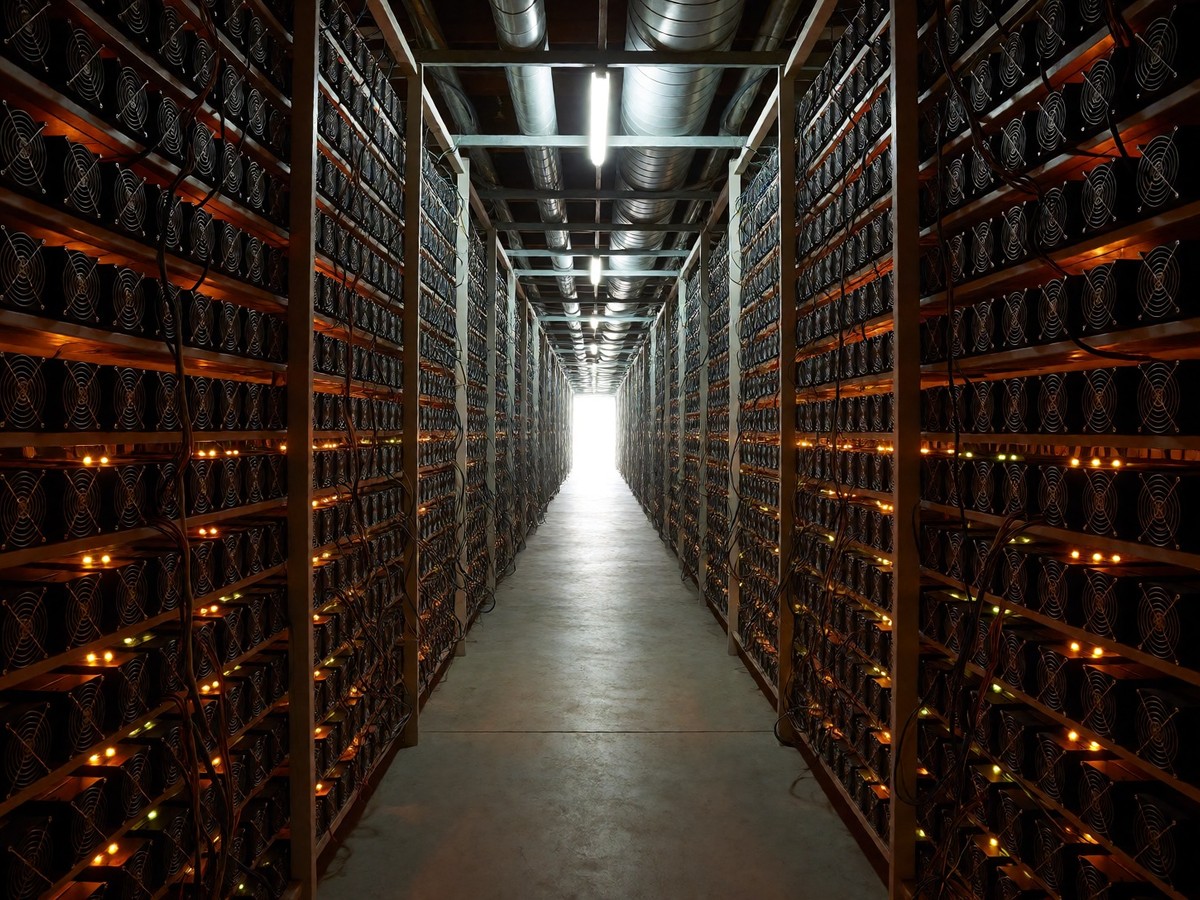
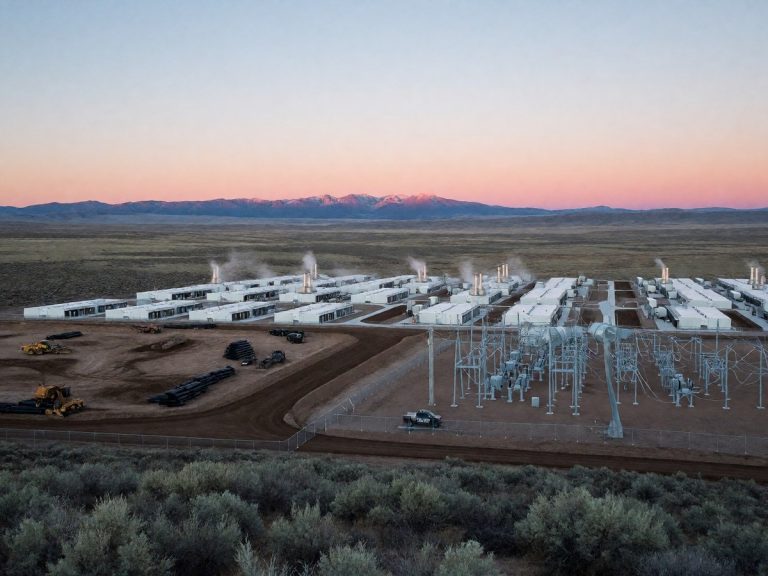
Foundry USA currently commands approximately 30% of the global Bitcoin hash rate, a figure that places it well ahead of its closest competitors. This dominance is not accidental; it results from a strategic consolidation of North American mining hardware under one operational umbrella. The pool aggregates around 280 EH/s of computing power, which is almost twice the size of Antpool, the second-largest player in the network. By controlling such a massive share of the network’s total work, Foundry has effectively become the primary infrastructure layer for institutional miners in the United States.
Institutional Scale and Geographic Concentration
The rise of Foundry USA tracks the migration of Bitcoin mining to the United States following the Chinese ban in 2021. Today, an estimated 36% of all global mining activity takes place in the U.S., with Texas alone hosting over 50% of North America’s hashrate. Foundry serves as the central hub for this shift, connecting major operators like Greenidge Generation, Hive, Bitdeer, and Hut 8 into a single coordinated entity. When Greenidge joined the pool, the deal added roughly 800 petahashes of new capacity, bringing the total connected power to nearly 30,000 P. This geographic concentration allows the pool to leverage local energy advantages, particularly the low electricity rates in Texas and New York, which are critical for maintaining profitability as network difficulty rises.
The pool’s structure relies on the Stratum protocol to distribute mining jobs to ASICs, ensuring that each worker contributes measurable shares rather than waiting for rare block discoveries. I find this model superior for large operations because it converts volatile solo mining income into a predictable cash flow. The infrastructure supports subaccounts for different facilities or customers, allowing businesses to track revenue by location or energy contract. This level of granularity is essential for enterprise miners who need to reconcile their financial statements with actual hardware performance. Without such detailed reporting, managing multi-gigawatt operations becomes impossible.
| Metric | Value |
|---|---|
| Global Hashrate Share | ~30% |
| Total Connected Power | ~280 EH/s |
| Primary Region | North America |
| Payment Model | FPPS |
| Min Withdrawal | 0.01 BTC |
How FPPS Payments Stabilize Revenue
Foundry uses a Full Pay-Per-Share (FPPS) system to calculate payouts, which differs significantly from older models like PPLNS. Under FPPS, miners receive credit based on the expected value of their valid shares, including both the block subsidy and an estimate of transaction fees. This method transfers the risk of "block luck" from the miner to the pool operator. If the pool finds fewer blocks than statistically expected during a specific day, the operator still pays out the full calculated amount. For miners, this means daily earnings remain stable even if the network produces no blocks for their specific hardware during that period.
The calculation excludes unusually high or low fee observations to prevent volatility from distorting payments. On December 19, for instance, Foundry mined a block containing a transaction with an inadvertent fee of 8.18 BTC, worth about $777,000. The pool refunded this amount to the sender, noting that their daily payout calculations exclude the three highest and three lowest fee blocks. This safeguard ensures that a single anomalous event does not skew the revenue stream for thousands of participants. I view this exclusion mechanism as a necessary protection for miners who rely on consistent cash flow to cover electricity bills and debt service. It removes the noise from raw blockchain data, providing a cleaner financial signal.
However, this stability comes at a cost. The pool operator must maintain sufficient reserves to cover payouts during unlucky periods, which introduces counterparty risk. Miners are trusting the operator’s solvency and accounting integrity. While Foundry’s scale reduces this risk compared to smaller pools, it remains a factor in any custodial arrangement. The regular minimum withdrawal threshold is 0.01 BTC per address, a standard that most institutional users meet easily but might be restrictive for smaller hobbyists.
Operational Risks and Network Control
Despite its efficiency, Foundry’s market share raises questions about network security and decentralization. A pool controlling more than half of the total hashrate could theoretically launch a 51% attack, though analysts consider this unlikely due to the economic disincentives involved. More immediate concerns involve the pool’s influence on block construction and transaction selection. Because Foundry directs a significant portion of the network’s computational power, it holds substantial sway over which transactions get included in blocks and when those blocks are broadcast. This concentration creates infrastructure dependencies, where many independent miners rely on the same servers and payment systems.
One curious observation from community discussions is that Foundry has historically avoided mining "empty blocks." These are blocks with no transactions, usually mined while a node verifies a previous block. Some theories suggest Foundry redirects its miners to other pools during these brief verification windows to avoid labeling empty blocks under its own name. Whether this is true or simply a statistical anomaly remains unanswered. What is clear is that the pool’s ability to manage these micro-second decisions efficiently gives it a slight edge in orphan race scenarios, although the gain is negligible, perhaps 0.0167%.
The dominance of Foundry USA signals a maturing industry where strategy outweighs brute force. Miners no longer just buy hardware; they choose ecosystems that offer reliability, compliance, and financial predictability. As the U.S. continues to expand its mining capacity, with new sites in South Carolina and Georgia, the pool’s share may grow further. For now, it stands as the undisputed leader, setting the pace for how institutional Bitcoin mining operates globally.