 Bitcoin News
CleanSpark expands in Wyoming and secures Sandersville revenue

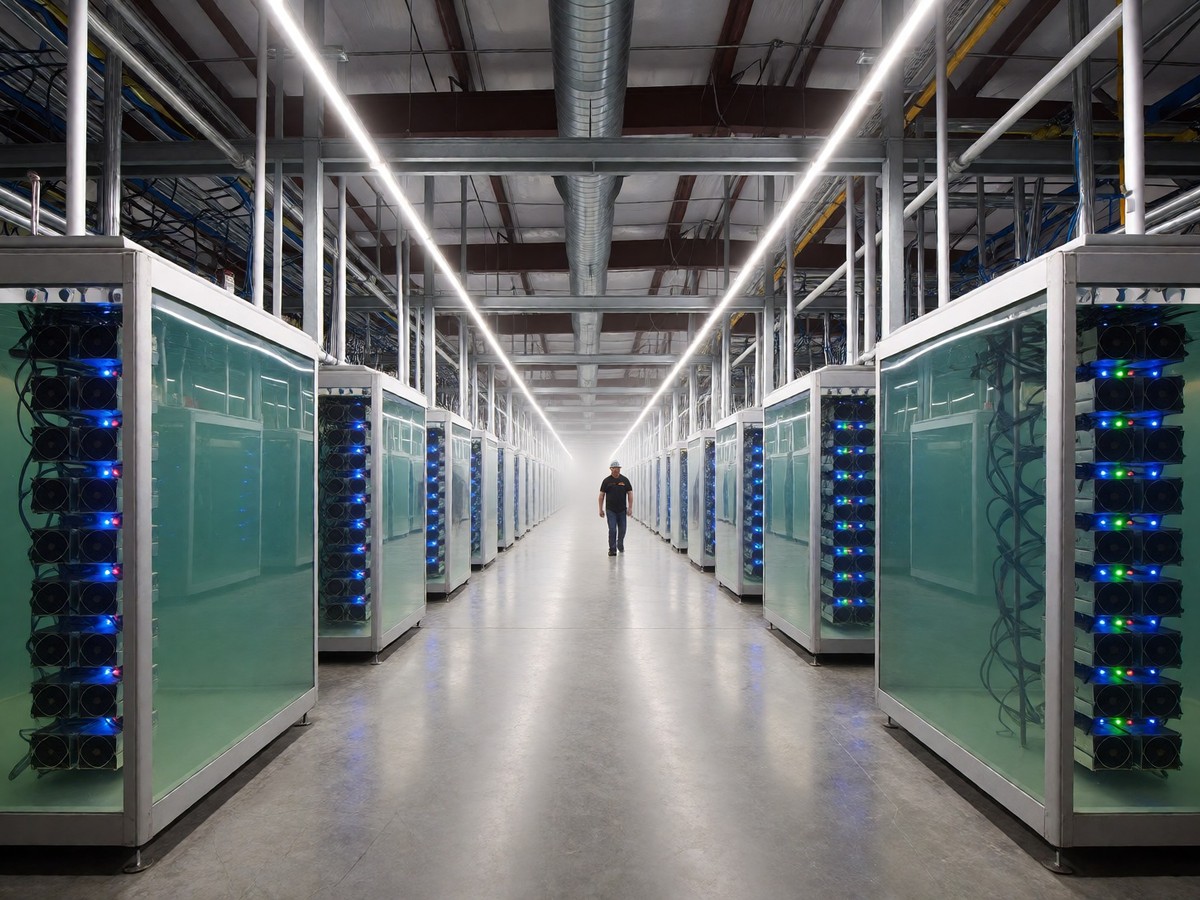
The Wyoming expansion provides 100 MW of capacity through the use of gas flaring. This project adds 12 EH/s to the operational hashrate. The facilities in Wyoming use immersion cooling technology. This method submerges mining hardware in a non-conductive fluid to improve efficiency and performance. Two separate mining locations in Wyoming host this infrastructure. These sites provide 75 MW of data center infrastructure power under contract. The locations became operational between the first and second quarter of fiscal 2025. The company uses a combination of S21 and S21 Pro Bitcoin mining machines. These machines help the company reach its 50 EH/s target. The company’s total operational hashashrate reached 50 EH/s as of August 31, 2026. The average operating hashashrate was 38.3 EH/s. The peak efficiency of the deployed fleet was 16.07 J/Th. The deployed fleet included 201,269 units as of August 31, 2026. This expansion diversifies the company’s footprint across Nevada, Mississippi, and Wyoming.
The Sandersville campus in Georgia provides a massive revenue stream through its infrastructure lease. CleanSpark signed a 20-year infrastructure lease agreement with a high investment-grade global technology company. The 20-year infrastructure lease agreement directly with a high investment-grade global technology company at the Sandersville campus expects to generate approximately $6.6 billion in contracted revenue over the initial term. This contract supports 175 MW of critical IT load. Deliveries for this load begin in Q4 2027. The agreement includes two five-year extension options. These options would increase the expected contract value to $11.6 billion. The contract provides a cumulative NOI contribution margin of nearly 100%. This results in an average annual NOI contribution of $330 million. Landlord project costs reach $10 million to $12 million per MW of critical IT load. The Sandersville site serves as a major hub. The company bought the site in September 2022 for $33 million. The facility capacity grew from 80 MW to an expected 230 MW. The Municipal Energy Authority of Georgia is building a 200 MW substation to power the additional capacity. CleanSpark also received notice of conditional classification by ERCOT for 585 MW of contracted capacity to receive batch zero baseload designation and 300 MW to receive batch zero studied load designation in Texas.
Environmental and Community Impacts
The environmental impact of these mining operations remains a significant concern. In Georgia, the electric utility Georgia Power had an energy mix in 2021 that included 47% gas and oil and 16% coal. This differs from CleanSpark’s claim of 94.02% clean energy. You already know that Bitcoin mining requires massive amounts of electricity. In the Houston/Austin region, 709,924 people live in a hotspot where Bitcoin mining increased PM2.5 pollution. The W.A. Parish Generating Station in Richmond, Texas, provides power to these areas. This facility has no scrubbers on any of its four stacks. This lack of scrubbers makes the emissions particularly toxic. In Northeast Texas, the Martin Lake power plant also provides electricity. This facility also lacks SO2 scrubbers. In New York, the Bayonne Energy Center provides power to Staten Island. The annual average Bitcoin mine-attributable PM2.5 concentration there reached 0.67 mg/m3. In Queens, the concentration reached 0.59 mg/m3. In addition to air pollution, noise levels impact local residents. In Adel, Georgia, residents report nonstop noise from Bitcoin mines. This noise often exceeds the 70 decibel cap. The constant drone of fans can interfere with sleep and increase stress. In College Park, Georgia, the mine emits 166,000 tons of CO2 per year. The Sandersville site emits 314,000 tons of CO2 per year. In Metropolis, Illinois, Bitcoin mine-attributable PM2.5 concentrations reach 0.96 mg/m3. In Northeast Texas, concentrations reach 0.86 mg/m3 near Tatum. In the Houston/Austin region, concentrations reach 0.52 mg/m3. Approximately 1,904,959 Americans in five states were exposed to PM2.5 concentrations of at least 0.10 mg/m3. 46,211,621 Americans living in 27 states were exposed to measurable concentrations of Bitcoin mine-attributable PM2.5 pollution. How will the regulatory environment in Wyoming respond to the increased methane use?
Bitcoin Treasury and Ownership
CleanSpark maintains a significant Bitcoin treasury and massive power portfolio. As of August 31, 2026, the company held 13,703 Bitcoin. Of this total, 3,951 Bitcoin was posted as collateral or as receivable for derivative transactions. In August 2026, the company produced 593 Bitcoin with an average sale price of $65,420. In July 2026, the company produced 586 Bitcoin with an average sale price of $66,133. In April 2026, the company produced 640 Bitcoin with an average sale price of $74,807. The company also manages a 1.8 GW power portfolio. This portfolio includes 808 MW of utilized capacity. BlackRock holds 4.45% of the company’s shares. Vanguard holds 4.05% of the shares. Their combined holdings reached $67.91 million as of August 31, 2023. Other large shareholders include JP Morgan Chase, Citigroup, Goldman Sachs, and Fidelity. The company uses equity offerings to fund expansion. It raised $211.86 million through two offerings in 2021. It also raised $40 million in 2020.
| Metric | Value |
|---|---|
| Total Bitcoin Holdings (Aug 31, 2026) | 13,703 |
| Operational Hashrate | 50 EH/s |
| Average Operating Hashrate | 38.3 EH/s |
| Deployed Fleet | 201,269 |
| Contracted Power | 1.8 GW |
| Utilized Power | 808 MW |