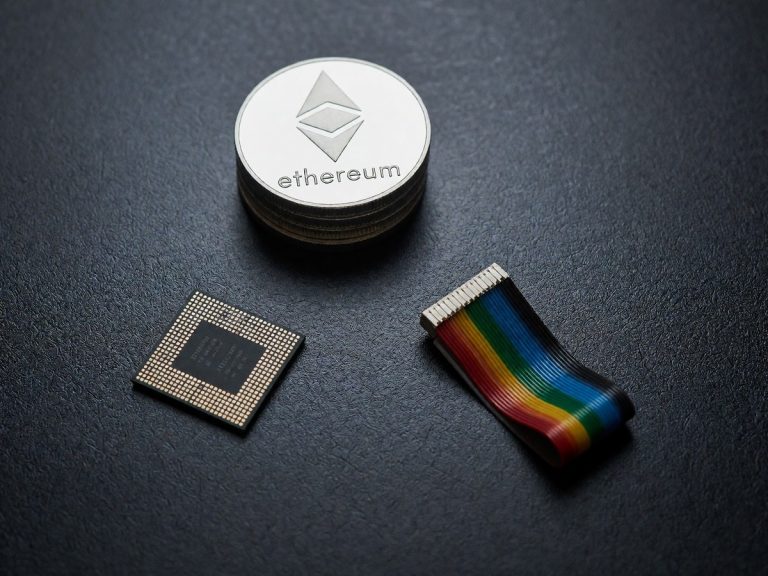
 Ethereum News
Ethereum’s 2014 crowdsale and the 2026 regulatory framework

The 2014 Ethereum crowdsale
Vitalik Buterin and the Ethereum core team raised $18.3 million in Bitcoin during a 42-day crowdsale from July 22, 2014, to September 2, 2014. The team spent six months on the development of Ethereum clients, languages like Serpent and LLL, and the transactions-pay-for-computation system. I find the team’s admission of miscalculating the legal difficulty in the United States and Switzerland quite honest. The sale price began at 2,000 ETH per 1 BTC and declined linearly to 1,337 ETH per 1 BTC. This resulted in an average price of $0.31 per token. More than 60 million tokens went to participants. The EthSuisse wallet received 6,600 transactions. To prevent concentration, EthSuisse restricted any single person or group from controlling more than 12.5% of the total ETH sold. The developers also set aside 9.9% of the amount raised for co-founders and another 9.9% for the Ethereum Foundation. The team reserved up to 5,000 BTC from the pre-sale to speed up development. Technical progress during this period included work on the recursive virtual machine, the placement of transactions into a Merkle tree, and the mining algorithm.
The developers worked on the development of testing facilities to ensure client compatibility. The team also built the Ethereum protocol, including the concept of micro-chains to reduce bandwidth requirements. I note that the team successfully navigated the technical difficulty of setting up a secure sale website and cold wallet system. The genesis block launch followed in the winter of 2014-2015.
The Hinman precedent
In 2018, William Hinman, the SEC Director of the Division of Corporation Finance, stated that Ether is not a security. He based this on the decentralized structure of the Ethereum network. Hinman focused on the fourth prong of the Howey test, which looks at whether the efforts of an identifiable third party drive the expectation of profit. He used the Gary Plastic case to explain that the manner in which a token is sold is the deciding factor. In his 2018 speech, William Hinman explained that if a cryptocurrency network is sufficiently decentralized, the ability to identify an issuer or promoter to make the requisite disclosures becomes difficult and less meaningful. He also asked if the primary motivation for purchasing the digital asset was for personal use or consumption. He noted that labeling a token as a utility token does not provide the substance needed to avoid being a security. I believe his logic provides the legal bridge the industry needed.
Hinman also asked if the promoter raised an amount of funds in excess of what was needed to establish a functional network. He asked if the promoter continues to expend funds from proceeds to enhance the functionality or value of the system. He also asked if the assets are dispersed across a diverse user base or concentrated in the hands of a few. He emphasized that the analysis of whether something is a security is not static and does not inhere to the instrument.
The 2025 regulatory shift
The regulatory environment changed when Paul Atkins became SEC Chair in April 2025. After the resignation of Gary Gensler, Acting Chairman Mark Uyeda formed the Crypto Task Force on January 21, 2025. This was followed by the creation of the Cyber and Emerging Technologies Unit on February 20, 2025. Atkins also proposed a safe harbor to provide a "fit for purpose startup exemption" for crypto companies. The SEC now uses five categories for digital assets: digital commodities, digital collectibles, digital tools, stablecoins, and digital securities. Only digital securities fall under federal securities law. I see the dismissal of several registration cases in 2025 as a result of this new direction.
Atkins prioritizes investor protection as the cornerstone of the mission. The SEC headcount dropped 15% from the start of 2025. The commission focuses on fraud and breaches of fiduciary duty. The SEC message is that substance matters more than structure. How will the SEC measure the specific level of decentralization required to avoid security classification?
| Ethereum Metric | 2026 Value |
|---|---|
| Current Price | $2,326.92 |
| Market Cap | $284,266,674,664 |
| 2014 ICO Price | $0.31 |
| 2014 Raise | $18.3 million |
The 2026 convergence
The 2014 sale provides the template for how a blockchain project can launch via a public token sale. You already know that the 2017 era was defined by different rules. The 2014 mechanism of selling a token to fund a future platform is a standard. The price of Ethereum has experienced massive volatility since that time. In August 2025, Ethereum hit a peak of nearly $5,000. In early 2026, the price fell because of recession fears and news that Vitalik Buterin sold millions of dollars in ETH. As of October 26, 2026, Ethereum has a market cap of $284,266,674,664. The price of 1 ETH is $2,326.92.
The 2014 sale was a success because it provided the funds for the development of the protocol. The SEC’s current classification system acknowledges the distinction between a platform and a security. The 2014 sale remains the foundation for the current market structure. The Ethereum network is the second largest cryptocurrency by market cap.