 Bitcoin News
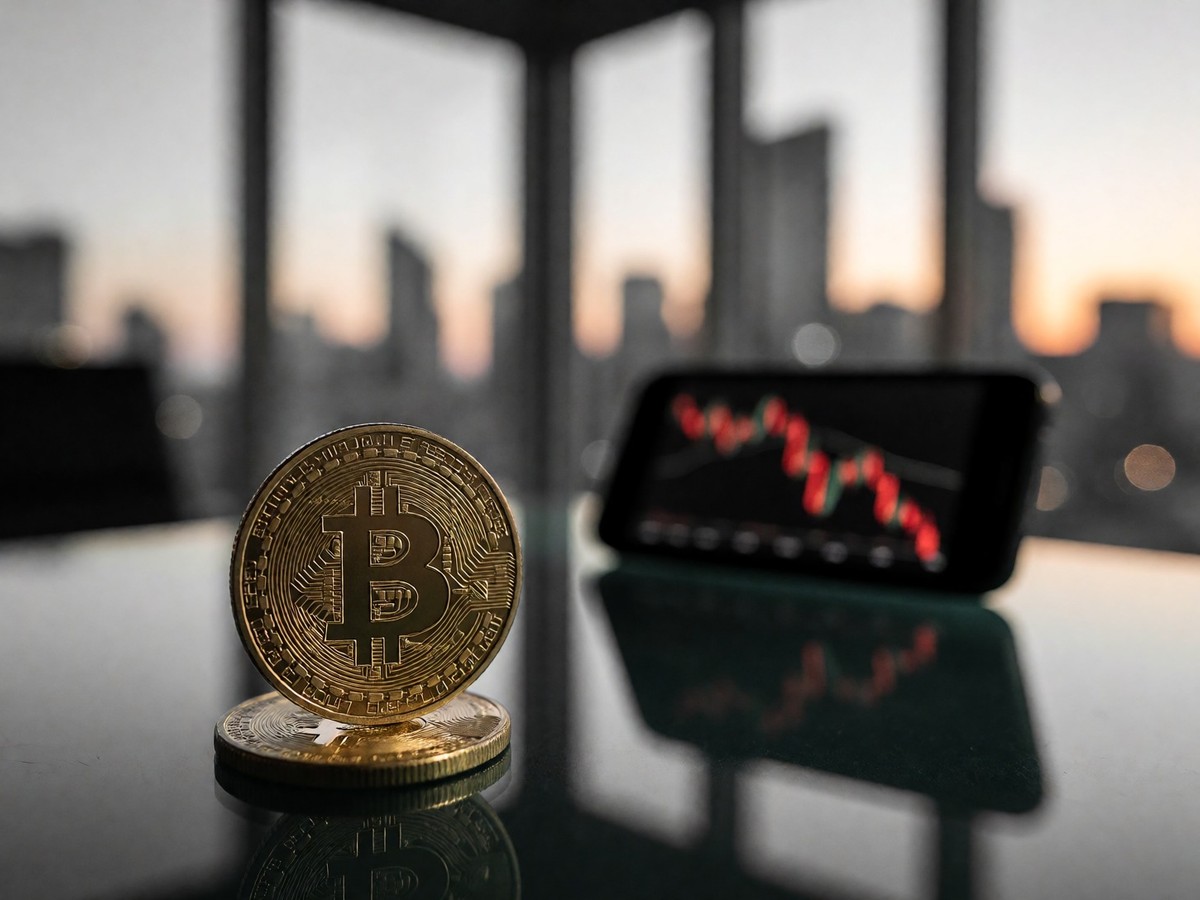
Fed policy pause pressures Bitcoin toward $55,000

Macro shifts and the inflation fight
Jerome Powell signaled that interest rate cuts stay off the table for the remainder of 2026. This decision sent Bitcoin sliding 5% over 24 hours to hover above $70,000. The Fed raised its inflation forecast for the year to 2.7% from a previous 2.4% projection. Rising energy costs complicate the fight against inflation.
The Fed held rates steady.
Fed Chair Kevin Warsh stated that disinflationary progress lacks sufficient speed. He emphasized that the Fed must deliver price stability, and he also said high inflation should be the predominant focus. He noted that current financial conditions are not restrictive. This hawkish stance creates pressure on speculative assets.
The June 17, 2026, dot plot showed a median range of 3.75% to 4.00% for the end of the year. This is a quarter-point higher than the current range. Three FOMC participants projected a rate hike, while five projected a half-point increase. Most participants expect rates to move lower toward 3% over the long term, though the 2026 real GDP growth projection sits at 2.2%. The Fed’s last rate cut occurred in December 2025.
Bitcoin price volatility and macro links
Bitcoin follows macro data. After peaking at $126,000 in October 2025, Bitcoin fell to approximately $64,350 by August 7, 2026. The cryptocurrency market cap dropped 4.4% to $2.5tn following the Fed decision. This decline shows how Bitcoin trades in lockstep with high-growth tech stocks.
Institutional investors often reduce exposure to volatile assets when the Fed maintains a hawkish hold.
I find the connection between rising Treasury yields and Bitcoin’s decline obvious. When yields rise, investors favor steady income from bonds over non-yielding digital assets. This shift drains liquidity from the crypto market. In March 2026, the Fed kept rates at 3.50% to 3.75%, causing Bitcoin to fall 5% to $71,100 and triggering $708 million in ETF outflows.
| Economic Metric | 2026 Value |
|---|---|
| Fed Inflation Forecast | 2.7% |
| Fed Funds Rate | 3.50% to 3.75% |
| Bitcoin Peak (Oct 2025) | $126,000 |
| Bitcoin Price (Aug 2026) | $64,350 |
Bitcoin recently tested $60,000 before recovering to the $70,000 level. This $60,000 test shows strong buyer support. The market also reacts to US dollar strength and mining expenses.
The predicted floor and cycle patterns
Historical cycles suggest Bitcoin might reach a bottom between October and December 2026. Many analysts expect the price to fall into the $50,000 to $55,000 range. This period follows the April 2024 halving.
Will buyers step in at $50,000?
You should watch the 200-week moving average. It sits near the predicted $50,000 to $55,000 value zone. This price range remains a logical target because it follows a 50% to 60% correction from the $126,000 peak. Bitcoin’s current correction phase follows its October 2025 peak. The market is in Phase 3 of the halving cycle, which is the bear market correction phase. This phase typically lasts 18 to 30 months after the halving.
The Fed’s decision to keep rates steady at 3.50% to 3.75% limits market growth because higher interest rates make government bonds more attractive than assets like Bitcoin, which forces a rebalancing of global portfolios. This reality forces investors toward safer yields. I think the current macro environment is the worst for Bitcoin traders.