 Ethereum News
Risks in Ethereum’s Fusaka upgrade and funding shifts

Technical scale and node requirements
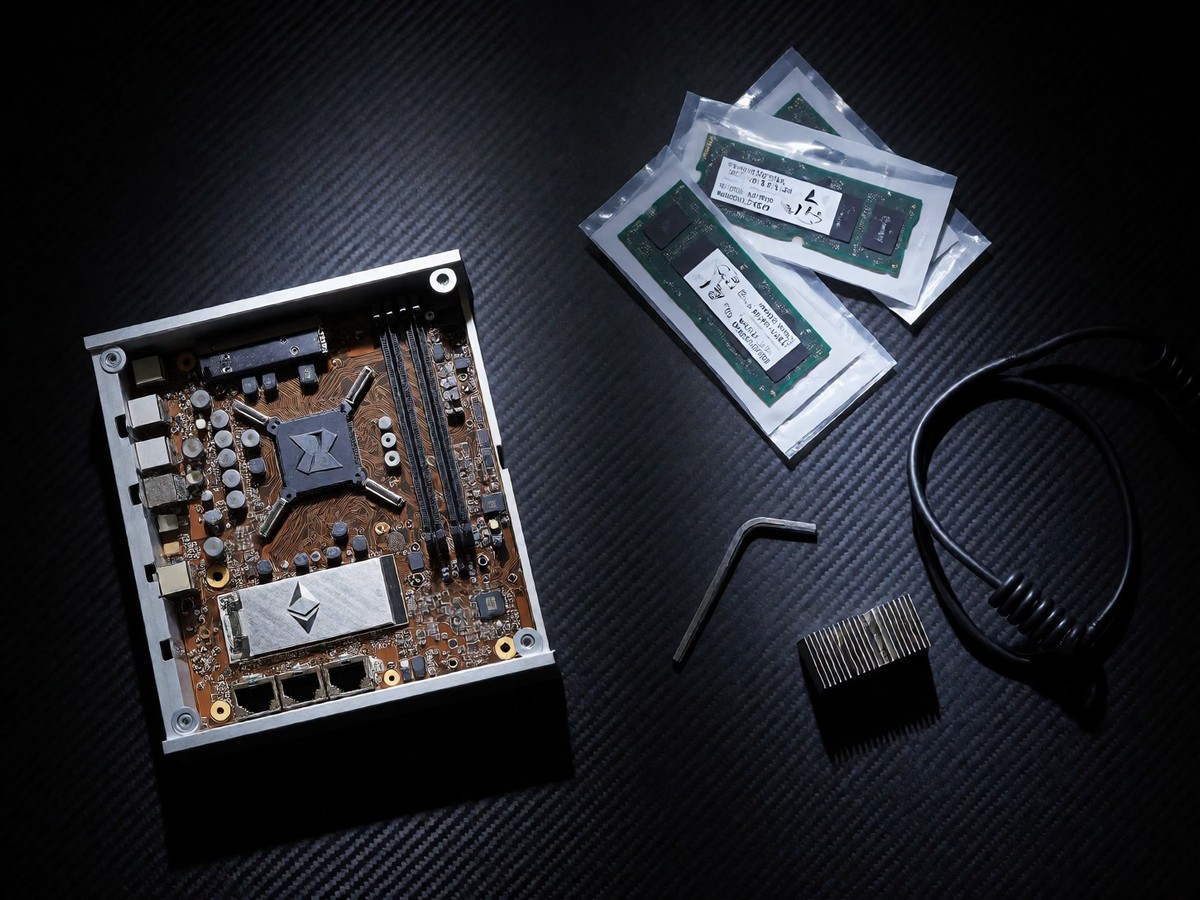
The Fusaka upgrade, which combines the Fulu and Osaka developments, launched on the mainnet on December 3, 2025. It increases the block gas limit from 45 million to 150 million, which expands the capacity for transactions and smart contract executions. This change enables the network to increase throughput from roughly 15 to 20 transactions per second to about 40 to 60 transactions per second. You likely already know that scaling remains the primary driver for these network changes. I find the increased technical load on node operators to be the primary risk. Nodes must process much larger blocks, which demands more powerful hardware. While PeerDAS, or EIP-7594, allows validators to verify small data samples instead of downloading entire blobs, it still places new requirements on the network stack. I would skip the hype about increased capacity if I were worried about decentralization. The shift to Verkle Trees replaces the existing Merkle structures with a new system that allows light users and mobile applications to operate with smaller proofs. The network tested this via the Holesky testnet on October 1, 2025, the Sepolia testnet on October 14, and the Hoodi testnet on October 28. Before this, the developers ran a bug bounty program with rewards up to $2 million. Analyst Max Wadington of Fidelity Digital Assets notes that this upgrade consolidates around a narrower set of goals that reinforce scalability and usability. The upgrade includes several EIPs such as EIP-7907 to increase smart contract code limits and EIP-7951 to add secp256r1 signature verification.
Funding volatility and the grant shift
The Ethereum Foundation faces a structural funding problem. Former coordinator Trent Van Epps, who worked at the foundation from May 2021 to April 2026, warned that the network requires roughly $30 million annually to maintain its client, research, and coordination teams. The foundation plans to reduce annual spending from 15% toward a 5% baseline by 2030. This shift involves moving from an open grant model to a curated, strategic approach where the foundation selects projects that match specific priorities. In 2024, the Ecosystem Support Program distributed nearly $3 million across 105 projects, but by the first quarter of 2025, that figure hit $32.6 million. I see a real risk that this transition to curated funding leaves important, non-priority research areas without support. In the 2025 Academic Grants Round, the foundation offered $1.5 million in total funds, with proposals due on March 24, 2025. This round drew on the success of 2024, which saw 300 applications from 25 different countries. The foundation focuses on areas like Economics and Game Theory, Consensus and Protocol Design, and Networking and P2P. I wonder if the current shift toward curated opportunities will stifle the independent research that previously drove the ecosystem. The application window opened for six weeks from Monday, January 20th, 2025, and closed on Monday, March 24th, 2025. Will the shift to curated funding eventually starve the very research needed to solve the P2P problem?
Centralized sequencing and L2 risks
Centralization remains a major issue in the Layer 2 ecosystem. As of April 2026, every major L2, including Arbitrum, Base, OP Mainnet, zkSync Era, Linea, and Scroll, still runs a centralized sequencer operated by a single entity or a single organization’s cluster. Coinbase operates the Base sequencer, while OP Labs manages OP Mainnet. This setup creates a single point of failure where a sequencer outage can halt a chain. For example, a hardware failure at Arbitrum One in January 2024 caused a 78-minute outage that prevented transaction processing. I find the censorship risk from these centralized operators to be the most direct threat to users. While force-inclusion mechanisms exist on most rollups, they involve higher costs and latency. In the 30 days leading to September 16, 2026, chain revenue reached about $5.3 million on Base and $0.47 million on Arbitrum. Sequencers perform four functions: transaction ordering, block building, batch posting, and state root proposal. If a sequencer goes offline, users cannot submit transactions and the chain effectively halts. The task of choosing which transactions get included falls to specialized builders, which creates a concentration of power. I find it difficult to trust a system where a single operator can control MEV and transaction ordering for millions of dollars in revenue. I also observe that the 32 ETH minimum requirement remains a barrier to entry for many potential validators.
P2P networking and the scaling gap
Vitalik Buterin noted that the Ethereum Foundation historically lacked enough expertise in the peer-to-peer networking layer. He argued that the foundation treated the P2P layer as a commodity instead of a priority for research. This oversight caused propagation delays and node staleness, where some nodes lag behind others during heavy activity. PeerDAS, which went live during the Fusaka hard fork, attempts to solve some of these data availability gaps by distributing the sampling workload. PeerDAS uses existing gossip protocols and libp2p to spread blob samples among peers. This reduces bandwidth requirements for full nodes while preserving the decentralization properties that Data Availability Sampling was designed to protect. This progress follows the Dencun upgrade in March 2024, which introduced Data Availability Sampling via EIP-4844. While PeerDAS extends this foundation, the underlying gossip layer still faces challenges in keeping up with explosive growth. I question whether the network can maintain its performance as more rollups come online and use these data structures. Builders must now work to make the "MEV quarantine box" as small as possible to prevent malicious builders from excluding transactions to attack specific applications.