 Ethereum News
Staking distribution and Rocket Pool changes after Pectra

The Ethereum staking ratio reached 34.23% with approximately 41 million ETH coins locked in the network. This concentration reflects a divide between liquid staking protocols and independent validator operations. Rocket Pool activated its Saturn 1 upgrade, which introduced 4 ETH megapool validators. This change cuts the node operator bond requirement in half compared to the 8 ETH minipools. Operators can run twice as many validators using the same capital and earn up to 2.3x more commission per ETH bonded. The Universal Adjustable Revenue Split model allocates 5% base commission to node operators and 9% revenue share to RPL stakers. While rETH holders maintain their previous commission levels, rETH remains overcollateralized. Rocket Pool also allows users to participate in staking with as little as 0.01 ETH via rETH. This provides a low barrier to entry compared to the 32 ETH requirement for solo validators. The Saturn 1 upgrade improves capital efficiency and scalability for node operators. By moving to a 4 ETH megapool structure, the protocol allows for more granular validator management.
Pectra and technical requirements
The Pectra upgrade modifies how validators interact with the network through specific improvements. EIP-7251 raises the maximum effective balance for validators from 32 ETH to 2048 ETH. This change enables reward compounding because every additional ETH earned generates new rewards without requiring full 32 ETH increments. EIP-6110 moves validator deposits to the execution layer, which reduces deposit processing time from 12 hours to 13 minutes. This change also removes the dependency on proposer voting in deposit processing and eliminates the need for external API calls. EIP-7002 allows withdrawals to be initiated directly from withdrawal credentials, which removes the dependency on validator operators. The implementation of EIP-7251 allows a single validator to manage up to 2048 ETH, which streamlines network operations and reduces the total number of validators required while the network maintains its current levels of decentralization. Additionally, the upgrade introduces Verkle Trees, a data structure designed to optimize how Ethereum nodes store and access information. This technology enables smaller, more efficient data verification proofs to improve scalability and reduce storage requirements. Developers also gain access to the EVM Object Format through EIP-7692, which provides a more efficient way to structure code for faster and more cost-effective contract execution.
Liquid staking and the economy of assets
Users choose between centralized exchange (CEX) staking, liquid staking protocols (LSP), and independent validator roles. CEX staking is a poor choice for security-conscious users because the exchange holds the private keys and users face total loss during a hack. Exchanges take 15% to 25% of total staking revenue as service and operational fees. LSPs like Lido or Rocket Pool allow users to stake any amount of ETH and receive a tradable token like stETH or rETH. These tokens provide capital efficiency by allowing users to use LSDs as collateral on lending protocols like Aave or provide liquidity on AMMs like Curve. Ethereum hosts more than $160 billion in stablecoins, making it the primary settlement layer for dollar-denominated activity. Stablecoin supply grew more than 50% year-over-year, with over $20 billion in yield-bearing stablecoins in circulation. On-chain real-world assets expanded from $4 billion to $18 billion in 2025 as tokenized U.S. Treasuries, credit products, and gold moved into active deployment. These assets integrate directly into lending, collateral, and liquidity systems. The total stablecoin supply reached $315 billion.
| Method | Minimum Capital | Technical Barrier | Service Fees | Primary Risk |
|---|---|---|---|---|
| CEX Staking | Less than 32 ETH | Very Low | 15% to 25% | Platform security |
| Liquid Staking | Any amount | Low | Varies | Smart contract |
| Solo Validator | 32 ETH | Very High | 0% | Slashing |
Validator tiers and market consolidation
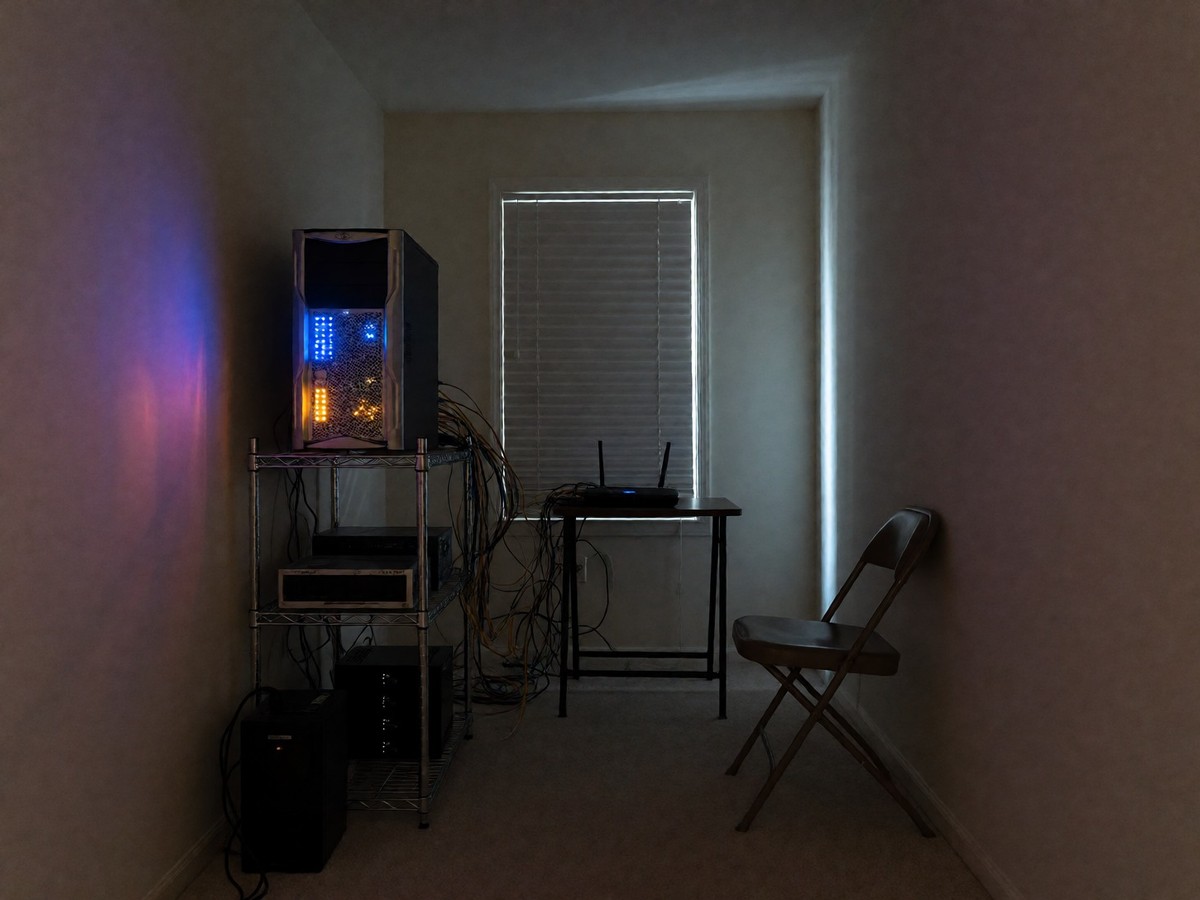
The validator market is splitting into three distinct tiers based on scale and ownership. The top tier includes large operators like Chorus One, Stakin, and Attestant, which carry over $1 billion in delegations. These companies often face acquisition by asset managers and data platforms. For example, Bitwise assembled a staking powerhouse by acquiring Attestant for $4 billion and Chorus One for $2.2 billion. These acquisitions show how large-scale asset managers consolidate market share. The middle tier includes operators with 5 million to 50 million in delegations, but these entities face difficulty finding exit opportunities because delegations bind to the operator address. The bottom tier consists of operators that simply stop signing blocks. In the Cosmos ecosystem, 41 networks have roughly 2,000 validator seats. On-chain records show 1,258 deserted seats and 270 instances where monikers changed to "closing" or "please redelegate". In the first quarter of 2026, 86 validator seats in the Cosmos ecosystem were jailed for 2 or more weeks. You should recognize that the technical requirements for solo validation remain high, requiring a stable machine, 24/7 internet, and the ability to manage both Execution and Consensus clients. Will the increasing validator stake limits eventually force smaller operators into the top tier?