
 Bitcoin News
The AI Pivot at Lake Mariner

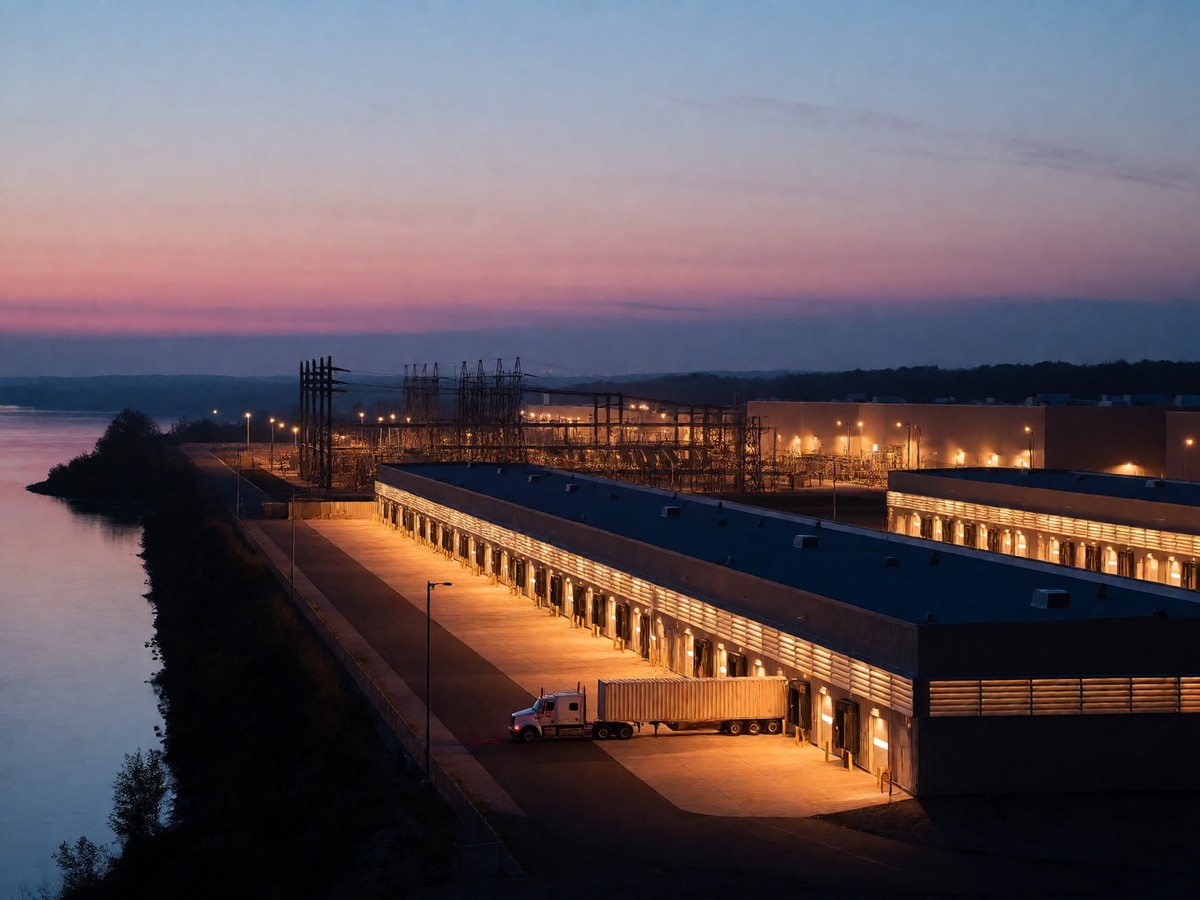
Revenue shift toward high-performance computing
TeraWulf shifted its business model toward high-performance computing. In the first quarter of 2026, HPC revenue hit $21 million, which exceeded the $13 million earned from bitcoin mining. I view the $34 million total revenue as a byproduct of this transition. The company maintains a $3.7 billion contract with FluidStack. This agreement includes a potential expansion to $8.7 billion if the client exercises all options. Google also holds a 14% stake in the firm and provided a $3.2 billion backstop. I find the shift from bitcoin mining to AI infrastructure more significant than the reported $427.6 million non-cash loss in Q1 2026. This loss consisted of $216.3 million in warrant revaluation and $67.1 million in interest expense. In September 2024, the company mined 176 bitcoin at an average rate of 5.9 bitcoin per day. The average power cost for that month was $0.042 per kilowatt-hour. The company targets 800 MW of mining capacity by 2025, though its most recent quarterly sales growth reached -5.9%.
Scaling power and infrastructure capacity
The 10.0 EH/s self-mining capacity remains a central component of the operations alongside the 200 MW zero-carbon nuclear deal. This deal provides the power density that AI workloads require. MARA Holdings, Inc. reported 57.3 EH/s of energized hashashrate in April 2025, but TeraWulf holds a larger market cap. You know that nuclear baseload power attracts hyperscalers like Google. I notice the company uses nuclear and hydroelectric power to maintain low costs.
| Facility / Metric | Value |
|---|---|
| Nautilus Capacity | 200 MW |
| Self-Mining Capacity | 10.0 EH/s |
| FluidStack Contract | $3.7 billion |
| Google Stake | 14% |
The company uses existing mining sites to host GPU clusters for tenants. These tenants bring their own hardware, such as Nvidia H100 or H200 clusters, to the facility. TeraWulf provides power, cooling, and connectivity. The company also secured long-lead items for the 50 MW CB-2 facility. Construction of the 20 MW CB-1 facility is on track for completion in Q1 2025. This facility includes liquid cooling and redundancy features like "N+1 redundant cooling systems" and dual power supplies. The facility supports 16 MW of critical IT load. I observe that the company successfully completed a 2.5 MW proof-of-concept project for high-density GPU workloads. As of September 30, 2024, the company had 195 MW at the Lake Mariner facility and 50 MW at the Nautilus facility.
Market valuation and debt expansion
TeraWulf carries an $8.5 billion market capitalization. I compare the $8.5 billion market capitalization of TeraWulf to the $5.1 billion market capitalization held by MARA Holdings, Inc. during the specific reporting period that ended on September 18, 2026. The company seeks $3 billion in debt financing via Morgan Stanley to expand the Lake Mariner campus after the $92 million Nautilus interest sale. This capital injection supports the construction of the 20 MW CB-1 facility. I see the $427.6 million net loss in Q1 2026 as a result of $216.3 million in warrant revaluation and $67.1 million in interest expense. MARA Holdings, Inc. reported a -429.7% net profit margin on $804.2 million in trailing 12-month revenue. I note that MARA Holdings, Inc. has a Value Score of 14, which the company calls "ultra expensive." TeraWulf also has a Value Score of 0, which the company calls "ultra expensive." The stock for TeraWulf rose 48% in 2026. MARA Holdings, Inc. stock rose 47.4% in 2026. In Q1 2024, the total installed hashrate was 8.0 EH/s. Will the expansion at Lake Mariner offset the tightening mining margins?