
 Bitcoin News
Tether rebalances 83,000 BTC holdings after $118 billion USDT

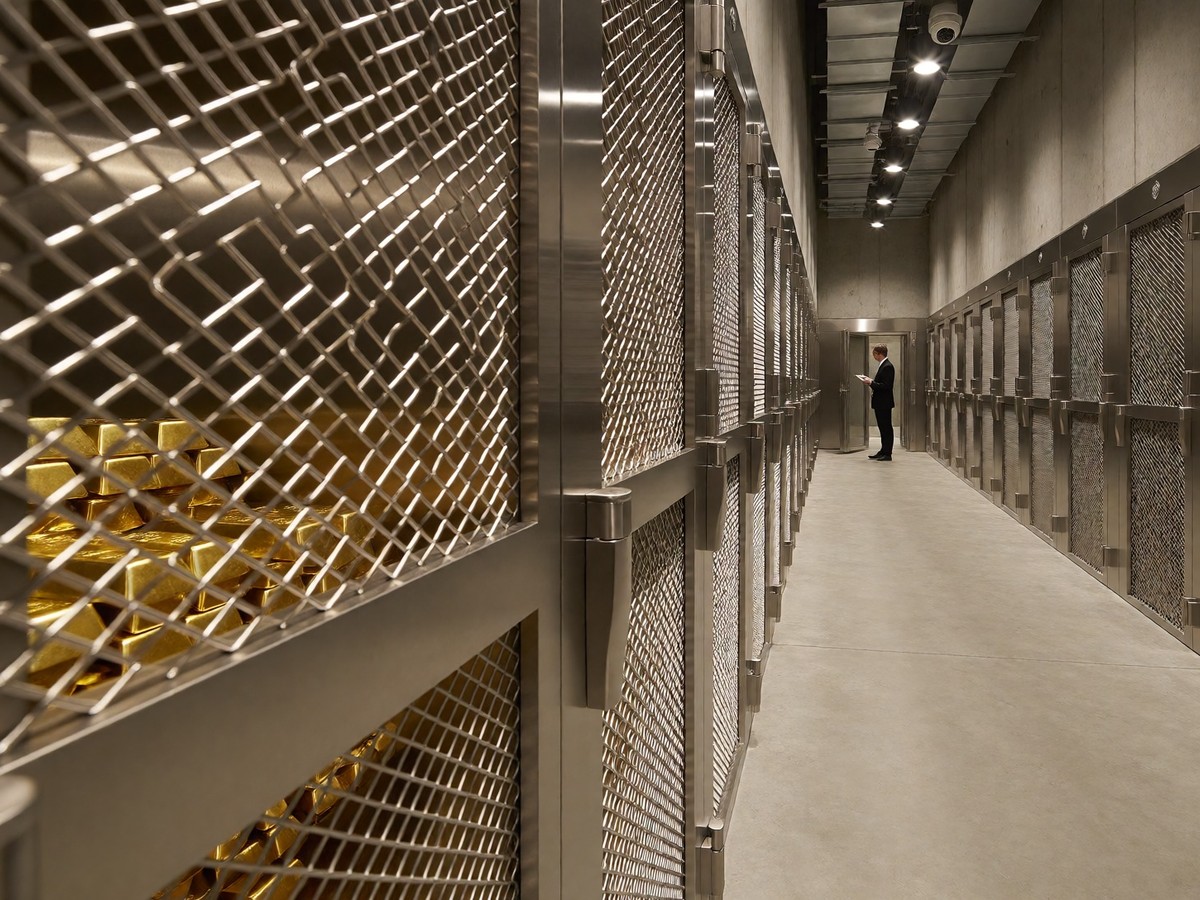
Bitcoin and gold accumulation
Tether allocates 15% of realized operating profits to Bitcoin. This strategy maintains a treasury that holds between 83,000 and 100,000 BTC. Every week, the company buys up to 2 tons of gold. This accumulation results in 140 tons of gold valued at $23-24 billion. Tether targets gold at 10-15% and Bitcoin at 10% of its investment portfolio. These hard-asset positions make up 20-25% of total reserves. Tether funds these purchases with profits from its core operations rather than minting more USDT. The company earned $10 to $13.7 billion across 2024 and 2025. With $186 billion in market circulation, the company builds a Bitcoin treasury worth over $8 billion. The addition of 8,888 BTC in early 2026 further bolstered this position. I judge this massive reserve rebalancing as a calculated attempt to build a sovereign wealth fund.
Regulatory friction and auditing
Tether engaged a Big Four accounting firm in March 2026 to complete its first full independent financial statement audit. This engagement replaces the quarterly attestations previously provided by BDO Italia. The audit covers digital assets, traditional reserves, and tokenized liabilities. The decision to hire ex-HSBC traders and expand into gold trading operations gives Tether more credibility among institutional players who would otherwise dismiss a stablecoin company as a purely crypto phenomenon. CFO Simon McWilliams oversaw the onboarding process to ensure the company meets institutional-grade standards. This move addresses the credibility gap left by the 2021 CFTC $41 million fine and the $18.5 million New York Attorney General settlement. However, the company faces intense pressure from the European Union. Revolut delisted USDT this summer because Tether refuses to comply with MiCA requirements to keep 60% of reserves in EU banks. This delisting exposes the limits of Tether’s dominance in the European market. You should understand that these audits provide a different level of assurance than simple attestations. Will the European Commission broaden MiCA to cover non-EU issuers?
Reserve composition and liquidity
Tether’s total assets reached $187.75 billion as of June 30, 2026. The company maintains liabilities at $183.64 billion. This leaves $4.11 billion in excess reserves. Tether holds the 17th largest position in US Treasuries globally. The company holds approximately $141 billion in direct and indirect US Treasury bill exposure as of March 31, 2026. This includes $112 billion in direct US Treasury bill holdings. USDT holders do not earn interest. Therefore, Tether captures the entire spread from its reserve investments. The company also holds $14.6 billion in secured loans, which remain over-collateralized by liquid assets. As of September 2025, Tether’s total reserves reached $181.2 billion, including $12.9 billion in gold and $9.8 billion in Bitcoin. While USDC holds roughly one-third of its reserves in Treasuries, Tether maintains a much higher concentration in government-backed securities. Tether’s total asset composition includes $17.9 billion in overnight reverse repurchase agreements and $3 billion in term reverse repurchase agreements.
| Asset Category | Allocation/Value |
|---|---|
| US Treasuries | ~80% |
| Bitcoin | ~10% |
| Gold | 10-15% |
| Secured Loans | 8.06% |
USDT market dominance and comparison
Tether leads the stablecoin market with a supply of $186 billion. This supply dwarfs USDC, which holds $78.1 billion. While USDC leads in annual transaction volume, Tether controls 74% of on-chain trading volume. The total stablecoin market capitalization reached $308 billion in August 2026. The market grew by 14.3% over twelve months. Tether’s ability to generate yield from its massive Treasury holdings allows for continuous reinvestment into Bitcoin and gold. This strategy differs from Circle, which follows the GENIUS Act. Tether remains a foreign issuer, which complicates its relationship with US and EU regulators.


