 Bitcoin News
Bitcoin hashrate hits 912 EH/s as Kenyan hydro expansion grows


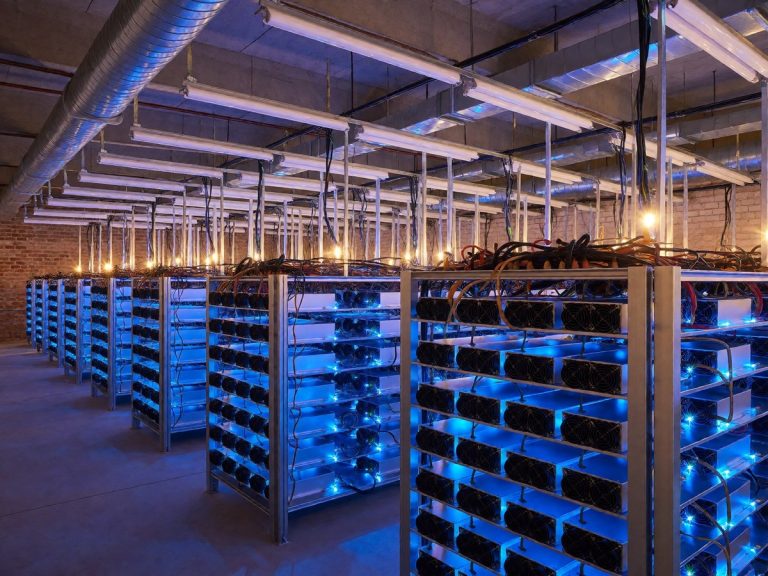
Gridless is an environmentally minded bitcoin mining company in rural Kenya. The company secured $2 million in a seed investment round led by Stillmark and Block, Inc. to finance its expansion into other East African markets. This investment supports mini-grid developers who struggle with sustainability. Gridless contracted five project pilots in rural Kenya with HydroBox. Three of these hydroelectric projects currently power local communities. Electricity from these plants supports rural electrification, containerized cold storage for local farmers, battery charging stations for electric motorcycles, and public WiFi points. Bitcoin’s network hashrate reached 912 EH/s on September 15, 2026. The Cambridge Digital Mining Industry Report from April 2025 states that 52.4% of Bitcoin mining electricity comes from zero-emission sources. This figure includes 42.6% from renewables and 9.8% from nuclear power. Hydroelectric energy specifically accounts for 23.4% of the global mining energy mix. In 2020, more than 50% of people across Africa lacked electricity. The current block reward is 3.125 bitcoins. I find the claim that Bitcoin mining stabilizes grids convincing given the massive scale of the hashrate.
Hardware efficiency and network difficulty
Mining efficiency changed as newer machines entered the market. The Bitmain Antminer S23 series, released in May 2025, provides better performance than older models.
| Hardware Model | Efficiency (J/TH) | Output increase vs S21 |
|---|---|---|
| Antminer S21 | 11.0 (air) | Baseline |
| Antminer S23 (hydro) | 9.5 | 69% higher hashrate |
| Antminer S23 (air) | 11.0 | 69% higher hashrate |
The S23 produces 69% more hashrate than the S21. Difficulty reached 127.45 trillion on September 15, 2026. The protocol adjusts difficulty every 2,016 blocks to maintain the ten-minute block target. Does the increasing difficulty offset the gains from hardware efficiency? You should focus on power costs rather than just machine speed. High upfront costs for modern machines require cheap power to ensure a return on investment. At $0.04/kWh, daily power costs for an Antminer S21 XP+ Hyd are $5.28, but costs jump to $15.84 if electricity reaches $0.12/kWh. The 2025 Cambridge report surveyed 49 mining firms that accounted for 48% of the global hashrate. Bitcoin’s hashrate hit 1.12 billion TH/s in September 2025, a 25% increase from the start of that year. The network’s estimated emissions stand at 39.8 MtCO2e.
Global energy shifts and environmental costs
Geographic shifts changed the mining map after the 2021 China ban. The United States now holds 37.5% of the global hashrate. Ethiopia uses the Grand Ethiopian Renaissance Dam, inaugurated in September 2025, to power roughly 2.6% of global hashrate. Paraguay saw a 54% year-over-year growth in mining operations through the Itaipu Dam surplus. However, the industry generates massive electronic waste. While the Cambridge Centre for Alternative Finance estimated 2,300 tonnes of e-waste in 2024, other studies estimate annual electronic waste exceeds 30,000 tonnes. This disparity shows the lack of consensus on mining’s physical footprint. The United Nations University Institute for Water, Environment and Health reported that Bitcoin mining’s water footprint during 2020-2021 was sufficient to meet the domestic needs of over 300 million people in rural sub-Saharan Africa. I find the environmental impact of mining in high-emissions regions like Kazakhstan or parts of the US deeply troubling. In Texas, the ERCOT grid manages massive flexible loads, with crypto mining demand reaching 4,288 MW in November 2025. Bitcoin’s energy use remains much higher than the global financial system. VISA consumed 740,000 gigajoules of energy for all operations in 2019. To offset the carbon emissions from China’s mining operations in 2020-2021, 2 billion trees are needed. During the 2020-2021 period, the global Bitcoin mining network consumed 173.42 Terawatt hours of electricity.