
 Bitcoin News
Bitmain’s Antminer S1 to the 3nm BM-N3 rollout

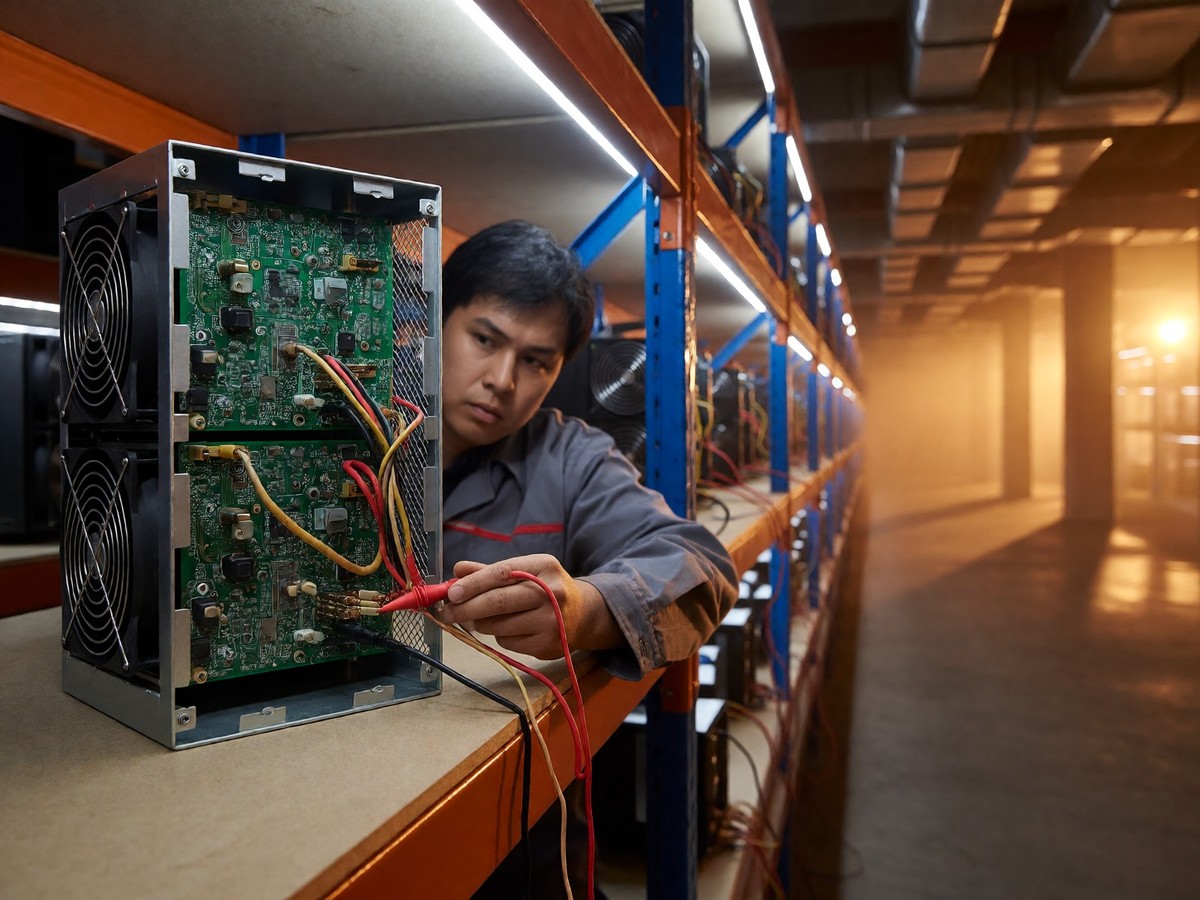
Bitmain launched the Antminer S1 in November 2013 with a hashrate of 180 GH/s using 80 to 200 watts of power. This device preceded the Antminer S2, which delivered 1 TH/s. Following the S1, the company released the S5 in late 2014, which achieved 1.15 TH/s at 590W. The S7 arrived in mid-2015 using a 28nm process to reach 4.73 TH/s at 1,293W. By 2016, the S9 used a 16nm FinFET design to produce 14 TH/s at 1,375W. This machine maintained high usage through the 2017 bull run and 2018 bear market.
The company faced a significant reliability crisis in 2019 with the S17 series. This model promised 56 TH/s at 40 J/TH, but mining farms reported failure rates between 30% and 50% within the first year. Users dealt with hashboard failures, thermal runaway, and tin whisker problems. Bitmain responded with the S19 series in 2020, which used 7nm chips to reach 95 TH/s. The S19 XP, released in 2022, provides 140 TH/s at 21.5 J/TH.
| Model | Hashrate | Power | Efficiency |
|---|---|---|---|
| Antminer S1 | 180 GH/s | 80-200W | N/A |
| Antminer S9 | 14 TH/s | 1,375W | 98 J/TH |
| Antminer S19 | 95 TH/s | 3,250W | 34.5 J/TH |
| Antminer S21 XP | 270 TH/s | 3,550W | 13.5 J/TH |
CleanSpark and the 3nm trajectory
CleanSpark recently expanded its capacity through a strategic agreement for up to 160,000 Bitmain S21 miners. This deal includes an initial batch of 60,000 units and a call option for 100,000 more at $16.00 per terahash. As of May 31, 2026, CleanSpark reported an operational hashrate of 50.0 EH/s. Their deployed fleet included 224,473 machines, and they produced 671 BTC in May 2026. The company holds 13,470 BTC as of May 31, 2026.
The industry now moves toward 3nm semiconductor nodes. TSMC produces the N3B, N3E, N3P, and N3X variants. The N3B node arrived in 2022, while N3E arrived in 2023. N3P targets high-performance computing, and N3X arrived for high-performance computing in 2025. In 2026, TSMC began volume production of the N3C variant. Samsung also produces 3nm GAAFET chips, and in July 2023, research firm TechInsights found Samsung 3nm GAA in a MicroBT Whatsminer M56S++ ASIC.
Scaling efficiency with new silicon
The transition from the 7nm chips in the S19 series to the 5nm chips in the S21 series changed the efficiency curve. The S21 delivers 200 TH/s at 17.5 J/TH. The S21 Pro reaches 234 TH/s at 15 J/TH. The S21 Hydro, which uses liquid cooling, produces 335 TH/s at 16 J/TH. You should consider the infrastructure requirements if you buy a hydro model. These units require coolant loops, heat exchangers, and plumbing.
The current 3nm rollout mirrors the early ASIC era because it pushes the limits of current silicon. TSMC’s N3E offers better performance per watt and lower manufacturing costs per wafer than the N3B. Samsung’s 3nm MBCFET technology provides 23% higher performance and 45% lower power draw compared to 5nm processes. The industry relies on these shrinking nodes to keep mining profitable as difficulty increases.
| Node | Type | Year |
|---|---|---|
| N3B | FinFET | 2022 |
| N3E | FinFET | 2023 |
| N3P | FinFET | 2024 |
| N3X | FinFET | 2025 |
| N3C | FinFET | 2026 |
Will the high defect rates seen in early N3B production prevent wider adoption of 3nm ASICs? Bitmain continues to lead the market by iterating on these manufacturing advancements. The S21 XP remains the efficiency leader with 13.5 J/TH. Industry competitors like MicroBT produce the M60S, which delivers 186 TH/s at 18.5 J/TH. Companies like CleanSpark select Bitmain hardware because they require the highest efficiency for large scale operations.