 Bitcoin News
El Salvador Bitcoin treasury and the volcano bond refinancing

El Salvador holds 7,606 Bitcoins in its official reserves as of 2026. The government maintains this position following a $1.4 billion deal with the International Monetary Fund (IMF) that includes a zero ceiling on voluntary public-sector Bitcoin purchases. This holdings total generates unrealized gains worth more than $219 million because the average acquisition price sat at $45,200 while current prices reach $74,000. The government continues a strategy of buying one Bitcoin every day, a routine President Nayib Bukele started on November 17, 2022. This accumulation method uses small, regular purchases to build a position over time regardless of market volatility.
The treasury uses these paper profits to secure better loan deals and pay off old national debt cheaply. While officials promote the daily purchase narrative, the IMF maintains that increases in the Strategic Bitcoin Reserve Fund reflect the consolidation of existing Bitcoin across government wallets rather than net new market purchases. The IMF requires the government to report all hot and cold wallet addresses and specifies that the total Bitcoin controlled across all government wallets must remain unchanged. This distinction allows the administration to claim a successful accumulation strategy while technically adhering to the IMF’s strict no-accumulation pledge.
| Financial Metric | Value |
|---|---|
| Total Bitcoin Reserves | 7,606 BTC |
| Current Bitcoin Price | $74,000 |
| Average Purchase Price | $45,200 |
| Total Unrealized Gains | $219,000,000 |
| IMF Loan Amount | $1.4 billion |
| Bitcoin Mining Reserves | 474 BTC |
The administration faces significant debt pressures. El Salvador’s debt-to-GDP ratio aims to hit 96% of GDP by 2026. Bloomberg Economics ranks the country among emerging market nations most vulnerable to a debt default. The government must manage large domestic debt obligations that require frequent rollover.
Geothermal power and the AI data center shift
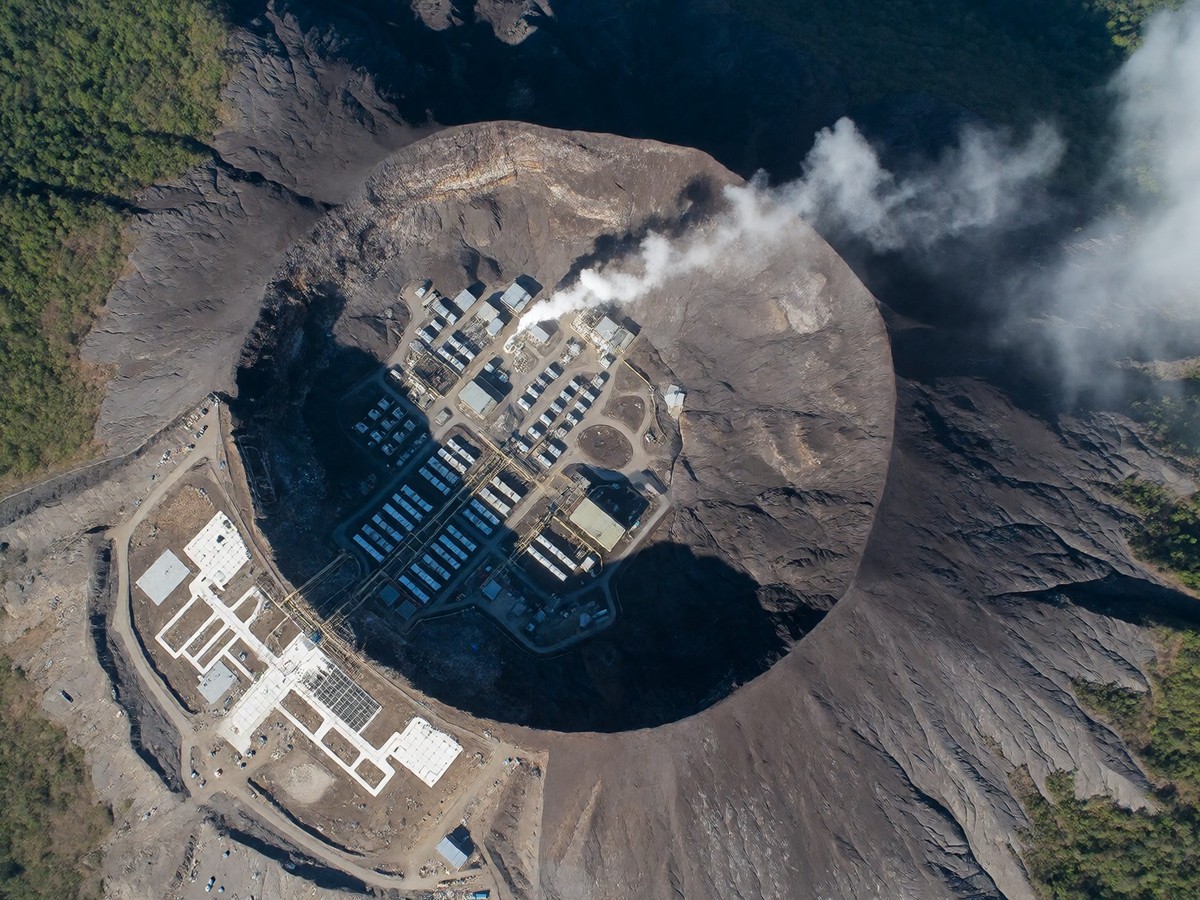
Volcanic heat provides the energy for Bitcoin mining operations near the Tecapa volcano. Machines inside the crater hold 474 Bitcoins in public accounts. The government opened access to outside firms to use this volcanic steam, and these companies pay upfront fees to use the power. New cooling technology increases the efficiency of these rigs. The administration uses this energy to attract artificial intelligence companies by offering zero income tax to firms that move their computing hubs to the country. These companies use volcanic heat for power and breezes from nearby peaks to keep machines at safe temperatures.
The government aims to train 100,000 young people in technical skills like Python programming and managing Bitcoin networks. This policy works alongside xAI to bring artificial intelligence tutors into schools. This initiative seeks to build a talent pipeline for the digital economy.
The Bitcoin mining strategy connects digital assets to physical energy resources. This approach replaces the need for large cash reserves with a reliance on natural heat and computing power. The transition to AI-focused data centers uses the same infrastructure that supports the Bitcoin mining rigs. Will the specialized workforce arrive fast enough to sustain these tech hubs?
The adoption gap and rural economic reality
Economic benefits remain concentrated in specific areas. Coastal zones like El Zonte thrive on tourism. Visitors in El Zonte use Bitcoin for board rentals and meals at beachside grills. Tourism numbers in these areas jumped 40% compared to last year. Many newcomers arrive with wallets full of Bitcoin.
The experience in rural farm country differs. Most people in the countryside use the US dollar for daily transactions. More than nine out of ten everyday payments happen in regular money. Most people sending money home from the US use traditional services rather than digital wallets. Remittances account for more than 20% of El Salvador’s gross domestic product. Only 1.6% of remittances went through digital wallets in 2022.
The adoption gap creates a split economy. High-tech hubs and tourist zones use Bitcoin, but rural residents stick to paper money. Many small and medium enterprises do not accept Bitcoin. A survey by the Chamber of Commerce and Industry of El Salvador found that 86% of businesses never made a sale in Bitcoin. Only 20% of businesses take Bitcoin payments.
| Adoption Metric | Value |
|---|---|
| Remittance share via digital wallets (2022) | 1.6% |
| Businesses not accepting Bitcoin (Chamber of Commerce) | 86% |
| US remittance share of GDP | >20% |
| Percentage of businesses taking Bitcoin | 20% |
The government launched the Chivo Wallet to help the unbanked. This wallet provides no-fee transactions and works with a mobile phone and internet connection. However, a study from the US National Bureau of Economic Research found that 61% of Chivo users stopped using the app after they spent their $30 bonus. Many residents in the countryside lack the digital literacy to use these tools.
Market volatility and sovereign risk
Bitcoin price swings create massive risks for the national budget. The asset lost 60% of its value during the 2021-2022 crash. This volatility makes it difficult for the government to plan long-term fiscal policy. The country’s credit score faces downgrades from agencies like Fitch due to the uncertainty of using Bitcoin as legal tender.
The administration uses Bitcoin as a shield against outside control, but this strategy faces strict boundaries. The IMF deal prevents the government from using state resources for speculative bets like DeFi farming or leveraged trades. The main ledgers must still use US dollars. The government must also wind down its involvement in the Chivo wallet and liquidate the Fidebitcoin trust.
The Bitcoin experiment failed to meet the initial goals of financial inclusion for the entire population. While the government claims success, international watchers remain skeptical. The country faces a heavy mix of multilateral and domestic debts. The administration’s decision to bet on a volatile asset complicates its ability to access preferential lending terms.
The Bitcoin price currently sits near $74,000, which is 40% above its 200-day moving average. Technical resistance exists at $75,000. If the price climbs past this zone, the value could move toward $82,000. If the price falls, it may drop toward $51,000. The government must manage its 7,606 BTC without triggering a fiscal crisis if the market enters a long downturn.