 Bitcoin News
The economics of Marathon Digital’s Texas wind farm and infrastructure pivot

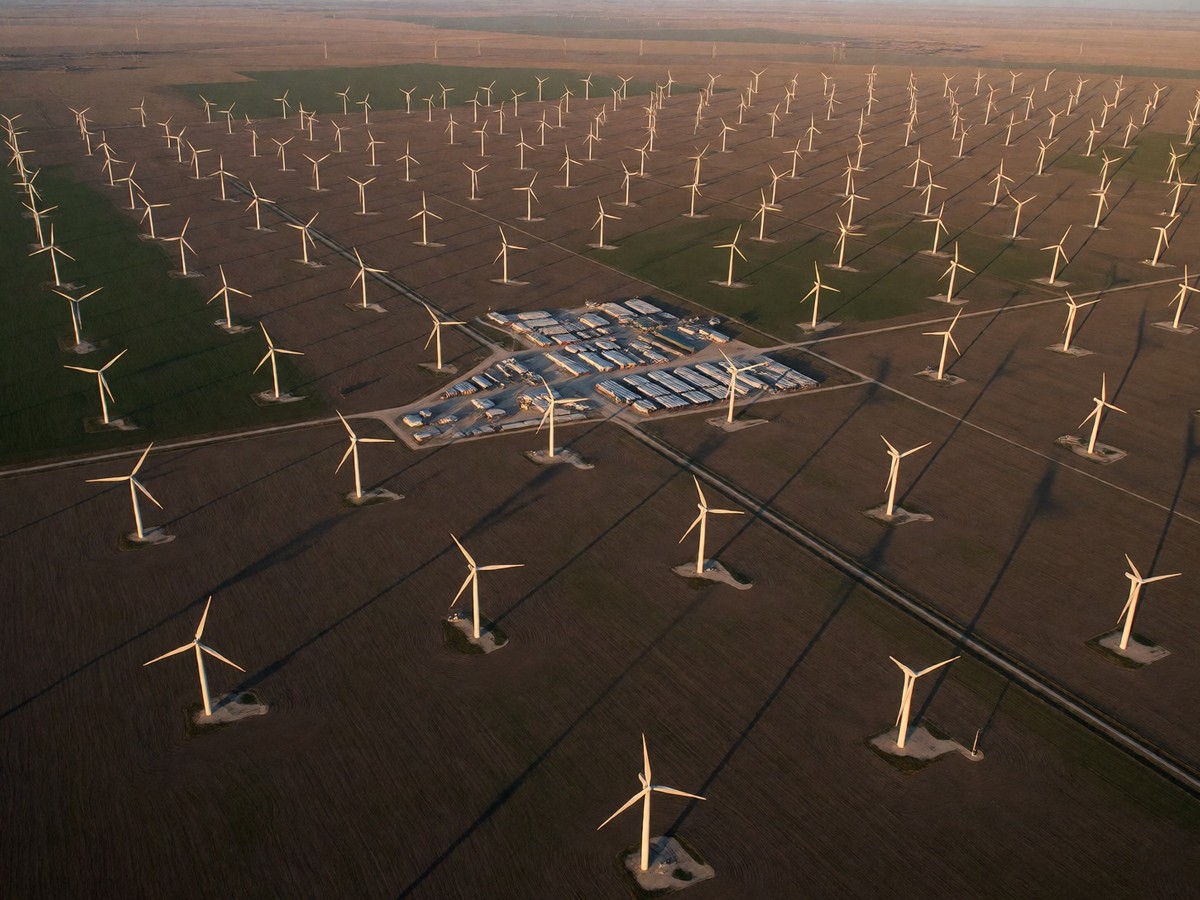
MARA deployed all containers and miners at its Texas wind farm to achieve full operational status in the fourth quarter of 2026. This 114 megawatt facility supports a 50 EH/s scale operation. The company previously reported an energized hashrate increase of 15% to 53.2 EH/s. MARA manages its energy stack through a combination of wind generation and gas-to-power capacity. Through a partnership with NGON, the company converts stranded and flared natural gas into on-site power, having recently doubled that capacity to 50 megawatts. The company holds 52,850 BTC as of late September 2025. This treasury grew from 44,893 BTC at the end of 2024, a holding valued at $4.2 billion when the spot price reached $93,354. MARA also grew its MARAPool hashrate by 168% in 2024, outpacing network growth of 49%. The company previously purchased 22,065 BTC at an average price of $87,205 and mined 9,457 BTC in 2024. You already know that Bitcoin mining requires massive energy, but MARA now treats that energy as a flexible asset rather than a fixed cost.
Grid flexibility and ERCOT load management
MARA uses its flexibility to monetize electricity when it remains low-cost. The company reduces demand when the grid needs power elsewhere. During Winter Storm Fern in February 2026, MARA voluntarily curtailed 770 megawatts across PJM, SPP, and ERCOT. This action allowed existing generation capacity to serve the grid during extreme strain. ERCOT now utilizes the Batch Zero process to streamline interconnection for large new loads. These provisions favor projects that bring on-site generation or curtail when the local grid faces stress. Texas faces massive pressure as ERCOT fields requests to connect more than 438,000 megawatts of new large loads. This demand equals five times the historical peak demand for the Texas grid. Regulators in the United States are redesigning large-load interconnection around speed, transparency, and flexibility. In the SPP region, the FERC-approved framework fast-tracks data centers that pair with co-located generation or agree to curtail during emergencies. MARA participates in policy forums to influence these emerging rules. The company also engages with the Ohio Joint Data Center Committee to establish its presence in that state.
Expansion into AI and high-performance computing
The company targets 2 gigawatts of power at the MAT 1177 site in Matagorda County, Texas. This 1,200-acre campus involves milestone-based payments totaling up to $600 million. MARA intends to bring 1 gigawatt online by October 2027 and the second gigawatt by April 2028. The company works with Starwood Digital Ventures to develop AI and high-performance computing assets. The Long Ridge acquisition expands this footprint into the PJM market. This $1.5 billion deal includes a 505 megawatt plant and 1,600 contiguous acres. Long Ridge generates approximately $144 million in annualized adjusted EBITDA, with 76% of its power hedged under a financial swap. MARA will finance this acquisition using cash, Bitcoin-backed capacity, and a Barclays bridge loan, while assuming at least $700 million in debt. The company expects to start a 200 megawatt AI build-out in the first half of 2027. This build-out should reach initial capacity by mid-2028. The acquisition increases owned capacity from 1.3 gigawatts to 2.2 gigawatts. MARA plans to retain the 25 full-time engineers and employees from the Long Ridge team. At the Hannibal site in Ohio, the company already operates 86 megawatts of capacity with 99% uptime, and it targets an additional 14 megawatts by the end of the year.
| Facility | Location | Capacity | Target/Status |
|---|---|---|---|
| Texas Wind Farm | Texas | 114 MW | Full operation Q4 2026 |
| MAT 1177 | Matagorda, TX | 2 GW | 1 GW by October 2027 |
| Long Ridge | PJM Market | 505 MW | 200 MW AI build-out |
| Hannibal | Ohio | 200 MW | 86 MW online |
The cost of mining in a high difficulty environment
The industry faces a brutal reality where many miners lose $19,000 on every Bitcoin they produce. Bitcoin production costs hover around $88,000 while the price sits near $69,200. The March 2026 difficulty adjustment followed a massive 11.16% plunge in February, which occurred when Winter Storm Fern forced MARA to curtail 770 megawatts of mining capacity across several different power markets. In March 2026, difficulty fell 7.76% to 133.79 trillion. The network hashrate retreated from a record 1.05 zettahash per second in January to roughly 943 exahash per second. This decline follows the 2024 halving which reduced the block subsidy from 6.25 BTC to 3.125 BTC. The pivot to integrated energy and AI infrastructure allows MARA to bypass the terminal decline facing pure-play miners. The 2028 halving event will reduce block rewards to just over 1.5 BTC, and the math becomes even tougher in 2032. Will the partnership with Starwood Digital Ventures generate enough AI revenue to offset Bitcoin volatility?