 Bitcoin News
Marathon Digital vs Riot Platforms: The Power and Hashrate Divide

Power scale and the data center pivot
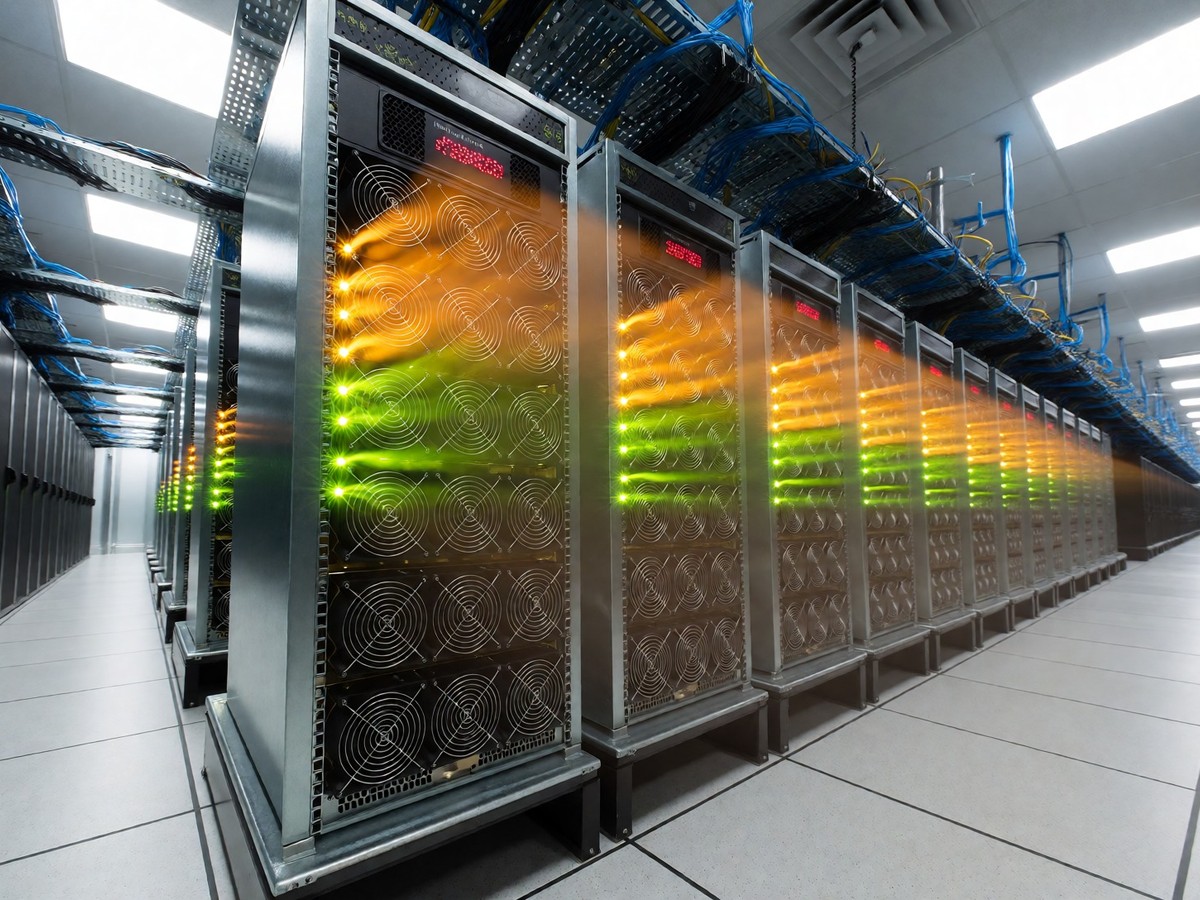
Marathon Digital maintains a massive lead in energy access through a potential portfolio capacity of 4.8 GW if it closes the Long Ridge acquisition and fully energizes the Matagorda County site in Texas. This Matagorta site provides up to 2 GW of expected power access across more than 1,200 acres. Riot Platforms operates a 1.7 GW power footprint and uses its Power First plan to transition from Bitcoin mining toward high performance computing, AI, and cloud data centers. Riot reported $33.2 million in data center revenue during its first quarter of operations in 2026, which occurred as the company transitioned into an active, revenue-generating data center operator. This revenue came as AMD doubled its contracted capacity to 50 megawatts. I find Riot’s move into AI infrastructure interesting, as the firm’s data center revenue reached $33.2 million in the first quarter of 2026. Marathon also manages 25 MW of gas-to-power operations in North Dakota and Texas. The company provides space, power, cooling, and connectivity to run compute for various clients. While Riot builds its data center presence, Marathon builds its status as a vertically integrated digital energy and infrastructure company.
The reality of mining margins
The competition for power determines the survival of these mining operations. High electricity prices in the US, which the government forecasts at 18.2 cents per kWh for 2026, push many miners toward the edge. A miner with an Antminer S21 Pro earns about $9.75 a day before costs at current hashprice levels. If the electricity price hits 17 cents per kWh, that same machine costs $15.00 per day to run. This math makes efficient hardware and low power costs the only way to stay profitable. The PJM grid, which covers 13 US states, saw capacity auction prices rise from $28.92 per MW-day to $333.44 per MW-day for the 2027/28 period because data centers made up 5,100 MW of the 5,250 MW rise in forecast peak demand. In the UK, the energy regulator Ofgem raised the price cap to 26.32 pence per kWh on 1 October 2026 because of higher gas costs. At the current hashprice of $0.0398 per TH/s per day, which was the level on 5 October 2026, an Antminer S21 Pro with 245 TH/s generates $9.75 in revenue. An Antminer S23 Hyd with 580T has a higher break-even power price of 17.5 cents per kWh.
| Miner Model | Efficiency (J/TH) | Break-even Power Price (USD/kWh) |
|---|---|---|
| Antminer S23 Hyd | 9.5 | 0.175 |
| Antminer S21 XP Hyd | 12.0 | 0.138 |
| Antminer S21 Pro | 15.0 | 0.111 |
| Antminer S21e Hyd | 16.9 | 0.098 |
| Antminer S21 | 17.6 | 0.094 |
Hashrate divergence and production
Marathon produced 717 Bitcoin worth $48.8 million in October, which the company attributed partially to its energized hashrate rising over 14% to surpass 40 exahashes per second, despite a 3% decline in block wins due to heightened network difficulty. Riot produced 505 Bitcoin worth $34.4 million in the same month, marking a 22.6% month-on-month increase. Riot’s energized hashrate reached 29.4 EH/s in October after the company installed new MicroBT miners at its Corsicana facility. This total fell short of its 34.9 EH/s target for the end of 2024 because of slower expansion at its Kentucky facilities. You, who already know that mining depends on the power contract, should watch if Riot can actually hit its 100 EH/s target for 2027. Riot’s Bitcoin mining revenue fell to $111.9 million in the first quarter of 2026, compared to $142.9 million in the same period in 2025. This decline resulted from lower average Bitcoin prices and increased global network hash rate. Riot mined 1,473 Bitcoin during the quarter, which was less than the 1,530 Bitcoin it mined in the same quarter in 2025. The company’s average mining costs excluding depreciation rose to $44,629 per coin from $43,808. The network releases roughly 450 new BTC daily from about 144 blocks. At a Bitcoin price of $85,739 and a network hashrate of 970 EH/s, hashprice is about $0.040 per TH/s per day, before fees.
The winner in the power race
Marathon Digital comes out ahead because of its 4.8 GW potential capacity and its ability to monetize excess energy through 25 MW of gas-to-power operations in North Dakota and Texas. The company reached an energized hashrate of over 40 EH/s in October. Riot’s transition to data centers provides a hedge, but its mining economics face pressure. Riot’s fair value per share dropped to $25.94, while its assumed annual revenue growth fell to 24.70% from 30.77%. The company’s forecast net profit margin also dropped to 11.39% from 12.34%. Riot’s Bitcoin holdings sit at 15,679 BTC, valued at approximately $1.1 billion based on a quarter-end price of $68,222. I believe Marathon’s focus on large-scale, low-cost energy and infrastructure gives it a superior position in a market where US electricity prices reach 18.2 cents per kWh in 2026.