 Bitcoin News
Bitcoin’s Layer Two growth and retail links

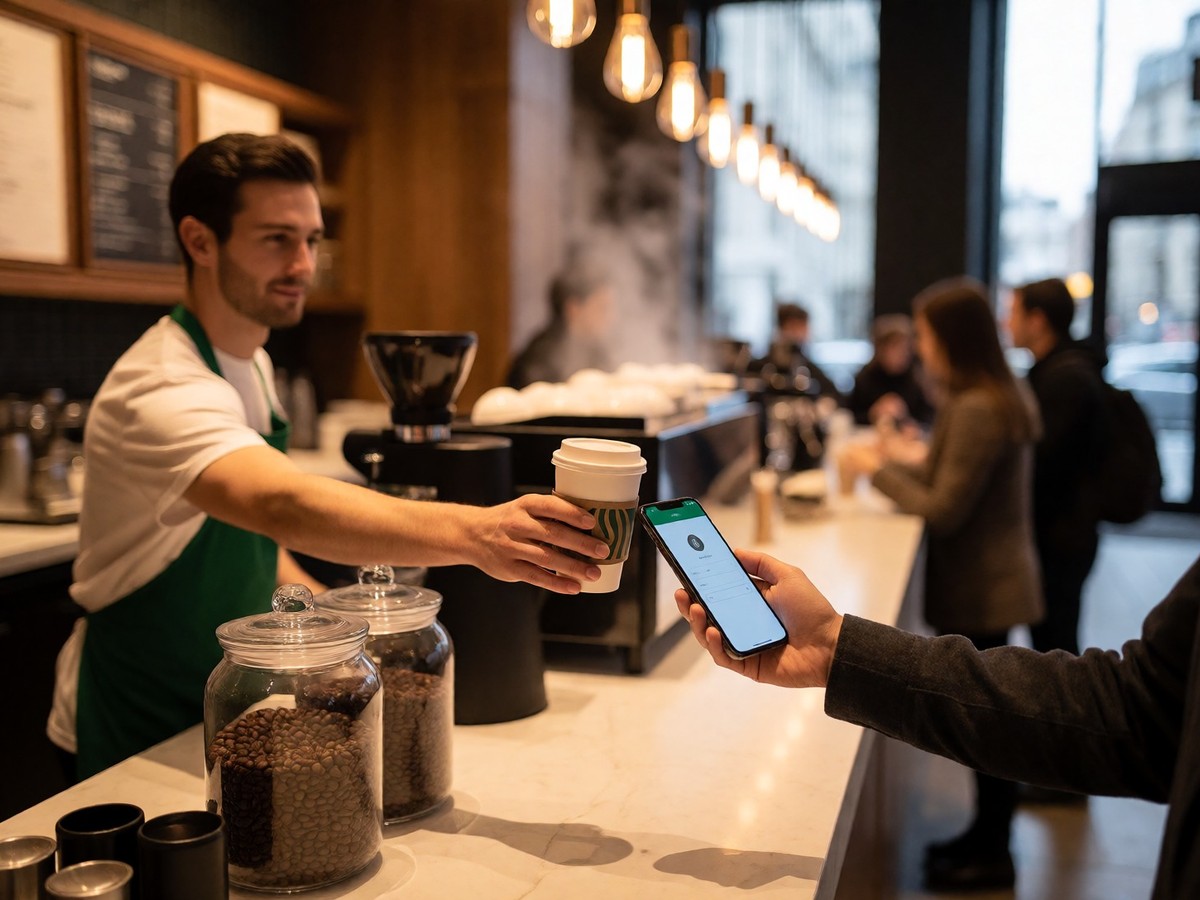
Bakkt enables Starbucks card reloads
Bakkt lets customers convert Bitcoin into U.S. dollars to reload Starbucks cards. This platform involves Microsoft, Intercontinental Exchange, and BCG. A Starbucks spokesperson told Motherboard that customers cannot pay for Frappuccinos with Bitcoin, despite reports that the company’s partnership with Bakkt would enable direct cryptocurrency spending at retail locations in stores. The platform converts digital assets into fiat currencies for use in the Starbucks app. Bakkt saw more than 500,000 users participate in its trial program. This allows users to load Starbucks cards using Bitcoin.
Lightning Network volume climbs
Lightning Network volume hit $1.17 billion in November 2025. This equals 266% growth over the previous year.
The network holds 4,898 BTC in public capacity as of May 2026. This includes 41,080 channels and 17,438 nodes according to mempool.space. Capacity peaked at 5,637 BTC in December 2025. This surge came from capital from Binance, OKX, and Coinbase integrations.
River noted the average Lightning transaction hit $223 in November 2025. This figure surpassed the $118 average from the year before.
LND lacks native BOLT12 support.
Micropayment experiments in gaming and messaging faded, which explains the transaction count changes. However, Lightning Labs released an open-source toolkit for AI agents in 2025. This allows machines to run nodes and make autonomous payments. AI agents do not incur mental costs, which could drive more frequent, smaller payments.
In Africa, Bitnob facilitates Lightning-based salary payments across 23 countries. This company saw 340% year-over-year transaction volume growth. Lightning is a second layer for payments, created by Blockstream and Adam Back. It was built for necessity, since base chain blocks come slow. When traffic piles up, costs go up.
Strike simplifies Bitcoin payments
Strike uses Lightning. It works in 100 countries.
| Service | Rate |
|---|---|
| US Bitcoin-backed loans | 9.5% APR |
| Global Bitcoin-backed loans | 10.5% APR |
| Recurring DCA fees | 0% after one week |
Strike is a Bitcoin-first payments app. It is easy for first-time buyers and remains sophisticated for seasoned holders. Strike provides loans from $10,000 to $1,000,000. Users in Argentina and Brazil use these loans at 10.5% APR. The app handles channel management and holds private keys. You handle the funds only when you withdraw to self-custody. Most users prefer a custodial model.
Strike revamped its fees in February 2024. It moved from an opaque spread model to explicit tiered trading fees. Recurring DCA purchases become fee-free after an initial week. Lightning payments between Strike users cost nothing. External Lightning payments typically run about 0.15% plus a 1% spread when currency conversion occurs.
In 2024, Strike reported 600% year-over-year growth in transaction volume. It now works for users across the Americas, Europe, Africa, Asia-Pacific, and the Middle East. Strike also allows users to direct-deposit salaries into Bitcoin. This feature helps US users convert up to 100% of their paychecks. Fees for these deposits stay at zero for up to $20,000 per month.
Users can buy Bitcoin with a linked bank account, wire transfer, or debit card. Transactions range from $1 to $2,500,000. The app provides two-factor authentication using passkeys or security keys. The mobile app scores around 4.8 out of 5 on the Apple App Store. It also has a 4.6 rating on Google Play. Users describe the experience as similar to Cash App but with Lightning payments underneath.
Will privacy enthusiasts accept this?