
 Bitcoin News
CleanSpark dominates hash rate growth over Riot Platforms

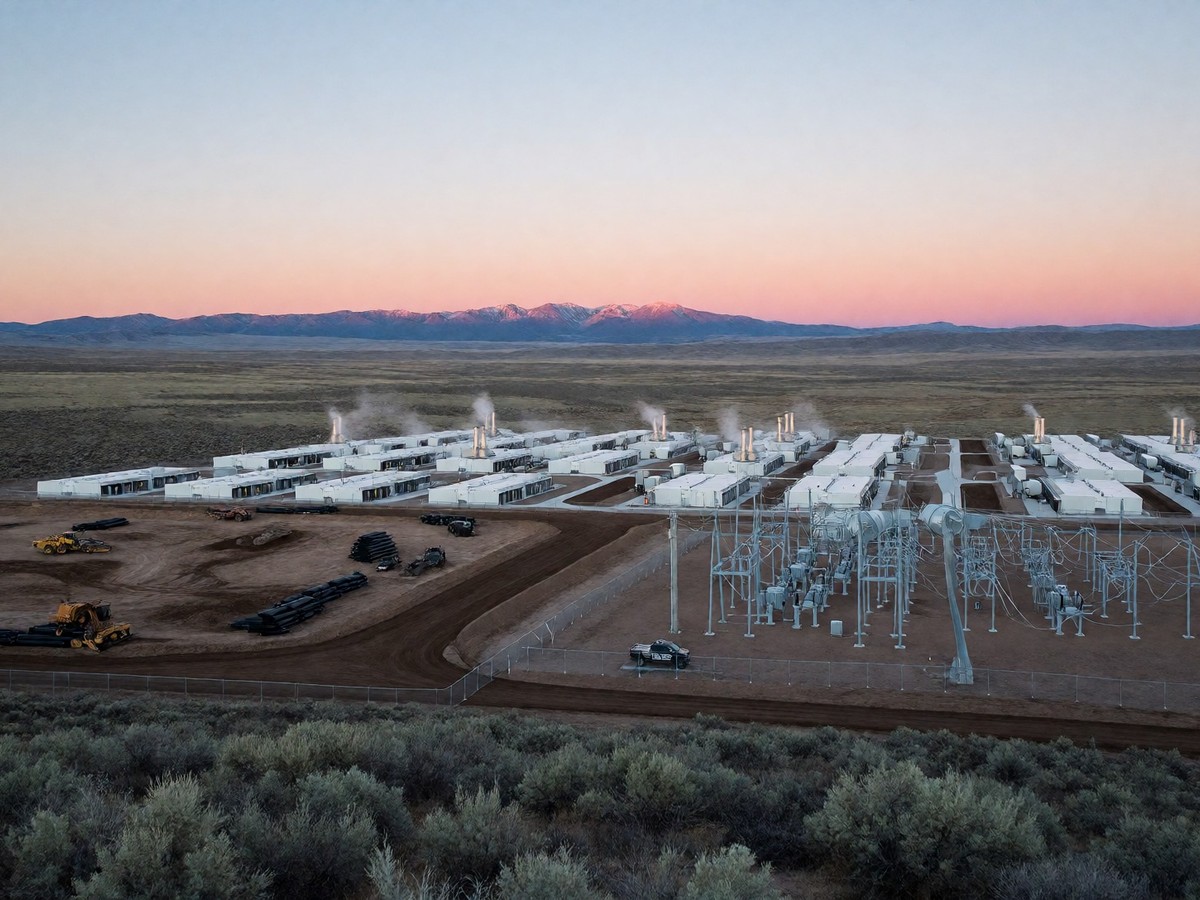
Hash rate and capacity expansion
CleanSpark wins the September hashrate race because it maintains an average operating hashrate of 38.6 EH/s as of July 2026, whereas Riot Platforms reported 32.2 EH/s in September 2025. CleanSpark also manages 1.8 GW of power under contract. The company acquired 447 acres in Brazoria County, Texas, to support a 600 MW data center. This expansion follows the acquisition of two Wyoming sites that add between 2 EH/s and 3 EH/s to its capacity. CleanSpark also signed a 20-year lease in Sandersville, Georgia, which provides $6.6 billion in expected contract revenue. The company also manages 808 MW of utilized power. CleanSpark is building a 600 MW data center in Brazoria County, Texas, to support a 300 MW initial demand load with potential expansion to 600 MW, which helps them scale alongside the growing demand for AI. CleanSpark also manages a portfolio of more than 1.8 GW of power, land, and data centers across the United States. Its portfolio includes twelve data centers in Georgia, three in Mississippi, and one in Wyoming. CleanSpark’s total Bitcoin holdings as of June 30, 2026, reached 13,924 BTC.
Production and efficiency
CleanSpark produced 586 BTC in July 2026, while Riot produced 445 BTC in September 2025. CleanSpark’s total Bitcoin holdings reached 13,931 BTC by the end of July 2026, which exceeds the holdings of its competitors. Riot maintains a larger treasury with 19,287 BTC held as of September 2025. Riot reported an all-in power cost of 4.2c/kWh in September 2025, a figure that rose 63% from the 2.6c/kWh cost in August 2025. In August 2025, Riot received $16.1 million in total power credits, while September 2025 saw only $1.4 million. CleanSpark reached a peak single day production of 20.77 BTC in July 2026. The company’s average daily production of 18.91 BTC in July 2026 sits higher than the 14.8 BTC per day Riot reported for September 2025.
| Metric | CleanSpark (July 2026) | Riot (Sept 2025) |
|---|---|---|
| Average Operating Hashrate | 38.6 EH/s | 32.2 EH/s |
| Bitcoin Produced | 586 BTC | 445 BTC |
| Bitcoin Treasury | 13,931 BTC | 19,287 BTC |
| Power Under Contract | 1.8 GW | Not specified |
Riot’s trailing 12-month revenue reached $674.5 million, while CleanSpark’s trailing 12-month revenue reached $679.2 million. Riot’s net profit margin for that period reached -196.3%, but CleanSpark’s net profit margin reached -146.9%. CleanSpark’s average price per Bitcoin sold in July 2026 was $66,133, while Riot’s average price per Bitcoin sold in September 2025 was $113,043. CleanSpark’s deployed fleet as of July 31, 2026, reached 230,507 units with a peak efficiency of 16.07 J/Th. In May 2026, CleanSpark’s deployed fleet reached 224,473 units with a peak efficiency of 16.07 J/Th. CleanSpark produced 671 BTC in May 2026 with an average daily production of 21.66 BTC. You should look at how these production numbers fluctuate against total holdings.
Market cap and environmental impact
Riot Platforms holds a $7.6 billion market capitalization, while CleanSpark holds a $3.3 billion market cap as of September 16, 2026. Riot’s stock rose 70.5% in 2026, and it outperformed CleanSpark’s 30.4% rise. Riot operates a facility in Rockdale, Texas, that uses 450 MW of power and produces 1.9 million tons of CO2 annually. This energy use remains a significant concern for local communities. CleanSpark also manages a portfolio of 1.8 GW of power. CleanSpark’s stock price increased 30.4% in 2026. Riot also manages a 750 MW capacity at its Rockdale facility. Riot plans a new facility in Corsicana, Texas, which could use 1 gigawatt of energy. CleanSpark previously acquired 271 acres and 285 MW in Austin County to support a next-generation data center campus. CleanSpark also manages assets in Georgia and Mississippi. CleanSpark’s total Bitcoin holdings as of June 30, 2026, reached 13,924 BTC, while its holdings as of May 31, 2026, were 13,470 BTC. CleanSpark’s average price per Bitcoin sold in June 2026 was $69,056. Does the heavy reliance on Texas power contracts for both companies create too much exposure to state-level grid volatility?