 Bitcoin News
ASIC market concentration and US hardware entry

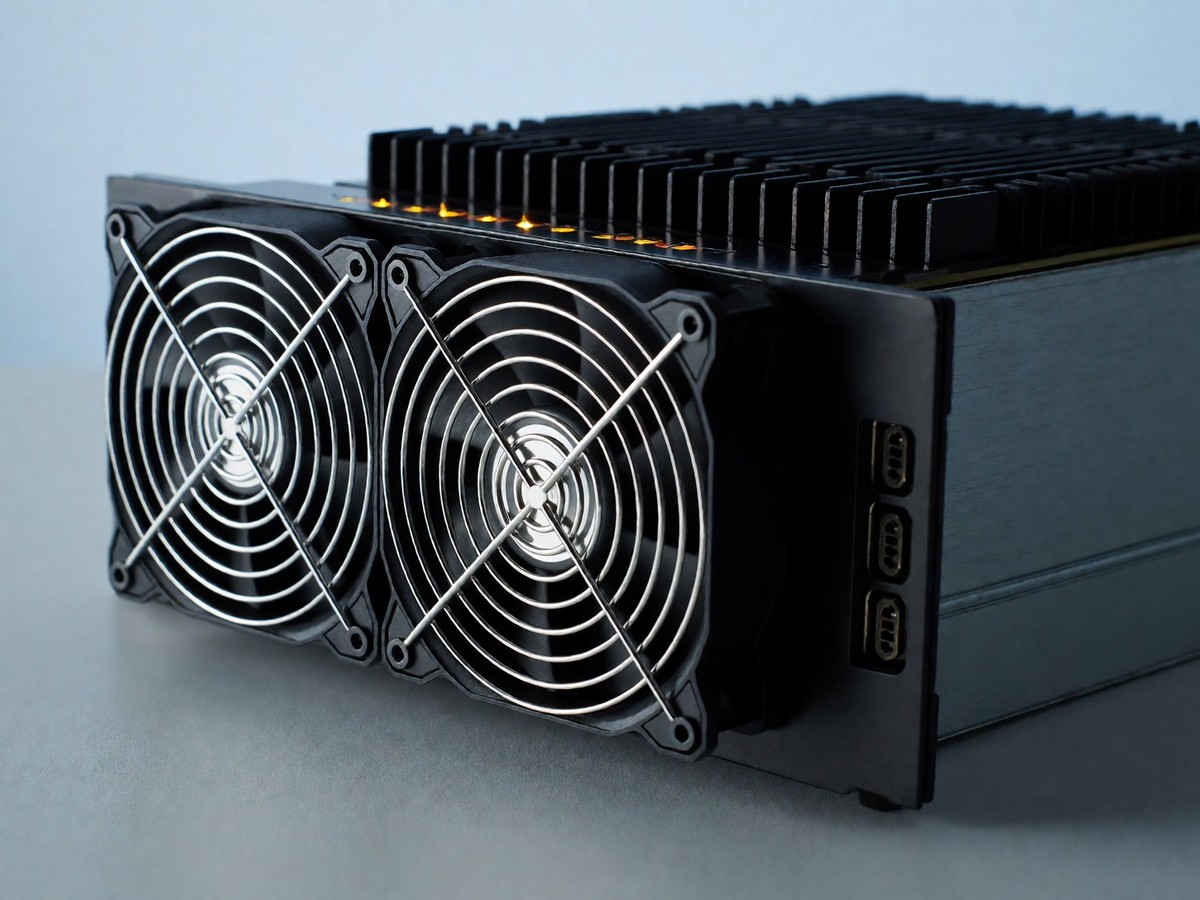
Bitmain maintains an 82% share of the ASIC market. MicroBT holds 15% and Canaan holds 2%. These three Chinese manufacturers dominate the hardware sector. US-designed machines from Block and Auradine have entered the market. This hardware presence changes the concentration of the mining industry.
The arrival of US-designed hardware occurs as manufacturers expand their product lines. Bitmain, MicroBT, and Canaan continue to release new models to meet network demands. While these companies hold the majority of the market, the entry of Block and Auradine introduces new competition. The production of these machines remains a specialized industry.
The development of mining hardware relies on specific chip architectures. Most professional miners use ASICs that run the SHA-256 algorithm. These machines compete for the right to add the next block to the Bitcoin network. The efficiency of these machines is the primary metric for miners.
Hardware specifications of the S21 series
The S21 series from Bitmain uses the BM1370 chip. The S21 Pro contains 65 chips per hashboard. The S21 XP contains 91 chips per hashboard. The standard S21 uses the older BM1368 chip. The S21 series uses 140mm fans. This differs from the 120mm fans used in the S19 series. The 140mm fans move more air at lower static pressure than 120mm fans. This change creates logistical hurdles for hosting facilities. Most custom exhaust shrouds use 120mm fans. The 140mm chassis requires entirely new ducting shrouds. The Bitmain Antminer S21 Pro consumes 3510W of electricity and produces 234 TH/s, which results in a daily electricity consumption of 84.24 kilowatt-hours if the machine operates for twenty-four hours throughout every single day.
The efficiency of a mining rig determines the highest electricity price at which a machine still covers its electricity. This metric uses joules per terahash to measure energy use. A lower number is better. The Bitmain Antminer S21 Pro uses 15 J/TH. This efficiency is 17% better than the base S21 model.
| Model | Hashrate (TH/s) | Efficiency (J/TH) | Power (W) |
|---|---|---|---|
| Antminer S21 | 200 | 17.5 | 3500 |
| Antminer S21 Pro | 234 | 15.0 | 3510 |
| Antminer S21 XP | 270 | 13.5 | 3645 |
| Antminer S21+ | 234 | 15.0 | 3510 |
The S21 series also requires the APW17 power supply. The APW17 handles the electrical demands of 200+ TH/s machines. It uses the C20 to P13 power interface. This is different from the APW12 used with the S19 series.
Calculating profitability in 2026
Mining profitability is the difference between the coins earned and the cost of equipment and electricity. The April 2024 halving reduced the block subsidy from 6.25 to 3.125 BTC. This reduction means every miner produces half the Bitcoin it produced before. Electricity costs are 80% of a typical miner’s cash operating cost. A miner with 15 J/TH efficiency produces Bitcoin at a structural advantage when electricity is cheap. The Bitmain Antminer S21 Pro is the best value for air-cooled miners in the S21 family. It produces 234 TH/s at 15 J/TH. The S21 XP produces 270 TH/s at 13.5 J/TH. The S21 XP is 10% more efficient than the S21 Pro.
The hashprice indicates the amount earned by one unit of hashrate per day. On September 28, 2026, the hashprice was $39.87 per PH per day. This equals about $0.0399 per TH per day. Miners calculate their daily earnings by multiplying the hashrate by the hashprice. They then subtract the daily electricity cost. To find the daily electricity cost, miners multiply the daily units of kilowatt-hours by their electricity rate.
The cost of electricity is the most important variable for a miner. If electricity costs exceed $0.10 per kilowatt-hour, the profit margins on many machines disappear. The S21 Pro is profitable below roughly $0.087 per kWh. At a rate of $0.05 per kWh, the machine produces a profit of $3.19 a day. At a rate of $0.30 per kWh, neither the S21 Pro nor the S21 XP is profitable.
Block and the Bitcoin infrastructure stack
Block is a $40 billion company. It invests across the Bitcoin stack in mining rigs, self-custody wallets, and Square-branded point-of-sale integrations. This strategy aims to move Bitcoin from a reserve asset to a routine means of payment. Jack Dorsey resigned from the board of Block to focus on decentralized social networks. This change suggests a shift in influence toward emerging technologies.
The company builds its infrastructure to lower barriers for people and small businesses to transact on Bitcoin. Block utilizes Square for merchant payments and works on hardware and software for Bitcoin users. The company also seeks regulatory changes to support Bitcoin as everyday money. This includes a de minimis capital-gains exemption for small retail transactions.
The movement toward US-designed hardware is an interesting development in the mining industry. Will the entry of US-designed hardware from companies like Block shift the market share away from Chinese manufacturers? You should check your electricity rates before you buy any hardware.