
 Bitcoin News
CleanSpark expansion and the 4-cent power shift

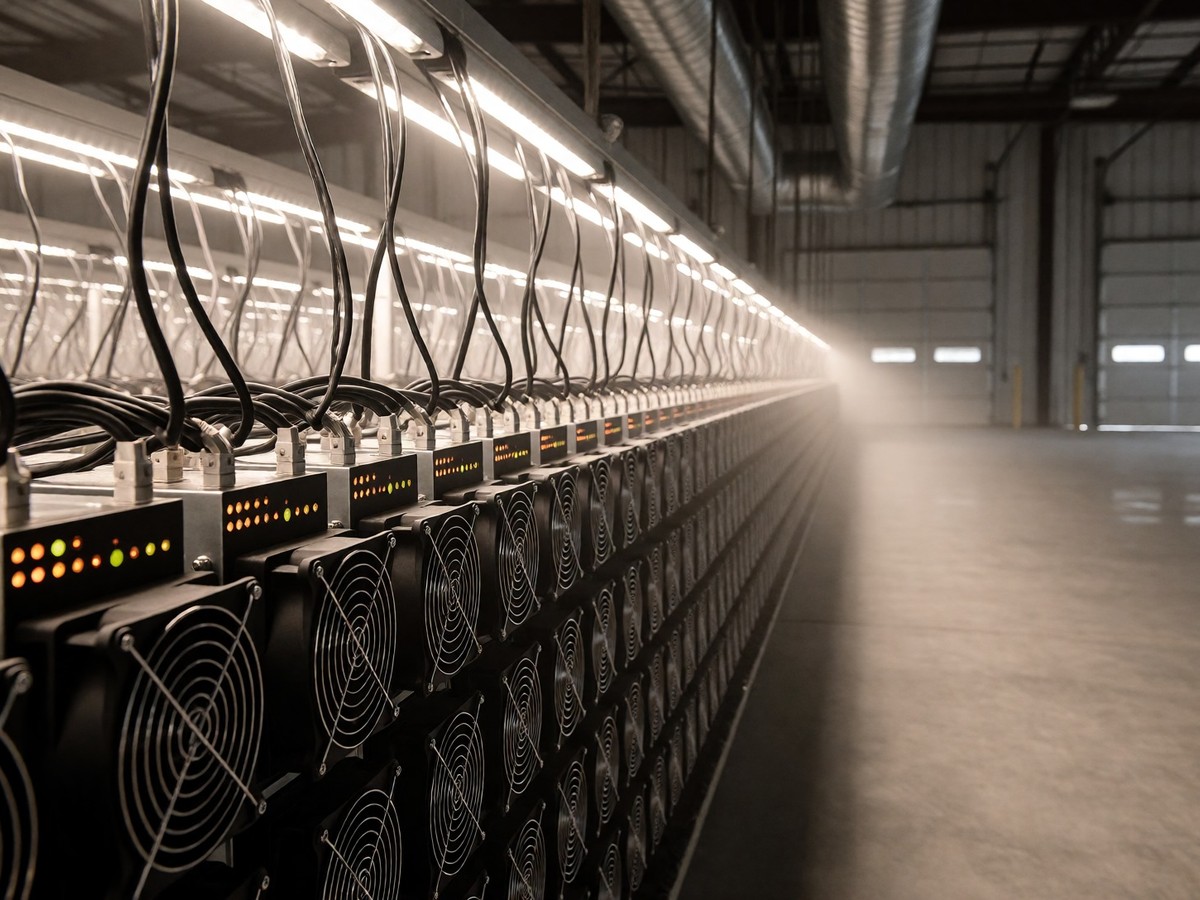
Massive Georgia infrastructure
CleanSpark operates over 400 MW of infrastructure in Georgia. The Washington campus provides 86 MW of power capacity. This site involved a total investment of over $100 million. CleanSpark acquired the 36 MW campus in 2022 for $25.1 million, which included existing infrastructure and machines. Phase two of the Washington site has a 50 MW capacity and includes 15,000 mining machines. About 10,500 of those machines are already in operation. This expansion increased the company’s compute power by 1.8 EH/s, helping them reach over half of their 16 EH/s target. The company also manages an 80 MW facility in Sandersville. Expansion plans for the Sandersville site include a 150 MW increase to reach 230 MW. CleanSpark also bought a turnkey campus in Dalton for $9.3 million. These sites increase the company’s capacity after its 50 EH/s milestone reached in mid-2025. The company also operates a 20 MW facility in Norcross that uses immersion cooling. This immersion method uses a synthetic hydrocarbon compound to cool machines. CleanSpark uses low-carbon energy sources for over 90% of its energy mix.
Efficiency dictates survival.
2026 mining economics
Bitcoin mining profitability in 2026 relies on machine efficiency and energy costs. The April 2024 halving reduced the block reward from 6.25 BTC to 3.125 BTC, cutting miner revenue in half overnight. This event compressed margins across the network. In July 2026, hashprice sat at roughly $29 per PH/s/day. While the network reached 0.96 ZH/s in July 2026, the decline in hashprice to $29 per PH/s/day forces many inefficient miners to shut down their operations immediately. You know that electricity costs dictate success.
The industry faces high competition because the network difficulty adjusts every two weeks. When more machines join the network, the revenue per terahash falls. In 2026, difficulty reached historically high levels because the network hashrate surpassed 1 ZettaHash in 2025. This makes low energy costs the ultimate survival filter. Many miners begin shutting down when hashprice drops below $35 per PH/s/day.
Large scale mining facilities prioritize hardware that maintains stable output under heavy loads. Selecting equipment is more than a procurement task because it involves long term energy management. A machine with lower joules per terahash uses less electricity for the same hashrate. This efficiency difference creates a massive cost gap between competitors. Most industrial operators focus on the total cost of ownership rather than just the initial price. A 10 J/TH miner produces roughly twice as much Bitcoin per dollar of power as a 20 J/TH miner.
| Hardware Model | Efficiency (J/TH) | Breakeven Power ($/kWh) |
|---|---|---|
| Antminer S21 XP | < 15 | $0.088 |
| Antminer S23 Hydro | < 15 | $0.124 |
| Older Air Miners | 17.5 | $0.070 |
The low power advantage
CleanSpark holds a significant edge. The 4-cent power deal from the Tennessee Valley Authority fundamentally shifts the margin for Georgia operations. Efficient hardware like the Antminer S21 XP breaks even at $0.088 per kWh. Older machines need electricity below $0.055 per kWh to remain viable. Residential power in the U.S. costs between $0.16 and $0.20 per kWh. This makes home mining a losing proposition.
The 100 EH/s expansion scale changes the economic profile of the company. Low power rates allow the company to maintain margins even when hashprice stays low. A difference of just $0.02 per kWh determines if a farm remains profitable or operates at a loss. Professional hosting in the industry typically runs at $0.07 to $0.08 per kWh. The 4-cent rate from the Tennessee Valley Authority provides a massive cushion against the rising difficulty that forces many operators to shut down when hashprice falls.
Residential rates are much higher.
The math remains simple.
Power is everything.
Will this delta widen?

