
 Bitcoin News
Five Ocean Mining contributors drive 12% hashrate shift from Foundry

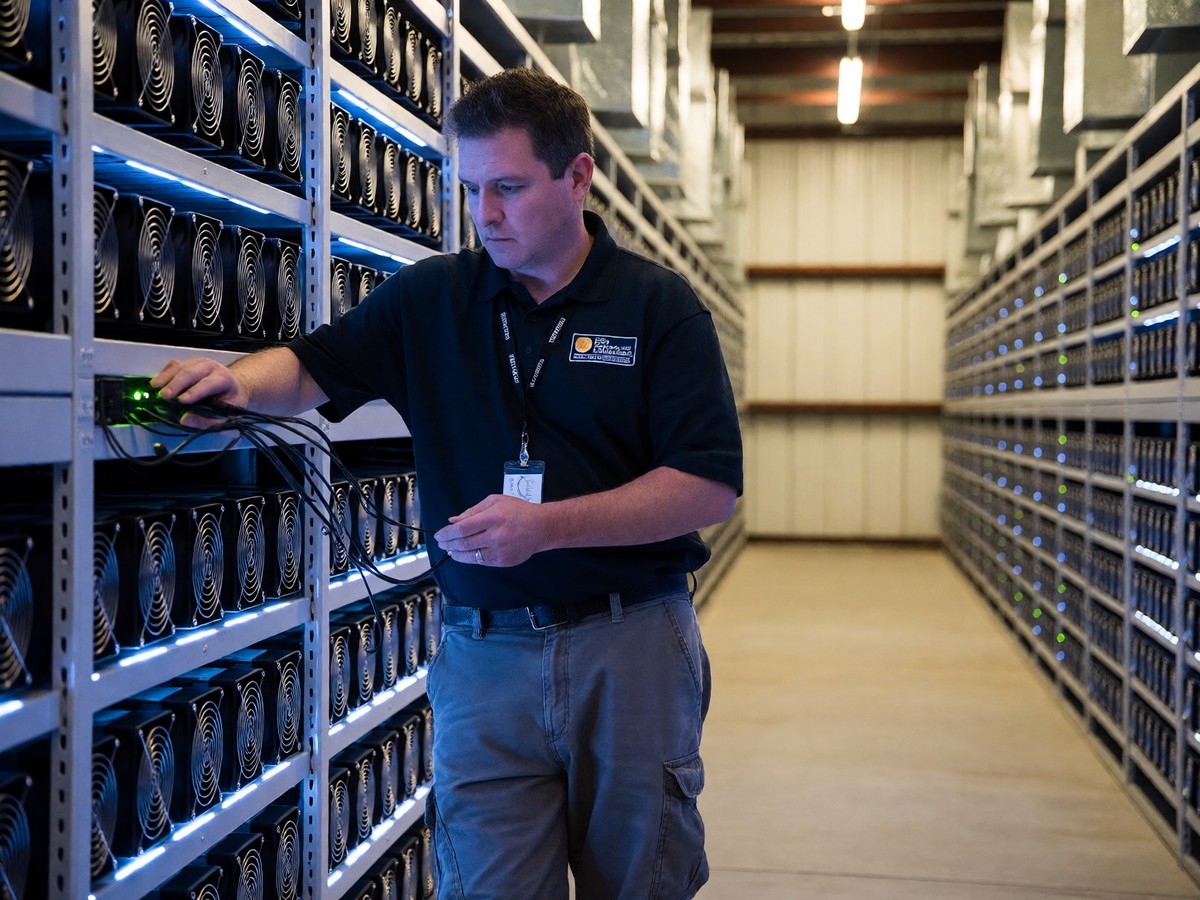
The Concentration of Network Hashrate
Foundry USA is the largest Bitcoin mining pool in 2026, holding approximately 24% of the network hashrate. This US-based pool is backed by Digital Currency Group. It provides daily FPPS rewards and requires identity verification and address whitelisting. Large-scale operations in North America prefer this pool because of its US-based infrastructure. AntPool is the second-largest pool in 2026 with around 21% of the network hashrate. Bitmain operates AntPool and bundles it with its ASIC product line. Miners can choose between FPPS at 2.5% or PPLNS at 0%. F2Pool is one of the oldest pools and holds around 16% of the network hashrate, running FPPS at 4% and PPLNS at 2%. Its servers are distributed across global regions to keep latency low. ViaBTC is an independent pool with strong adoption in Russia and Central Asia, providing PPS+ at 4% or PPLNS at 2%. It controls around 9% of the network hashrate. SpiderPool has grown to around 7% of the network hashrate, running FPPS at a standard 4% fee. MARA Pool is a private pool operated by Marathon Digital Holdings. It controls around 6% of the network hashrate. Outside operators cannot route hashrate to MARA Pool. Luxor is a US-based pool with 3.5% of the network hashrate. It provides FPPS payouts and is SOC 2 Type 2 certified. Binance Pool sits at around 2% of the network hashrate. It runs FPPS at 0.5% and requires KYC. BraiinsPool holds 1.18% of the network hashrate. It runs FPPS at 2.5% and PPLNS at 0%. The seven-day average hash rate for the Bitcoin network was 915.8 million TH/s as of September 26. This is the lowest level for the network since September 3. The network difficulty is 132.76 trillion at block 969,078.
Ocean and the Decentralized Infrastructure
Ocean is a non-custodial mining pool that uses the TIDES payout system to pay miners through coinbase transactions. The TIDES payout system provides an auditable rolling window that covers the last eight blocks of network difficulty to ensure that every single miner receives the exact and full pro rata portion of their contributed hashrate. This system is not a PPLNS or FPPS model. Ocean is operated by BitcoinOCEAN LLC, which is a subsidiary of Mummolin, Inc. The pool supports the DATUM protocol to let miners construct their own block templates. This protocol is a Stratum V2 extension that allows miners to run a local Bitcoin full node and DATUM Gateway. The gateway source is open at the GitHub repository for the project. Ocean is a small player with a hashrate of 525 ph/s. It successfully mined block number 823,129 on a Wednesday morning in 2026. The block reward was 7.412 bitcoins. The block contained 1 inscription and 54 op_returns. The filtering cost approximately 0.144 BTC in fees. This cost was an 11.03% reduction in fees or a 2% reduction in total block reward. Mummolin, Inc. announced that its subsidiary completed SOC 1 Type 2 and SOC 2 Type 2 examinations. These reports confirm the control design and operating effectiveness of the internal systems at Ocean. Does the adoption of DATUM sufficiently curb the control of large operators over transaction selection?
| Pool | Payout Method | Fee Structure | Non-custodial |
|---|---|---|---|
| Foundry USA | FPPS | Negotiated | No |
| AntPool | FPPS / PPLNS | 2.5% / 0% | No |
| F2Pool | FPPS / PPLNS | 4% / 2% | No |
| ViaBTC | PPS+ / PPLNS | 4% / 2% | No |
| Ocean | TIDES | 0% to 2% | Yes |
| BraiinsPool | FPPS / PPLNS | 2.5% / 0% | No |
Leadership Shifts and New Projects
Luke Dashjr resigned as chairman, chief technology officer, and director of Ocean on August 29. Mummolin repurchased all of his equity during this departure. The split was mutual and was driven by different visions for the future of Bitcoin mining following recent protocol developments. Dashjr will launch a new project called CONVOY to continue his work to decentralize Bitcoin mining. Dashjr helped launch Ocean in 2023 and previously founded Eligius. Ocean raised $6.2 million in a 2023 seed round led by Jack Dorsey. The company is built to provide decentralized mining infrastructure. In April 2025, Tether committed mining hashrate to Ocean from operations in Africa. No change to that commitment occurred after Dashjr left. You should consider if the technical roadmap for Ocean changes because of this leadership exit. The dominance of a few massive mining pools is a direct threat to the decentralization of the Bitcoin network.
The Economic Realignment of Mining
The Bitcoin network is navigating a structural transition as mining companies repurpose electrical capacity for Artificial Intelligence. Large operators like Riot Platforms, Core Scientific, and MARA Holdings move power to serve the demand for machine learning training and Large Language Model inference. This movement is a strategic pivot. The seven-day average hash rate for the Bitcoin network fell by 34.86 million TH/s as of September 26. Bitcoin’s mining difficulty is 132.76 trillion, which is about 15% below the November 2025 peak of 155.97 trillion. The current difficulty is a proxy for the price of electricity. When the price of electricity is high, the difficulty is high. The US hosts roughly 37% of global hashrate on the Texas and Wyoming grids. In Texas, the ERCOT grid experiences strain during summer heat waves. Miners use the Four Coincident Peak program to curtail power during peak grid stress. This program incentivizes miners to move capacity to enterprise AI clients. This shift reduces the flexible load on the grid. The hashprice was near $40 per petahash per day in late September. This is an increase from the $27.66 low in June 2026. The 2026 difficulty drop is a structural realignment. It differs from the 2018 bear market when difficulty fell because the price of Bitcoin dropped. In 2026, the drop is driven by the reallocation of computational infrastructure.