
 Bitcoin News
CleanSpark Wyoming expansion and renewable energy myths

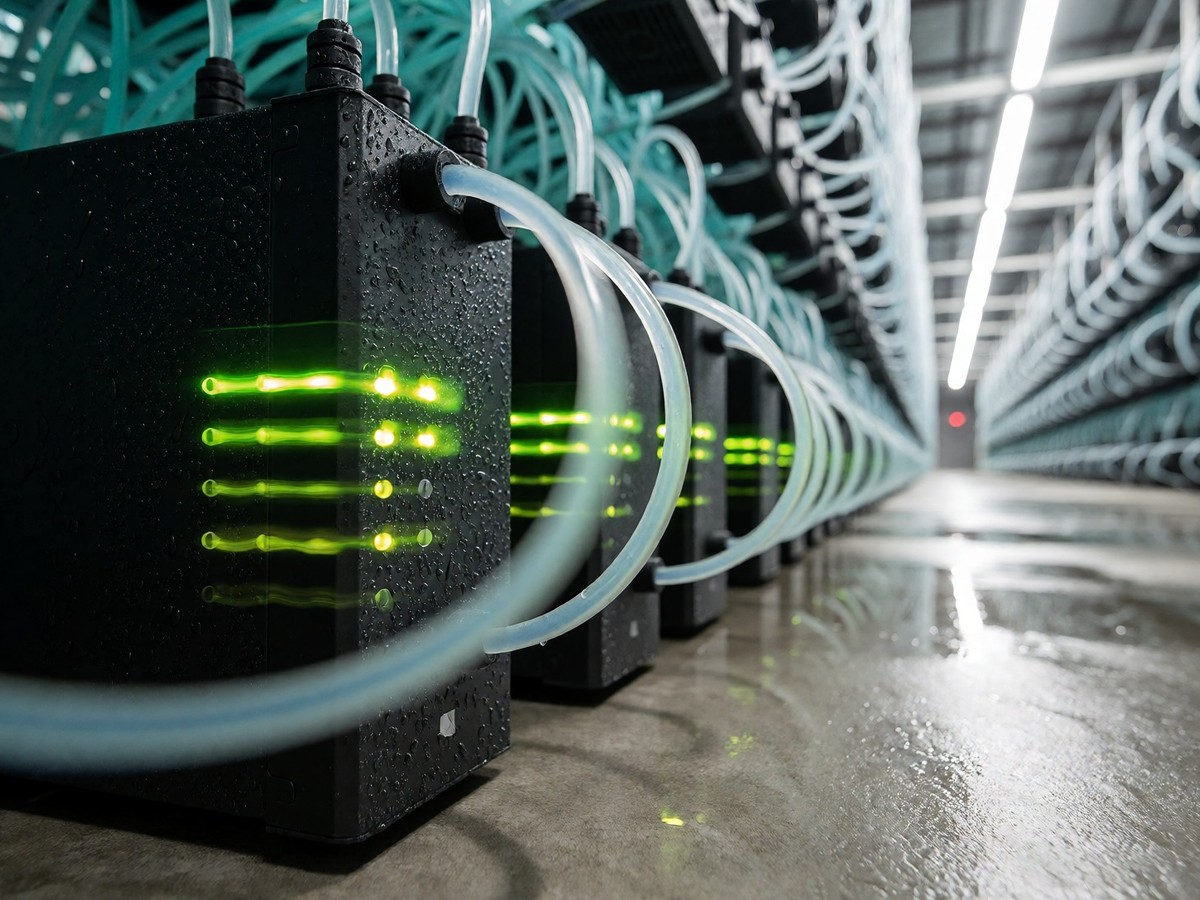
CleanSpark manages 1.8 GW of power, land, and data centers across the United States. The company recently expanded its Wyoming presence by completing an acquisition of a 30 MW Bitcoin mining site in Cheyenne. This facility uses immersion cooling and utilizes S21 immersion XP machines. CleanSpark expects this site to add over 2 EH/s to its hashrate once it becomes operational. The company also progressed on real estate for a second Wyoming site that provides an additional 45 MW and 3 EH/s. I find the expansion into Wyoming logical because the state supports the industry through the BITCOIN Act.
Metric
Value
Wyoming Site 1 Capacity
30 MW
Wyoming Site 2 Capacity
45 MW
Site 1 Expected Hashrate
2 EH/s
Site 2 Expected Hashrate
3 EH/s
Total Wyoming Contracted Capacity
75 MW
Debunking the energy hog myths
Bitcoin mining consumes 0.5% of global electricity according to the Cambridge Centre for Alternative Finance. This usage results in annual greenhouse gas emissions of 39.8 Mt CO2, which equals 0.08% of global emissions. Daniel Batten of the Digital Assets Research Institute reports that 56.7% of the Bitcoin network uses sustainable energy. This figure rose from 34% in 2021. Miners seek cheap renewable energy because it lowers costs. Wind and solar energy often produce excess power during times of low demand. Miners act as a buyer of last resort to prevent this energy from going to waste.
The industry provides grid stability through demand response. Miners can shut down power instantly when grid operators face stress. This flexibility helps avoid the need for gas peaker plants. In Texas, this capability saved $18 billion. The efficiency of hardware also changes the energy profile of the sector. The Bitmain Antminer S21 XP+ Hyd produces 500 TH/s while consuming 5,500W. This machine reaches an efficiency of 11 J/TH. CleanSpark uses a fleet with a peak efficiency of 16.07 J/Th as of August 31, 2026.
Addressing the pollution claims
Critics claim CleanSpark uses fossil fuels despite its sustainability goals. A New York Times and WattTime investigation found that the Sandersville site used 72 MW of electricity, with 91% coming from fossil fuels. This resulted in 314,000 tons of CO2 emissions per year. CleanSpark manages a portfolio of 1.8 GW and claims its energy mix was 94.02% clean energy from October 2021 to September 2022. The company uses the Georgia Simple Solar program to buy renewable energy credits. Researchers argue that buying these credits does little to drive energy transitions or offset emissions.
Noise pollution remains a problem for residents living near mining facilities. A 2024 study near Hood County, Texas, recorded maximum noise levels of 59 dBA. Residents in Adel, Georgia, report constant noise from Bitcoin mines. This noise can exceed the 70 decibel recommendation. A 2025 study in Nature Communications found that demand from 34 large U.S. bitcoin mines increased PM2.5 pollution. This exposure affects 1.9 million people in metropolitan areas like the Houston – Austin corridor. CleanSpark operates a 20 MW site in Norcross that uses immersion cooling to reduce noise. This method uses synthetic oil to cool computers instead of relying on fans. Can companies resolve these local health issues through better site selection?
CleanSpark produced 593 bitcoin in August 2026. The company holds 13,703 bitcoin as of August 31, 2026. Its operational hashrate reached 50 EH/s on that date. The company also manages 808 MW of utilized power. CleanSpark works with ERCOT and the PUCT in Texas to satisfy regulatory audits. The company received notice for conditional classification for 585 MW of capacity to receive batch zero baseload designation. It also received notice for 300 MW to receive batch zero studied load designation.