 Bitcoin News
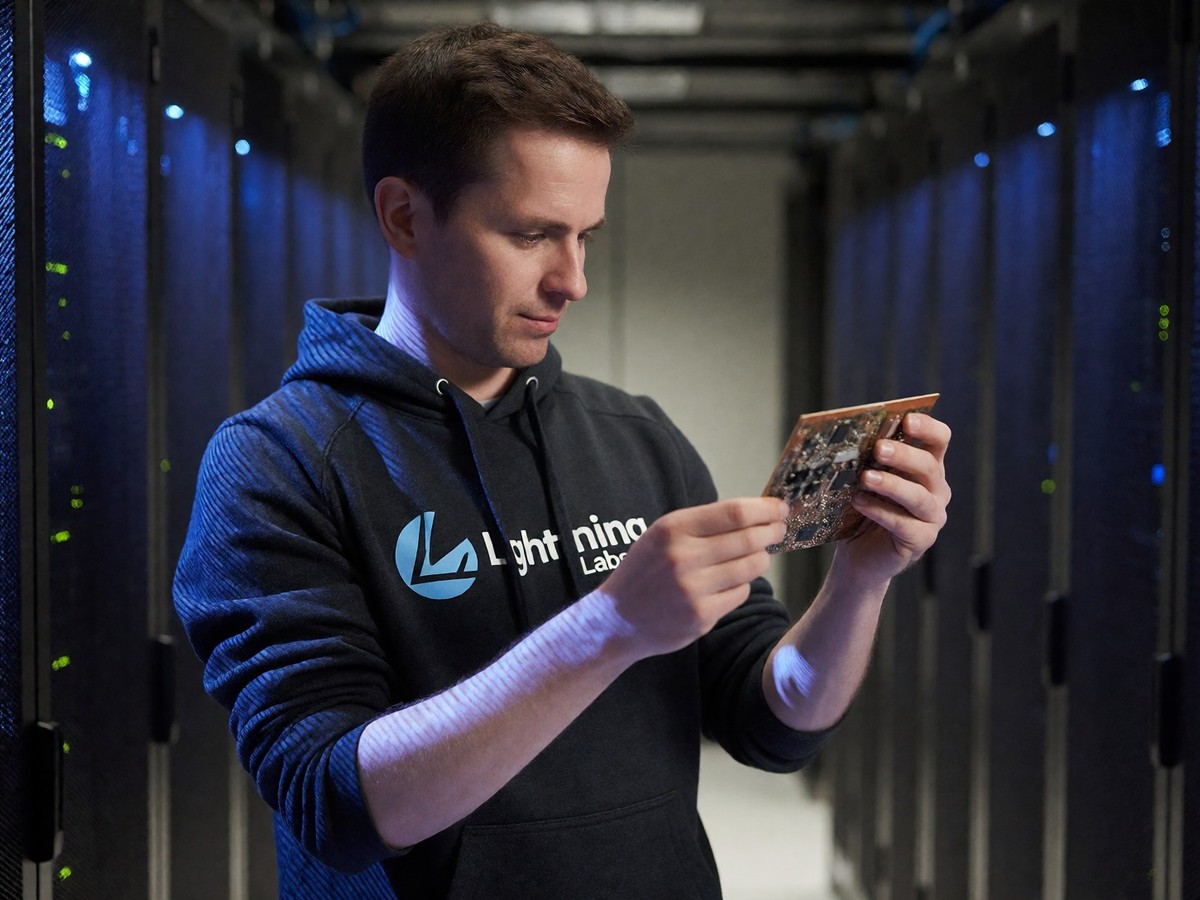
Five Lightning Labs engineers behind the 45,000 TPS Taproot Assets

The v0.8 release and Taproot integration
Lightning Labs engineers released Taproot Assets v0.8 in June 2026. This update enables the transfer of stablecoins like USDT over the Lightning Network. Taproot Assets is the most functional way to move assets over Lightning. Because the protocol uses Taproot to embed asset metadata within existing Bitcoin outputs, Schnorr signatures improve scalability by allowing signature aggregation. The system relies on a Merkle-Sum Sparse Merkle Tree to prove that the total supply remains constant during transfers. Elizabeth Stark leads Lightning Labs as CEO. Following a trademark dispute with Tari Labs, Taproot Assets rebranded from Taro in May 2023. The protocol allows developers to integrate assets alongside BTC in both on-chain and Lightning applications. Lightning Labs raised a $70 million Series B to build Lightning Network infrastructure. The project reached mainnet alpha with version 0.3 in October 2023. Version 0.4 added Lightning Network integration in July 2024. The protocol uses Bitcoin as a universal routing currency to solve liquidity fragmentation.
Technical mechanics of asset transfers
The protocol manages asset data through off-chain Universes. These servers index transaction data and serve proofs to holders. Participants bear the cost of storage and verification. To check if an asset remains valid, a user verifies its lineage from the genesis output. This verification process uses a communication system called the gossip layer. Edge nodes use the Request for Quote protocol to negotiate exchange rates for asset-to-BTC conversions. These nodes compete on fees, including routing fees, swap fees, and spreads.
| Backup Mode | Description |
|---|---|
| Raw | Exports complete proof files |
| Compact | Strips fields recomputable from the blockchain |
| Optimistic | Omits proofs and fetches them from a universe federation server |
The v0.6 release allowed receivers to use up to 20 inbound asset channels. Version 0.7 added multi-path payment support so users can split a single payment across multiple channels. In the v0.8 release, edge nodes can delegate quote orchestration to an external engine. This engine handles pricing, hedging, and acceptance policy. RFQ orders can carry explicit limit-price bounds and minimum fill sizes. When a receiver creates an invoice, their edge node requests a price quote from connected peers. These quotes are time-limited to protect both parties from price volatility.
Scaling the Lightning Network
Lightning Labs engineers built the Taproot Assets SDK to simplify application development. This Go-based library maps protocol primitives to common operations. You should know that the daemon requires version 0.8.0 or newer to handle group-key-aware records. The Taproot Assets SDK replaces raw protocol identifiers with a single AssetRef value, which is a self-verifying string that developers store, pass around, and expose over their own APIs to manage asset identity. The protocol handles both fungible and non-fungible assets.
One drawback involves the linear growth of proof files because every transfer appends to the proof chain. This increases the bandwidth and storage requirements for validation over time. Does the network scale effectively if proof sizes continue to grow? The v0.8 release improves auditability for forwarding history and speeds up proof verification. The protocol differs from RGB, which is a full smart contract platform. It also differs from Runes, which stores token data in OP_RETURN outputs on the base layer. The current Lightning Network capacity exceeds 4,900 BTC and contains more than 45,000 channels. The network serves users in emerging markets including Nigeria and Brazil.