Bitcoin News
CleanSpark infrastructure revenue and mining margins

Sandersville Lease Economics
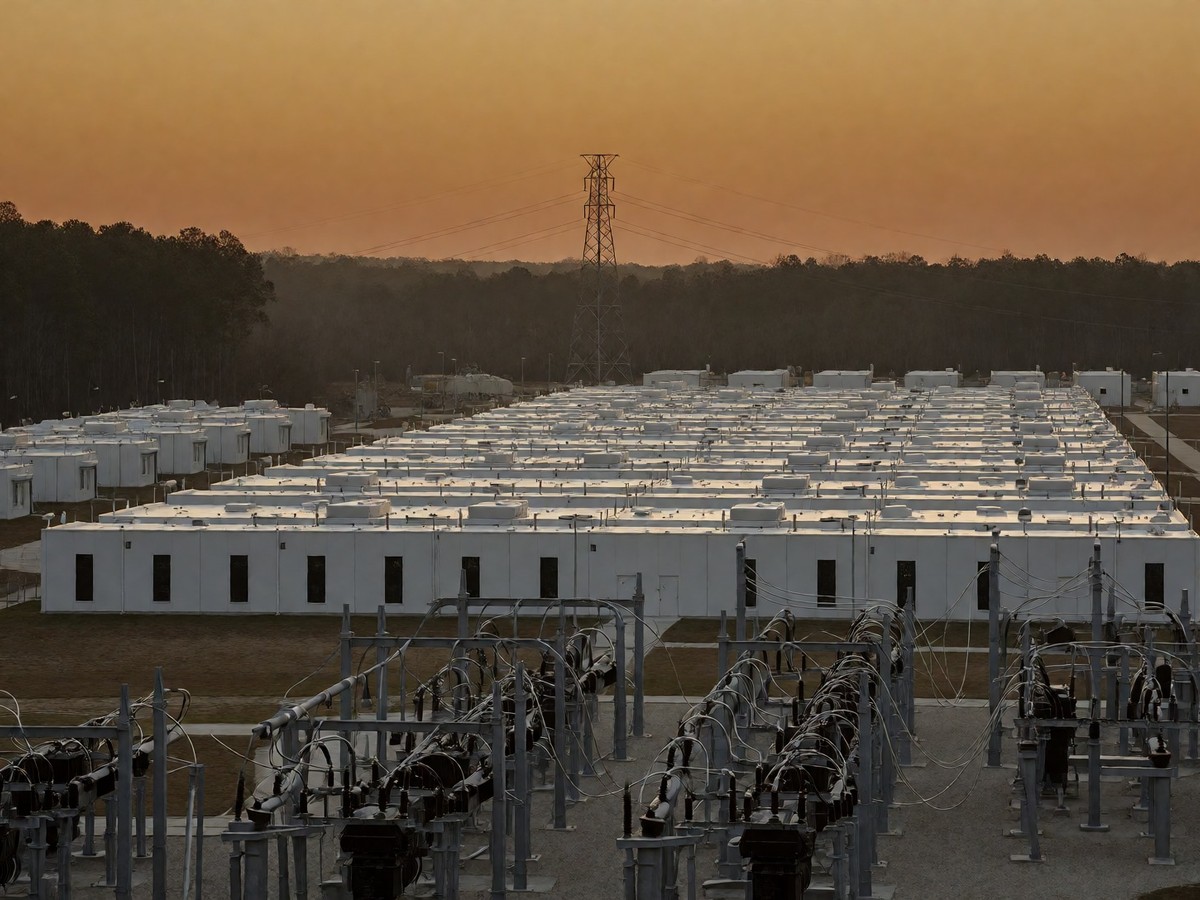
CleanSpark secures $6.6 billion in contracted revenue through a 20-year triple-net lease at its Sandersville, Georgia, campus. This agreement provides 175 MW of critical IT load to a high-investment-grade global technology company. The facility has 250 MW of gross power capacity. This contract yields an average annual Net Operating Income contribution of $330 million. Because the tenant assumes responsibility for maintenance, taxes, and insurance, the company expects Net Operating Income margins near 100%. The total contract value expands to $11.6 billion if the tenant exercises two five-year extension options. Landlord project costs for the buildout reach $10 million to $12 million per megawatt of critical IT load. Management expects the first data hall to be ready in the fourth quarter of 2027. The company continues to mine Bitcoin at the site until power transfers to the high-performance computing halls. The company uses the tenant’s preferred mechanical, electrical, and plumbing manufacturers to reduce design risks and supply chain bottlenecks. This investment follows the transition from an energy company to a bitcoin mining company.
The first data hall arrives in late 2027.
Texas Expansion and Competition
The Sandersville tenant holds an exclusivity window for the 885 MW Texas portfolio. This portfolio includes 718 acres across two locations in the Houston region. The Sealy campus covers 271 acres and supports 285 MW of gross capacity via a CenterPoint Energy Facility Extension Agreement. The Brazoria campus covers 447 acres and supports 300 MW of initial load with potential expansion to 600 MW by mid-2028. This Brazoria site includes transmission-level approvals that enable a phased rollout. These assets provide access to the ERCOT power market. CleanSpark manages 1.8 GW of contracted power. This amount exceeds the capacity of MARA Holdings, which has an operational hashrate of 72.2 EH/s but faced $40,047 per Bitcoin in on-site energy costs. Unlike Riot Platforms, which faces regional regulatory frictions in Texas, CleanSpark utilizes its power portfolio to secure long-term contracts. Core Scientific remains an early leader in AI hosting but faces execution risks regarding legacy site retrofits.
Texas sites expand capacity.
Mining and Financial Performance
Mining margins faced pressure after the 2024 halving. Hashprice fell to $29 per petahash per second per day in July 2026. CleanSpark reported a $239.8 million GAAP net loss for the fiscal third quarter ended June 30, 2026, primarily because of massive non-cash, mark-to-market accounting adjustments on held Bitcoin and valuation losses on Bitcoin posted as collateral. Revenue for that period reached $138 million, a 30.5% decline from the $198.6 million reported in the prior year. The company holds 13,931 Bitcoin. The company carries $1.789 billion in total debt. A $1.15 billion portion of this debt consists of a zero-interest convertible note maturing in 2032. Total liquidity reached $917 million as of June 30, 2026, which includes $20.6 million in cash and Bitcoin valued at $814.9 million. The company’s total Bitcoin holdings were 13,924 as of June 30. The average price per bitcoin sold was $66,133 per unit. The operational hashrate reached 50 EH/s as of July 31, 2026. The deployed fleet includes 230,507 machines. The peak efficiency of the deployed fleet reached 16.07 Joules per Terahash. The industry average production cost reached $77,000 per Bitcoin. The total Bitcoin production reached 4,310 in 2026 as of July 31. Average daily production reached 18.91 as of July 31, 2026. The peak single day production was 20.77. You should monitor the $1.15 billion debt.
Will expansion succeed?