 Bitcoin News
Marathon Digital’s Paraguay hydroelectric expansion and mining shifts

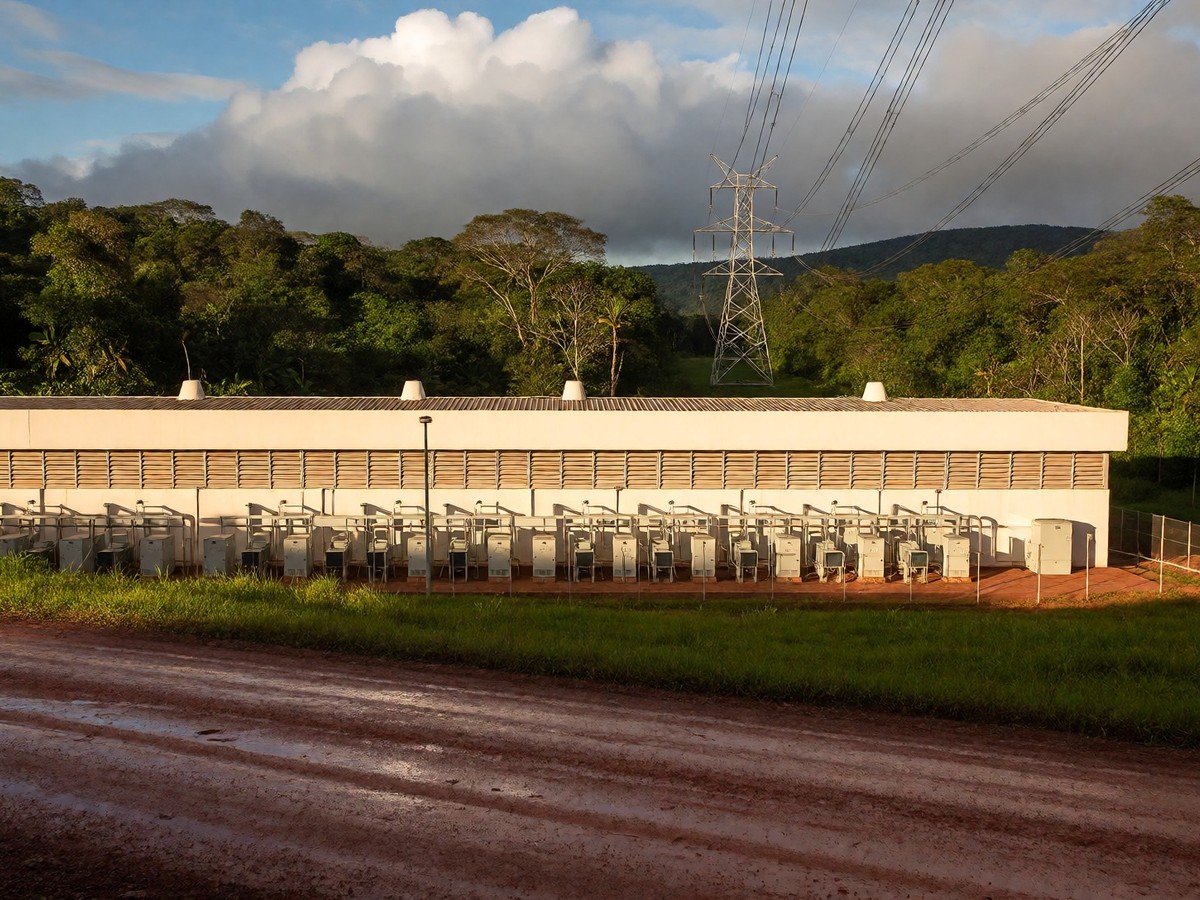
Marathon Digital and Penguin Infrastructure Holding started a 27 megawatt Bitcoin mining project in Paraguay. This project uses renewable energy from the Itaipu Dam, which is the second largest hydroelectric dam in the world based on annual production. The project uses the 32 terawatt hours of annual energy surplus produced in Paraguay. The first phase of the project finishes in November and provides 7 megawatts to run 0.3 EH/s of Marathon miners. The second phase finishes in 2024 and provides 20 megawatts to run 0.8 EH/s of miners. This project is the first Latin American venture for Marathon and its second international expansion. Marathon previously launched a pilot project in Utah using methane gas from landfills. Fred Thiel, the CEO of Marathon, manages these international expansions to reduce dependence on U.S. facilities. Marathon reported a 467% surge in Bitcoin production last year, reaching 3,490 BTC in the third quarter of 2023. The company currently holds a 19.2 EH/s hash rate. The Itaipu Binational plant, a joint venture between Paraguay and Brazil, produced more than 3,094,078 GWh since 1984. Between January and July 2025, the plant transferred $303 million to the Paraguayan state. This total includes $150 million in royalties and $110 million in energy cession payments. Another $43 million went to the National Electricity Administration (ANDE).
HIVE Digital Technologies expands its capacity in Paraguay through several phases of hydroelectric infrastructure. In January 2025, HIVE bought a 200 megawatt site in Yguazu from Bitfarms for $56 million. This purchase included the completion of Phase 2, which provides 18 EH/s of capacity. HIVE targets 25 EH/s by the end of 2025 and aims for 35 EH/s globally by 2026. The company currently produces over 8.5 Bitcoin per day. HIVE also plans a third 100 megawatt phase at the Valenzuela site. The company already energized the transformers for this Phase 3 expansion. HIVE uses Bitmain S21+ hydro units and dry-cooler technology to optimize efficiency in the local climate. Bitfarms also expands its Yguazu facility with 100 megawatts of clean hydropower. Bitfarms started construction in March 2024 and expects to increase its managed capacity from 428 megawatts to 528 megawatts by 2025. Bitfarms secures electricity at a fixed rate of $0.039 per kilowatt-hour. This fixed rate protects the company from energy price fluctuations.
The Bitcoin network difficulty fell to 125.81 T on August 31, 2026, which is a 19.34% decrease from the 155.97 T record that the network reached in late October 2025 after several negative difficulty adjustments in the region. The network difficulty changes every 2,016 blocks. In February 2026, difficulty fell by 11.16%. In March, it fell by 7.76%. In June, the difficulty fell by 10.09%. In July, it fell by 5.00% and 0.74%. On August 23, 2026, the difficulty fell by 1.31%. A falling difficulty means a single terahash produces more Bitcoin. Specifically, a 10.09% drop on June 14 meant a miner could expect 11.22% more Bitcoin per unit of computation. However, this does not guarantee profit because electricity and hardware costs remain high. Miners with equipment in the 25 to 38 J/TH range face the most risk. These fleets are particularly exposed to economic shutdowns. If the network difficulty remains volatile, will these marginal miners stay online? You know that ASIC efficiency and the price per kilowatt-hour determine who actually wins during these adjustments.
The mining industry sees a transition where power capacity moves from Bitcoin to high-performance computing. In August 2026, Riot Platforms announced a 20-year lease for 191 megawatts of IT capacity in Rockdale, Texas, which will generate approximately $9.1 billion in revenue over the initial term. CoinShares reports that listed miners announced more than $70 billion in AI and high-performance computing contracts. This reflects a change where a megawatt connected to a grid is no longer solely for SHA-256 mining. The 2021 China ban caused a 27.94% difficulty drop, but the current 2026 decline reflects different economic pressures.
| Company | Facility/Project | Capacity (MW) | Targeted Hashrate (EH/s) |
|---|---|---|---|
| Marathon Digital | Paraguay Project | 27 | 0.8 (Phase 2) |
| HIVE Digital | Yguazu | 300 | 25 (by Fall 2025) |
| Bitfarms | Yguazu | 100 | N/A |