 Bitcoin News
The history of El Salvador’s Bitcoin legal tender law

The Legislative Assembly of El Salvador passed the Bitcoin Law with a 62 to 22 vote on June 9, 2021. This decision made El Salvador the first country to adopt bitcoin as legal tender on September 7, 2021. President Nayib Bukele announced the plan during the Bitcoin Conference in Miami and claimed it would attract foreign investment and help the 70% of Salvadorans who lack bank accounts. The government set aside $150 million in cash to back the country’s bitcoin holdings. Under Article 7 of the law, every economic agent must accept bitcoin as payment when someone offers it for a good or service. The government’s decision to make bitcoin legal tender, alongside the US dollar, forced businesses to accept the cryptocurrency even though the majority of the population preferred cash for all of their daily transactions. This policy was a major departure from the 2001 Monetary Integration Act, which replaced the colon with the US dollar to achieve stability. Before this national mandate, an American advocate named Mike Peterson facilitated a $100,000 donation of bitcoin to charities in the village of El Zonte in 2019. This village became known as "Bitcoin Beach" and served as an early example of a circular economy based on cryptocurrency.
Failed adoption and public resistance
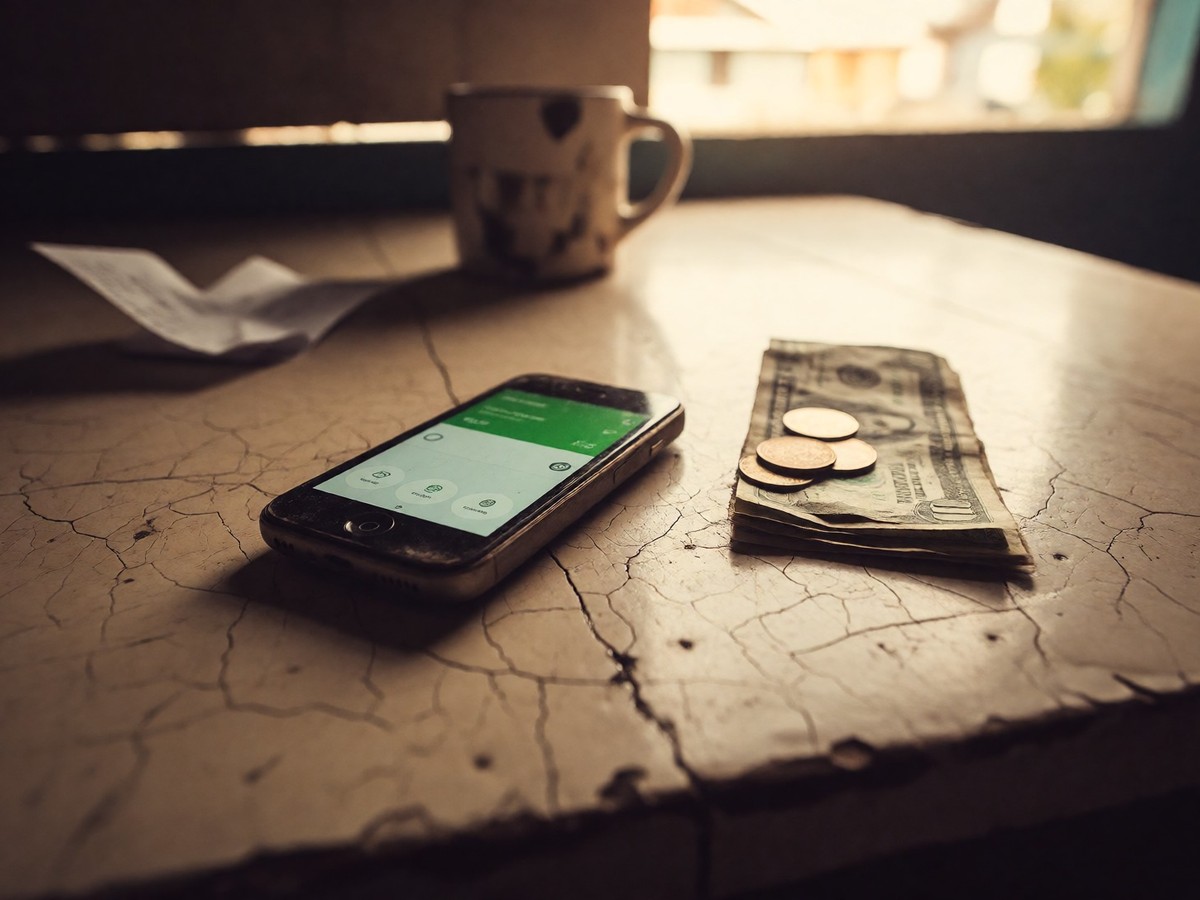
To promote the new system, the government launched the Chivo Wallet in September 2021 and gave $30 in bitcoin to every person who downloaded the app. This incentive targeted the 70% of households without bank accounts and the 90% who do not use mobile banking. However, the rollout faced immediate technical failures, including server capacity issues, identity theft, and pricing discrepancies. Most people used the app only to collect the $30 bonus.
| Metric | Value |
|---|---|
| Businesses accepting bitcoin | 20% |
| Sales via Chivo Wallet | 5% |
| Firms converting bitcoin to dollars | 88% |
| Households with no bank account | 70% |
| Households without mobile banking | 90% |
I see a massive gap between the government’s vision and actual usage. While 78% of those aware of the app tried to download it, daily use never became widespread. More than 60% of early users did not make a transaction after spending their initial bonus. Only 20% of firms accepting bitcoin actually kept the cryptocurrency, as 88% of these businesses converted their holdings into dollars. Most active users were young, male, and banked, which was not the intended target.
Public resistance was constant. In September 2021, a poll from the Central American University found that 68% of Salvadorans disagreed with the decision. Another poll from November 2021 showed that 91% of citizens preferred the US dollar over bitcoin. Protesters in San Salvador burned bitcoin machines and marched against the law. I think the government’s attempt to force a digital currency on a cash-heavy population was a mistake. Even as recently as 2022, more Salvadorans had Bitcoin Lightning wallets than bank accounts, yet adoption remained slow. By the end of 2023, only about 1.3% of wallet transfers in the country were made using cryptocurrency.
International pressure and the IMF
The International Monetary Fund (IMF) created intense pressure on the Salvadoran government to scale back its cryptocurrency involvement. The International Monetary Fund warned that the high volatility of bitcoin introduced unnecessary risks to the underdeveloped economy and created significant concerns regarding financial integrity, consumer protection, and national stability. The IMF also refused to assist with the law’s implementation because of transparency and environmental concerns. By December 2024, the government reached a staff-level agreement with the IMF to make bitcoin acceptance voluntary for private businesses. This agreement required El Salvador to reduce its budget deficit to 3.5% of GDP over three years.
The state continued to buy bitcoin despite these warnings. The government holds 6,049 BTC as of January 2025, which has a value of approximately $634 million. The administration also uses geothermal energy from the Tecapa volcano to mine bitcoin. The country has installed 300 processors to run these operations. This mining contributes to a national hash rate of 1.1 EH/s. The country’s energy landscape includes a peak baseload demand of 1.2 GW and an installed capacity of 2.5 GW. Renewable energy provides 700 MW of the supply.
The volatility of the asset caused the national reserves to lose about $22 million in early 2022. I find the decision to keep buying bitcoin while the national debt rose from $25.5 billion in 2021 to a projected $29.84 billion in 2024 to be extremely risky.
The end of the experiment
The legal tender experiment ended in early 2025. El Salvador rescinded the legal tender status of bitcoin in February 2025 after research showed it was rarely used. In March 2025, The Economist reported that the experiment was a failure that brought more costs than benefits to the economy.
The government’s push for "Bitcoin City" and "Volcano Bonds" struggled to gain any traction. Plans to build a city at the base of the Conchagua volcano using geothermal energy faced multiple delays. I find the attempt to use crypto to fund national infrastructure to be a massive miscalculation. The 2024 re-election of Bukele did not change the economic trajectory. Inflation reached 7.76% following the adoption of bitcoin, though 2024 statistics suggest authorities managed to curb that growth.
The country’s crypto reserves remain large despite the change in law. The state holds over 6,000 BTC while most citizens continue to use cash. Why did the government spend so much of the national budget on an asset that the public never truly adopted?