 Bitcoin News
North Dakota wind power shifts Core Scientific mining efficiency

Efficiency gains from new North Dakota power
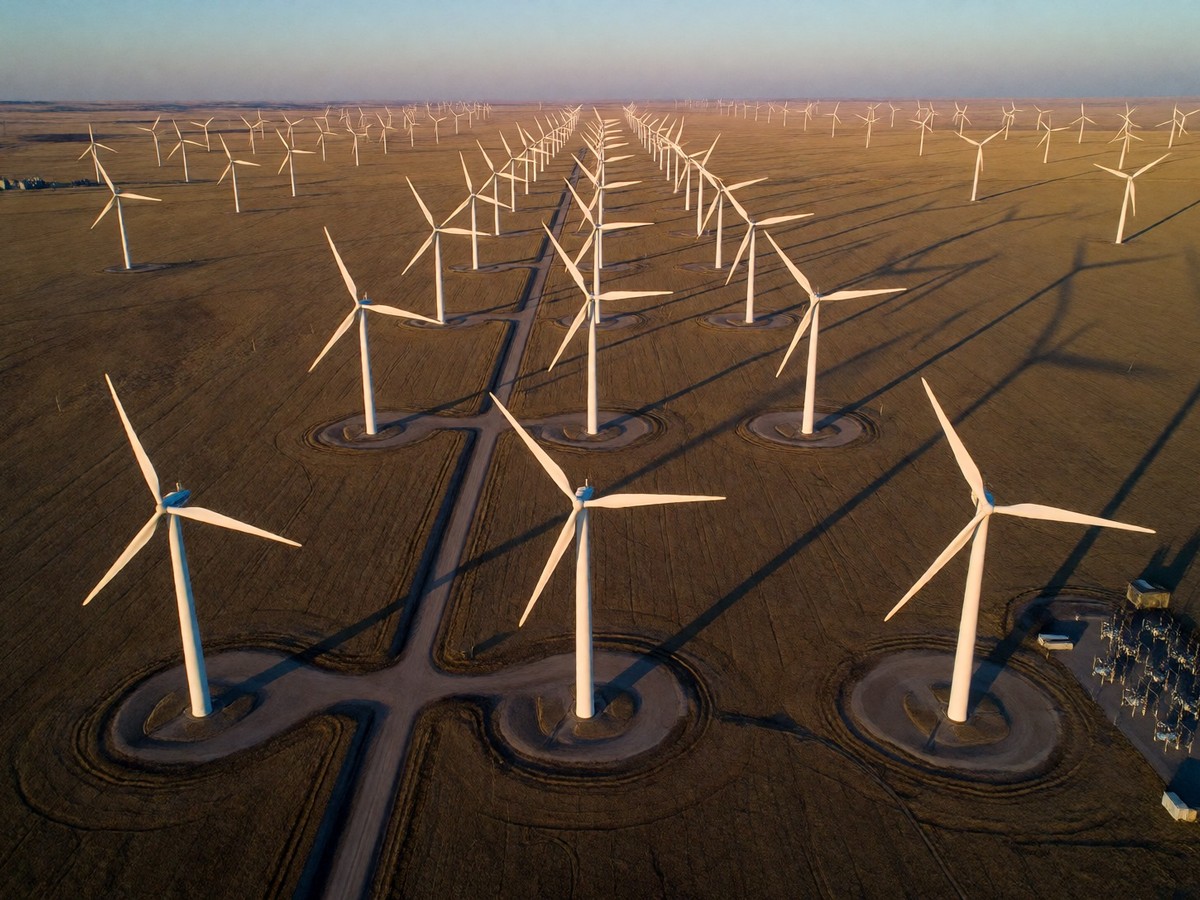
Core Scientific energized 500 megawatts of wind power in North Dakota this month. This energization pairs with a 15% hash rate efficiency gain from the deployment of S21 XP miners. I see these technical improvements attempting to stabilize self-mining output. The company operates 10 data centers across seven states. These facilities use 1.9 gigawatts of gross utility power capacity.
In July 2024, Core Scientific earned 411 bitcoin from its owned fleet of miners. The company operated approximately 172,000 owned bitcoin miners during that month. These miners produced a total energized hash rate of 20.1 EH/s. Customer-owned miners in the same period earned an estimated 110 bitcoin. This helped the company manage its post-halving strategy to maximize profitability. The total energized hash rate across all data centers was 25.3 EH/s in July 2024. I find the combination of wind power and new hardware to be a logical step for the company.
Revenue shifts toward AI infrastructure
Self-mining revenue fell 55% year-over-year to $30.1 million in the first quarter of 2026. This drop from $67.2 million in the first quarter of 2025 shows how mining revenue struggles. You already know that Bitcoin mining is sensitive to the halving event. The company mined 279 bitcoin in the first quarter of 2026, which is a 45% decrease compared to the same quarter last year. The $347.2 million loss included $266.5 million in non-cash impairment charges and another $30.8 million non-cash loss tied to changes in the fair value of warrants and contingent value rights. I find the company’s high-density colocation business to be its most effective segment.
Colocation revenue grew from $8.6 million a year earlier to $77.5 million in the first quarter of 2026. By mid-July 2026, the company reported 437 megawatts of billing customer power, which creates about $635 million in average annualized colocation revenue. This shift to AI infrastructure provides a different revenue path than traditional Bitcoin mining. The company signed a 12-year deal for 200 megawatts of infrastructure for CoreWeave in June 2024. This partnership expanded to 590 megawatts across six sites by February 2025. One colocation customer generated 67% of total revenue in the first quarter of 2026. In comparison, Riot Platforms reported fourth-quarter revenue of $647.4 million.
Comparing hardware efficiency
Upgrading the fleet involves replacing older machines with newer hardware. The S21 Pro provides 234 terahashes per second. I find the efficiency of the S21 XP helps offset the costs of energy.
| Miner Model | Energy Efficiency (J/TH) |
|---|---|
| S19 Pro | 16.5 |
| S21 Pro | 15 |
| S21 XP | 13.5 |
The S21 Pro uses 3,510 watts of power. The S21 Pro provides a 2.13x performance enhancement over the S19 Pro, which delivered 110 TH/s. The S21 Pro efficiency of 15 J/TH is better than the 16.5 J/TH of the S19 Pro. This machine has a noise level of 75 to 76 decibels and measures 450 by 219 by 293 millimeters. I find the S21 Pro to be the best balance of cost and performance.
Expansion and future capacity
Core Scientific is scaling its capacity to meet growing demand. The company is working to complete a 100 megawatt expansion of its Pecos, Texas data center. It also aims to scale its Muskogee, Oklahoma, campus to 1.5 gigawatts of gross power. This includes 1.0 gigawatt of leasable capacity. The company holds 1.3 gigawatts of leasable customer power capacity as of March 2026. I see these massive builds as necessary to support the 1.1 gigawatts of customer power already leased. The company is also expanding in Texas by adding 430 megawatts of gross power capacity and increased capacity in other regions by 300 megawatts.
The company manages growth through strategic financing. It announced up to $1 billion of strategic financing with Morgan Stanley and expanded a J.P. Morgan facility to $1 billion. It also priced $3.3 billion of senior secured notes. These funds help support the high costs of building data centers. The company ended March with $1.04 billion of liquidity. This liquidity includes $1.01 billion of cash and $37.3 million of bitcoin. Will the massive capital requirements for AI infrastructure eventually strain the company’s liquidity? I find the company’s move into AI infrastructure to be its best path forward.