
 Bitcoin News
Power and land exceed GPU demand in Bitcoin mining AI conversions

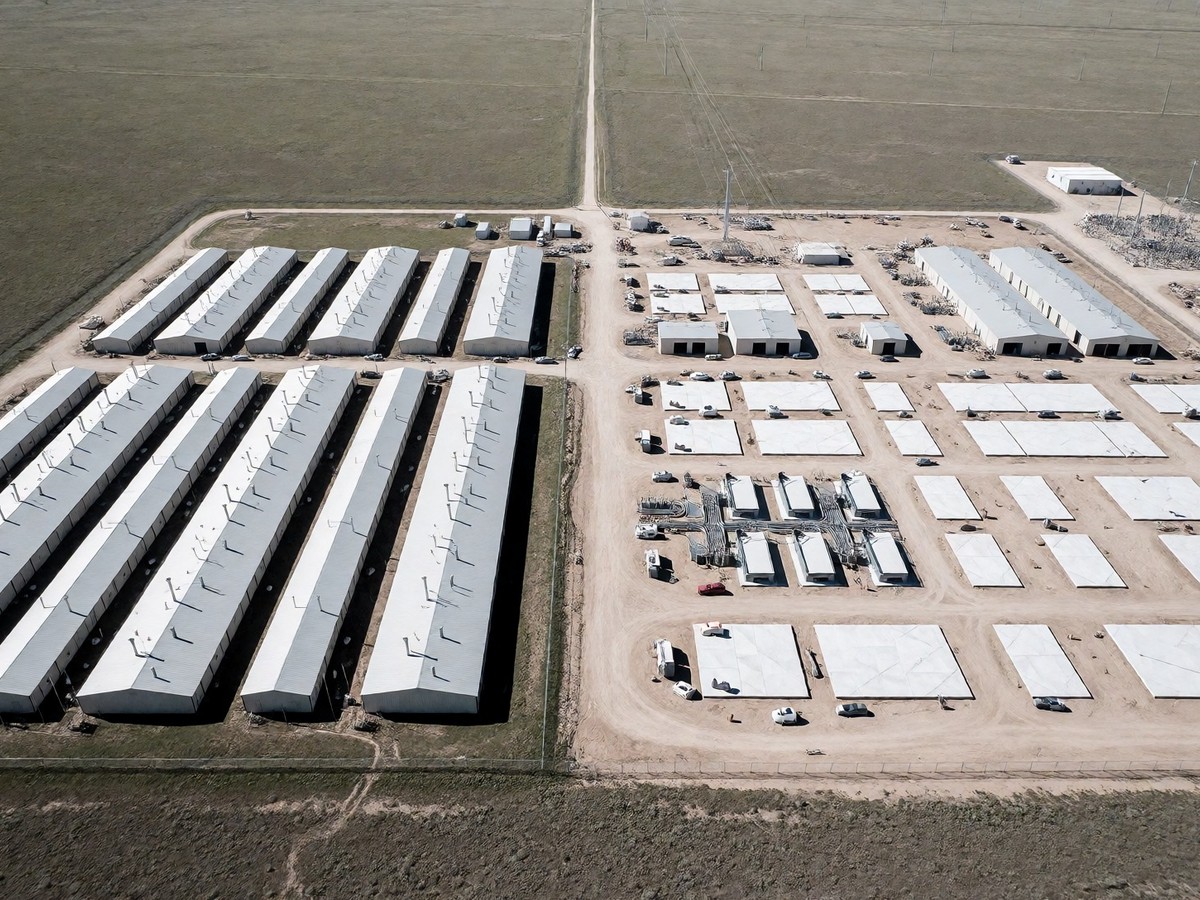
The industry abandons hashpower for power interconnection agreements. CoreWeave seeks to acquire Core Scientific for $9 billion to gain 1.3 gigawatts of power capacity across nine US sites. This move proves that infrastructure execution beats hardware procurement. Keel Infrastructure, formerly Bitfarms, redomiciled to Delaware and changed its name to focus on real estate and power. I see this as an exit from mining rather than a diversification. Most miners discard their SHA-256 ASICs because they have no value for AI workloads. The build cost for AI-ready capacity jumps to $8 million or $15 million per megawatt, compared to $700,000 or $1 million for mining. I note that what carries over from mining is the interconnection agreement, the substation, the fiber, and the land. This structural shift allows companies to leverage their grid access to capture high-margin lease revenue from AI tenants. I observe that companies like Cipher, formerly Cipher Mining, rebranded to reflect a strategic shift toward high-performance computing with a $9.3 billion contracted backlog. Bitzero plans to expand its capacity to 325 MW by 2027 to provide flexibility for alternative compute demand. This transition follows the period when the cost to mine a single Bitcoin averaged $79,995 in late 2025.
Hyperscaler backstops secure the transition
Google and Microsoft provide financial guarantees that turn lease contracts into collateral for senior secured notes. This mechanism allowed TeraWulf to use Google-backed obligations to secure financing for its Lake Mariner site. Riot Platforms secured a 20-year lease with Anthropic for 191 megawatts in Texas, which generates $9.1 billion in revenue and could reach $16.1 billion if the tenant exercises two five-year extension options. You already know that power scarcity drives these deals. IREN signed a $9.7 billion contract with Microsoft to provide 76,000 Nvidia GB300 GPUs at its Childress, Texas campus. I see a pattern where hyperscalers like Google and Microsoft provide the credit needed to fund massive capital expenditures. Companies like Hut 8 also use this model, having signed a 15-year, 245 MW lease at River Bend that is backed by Google. I observe that IREN’s contract includes a $1.9 billion prepayment from Microsoft.
| Company | Tenant | Capacity | Contract Value |
|---|---|---|---|
| Riot Platforms | Anthropic | 191 MW | $9.1 billion |
| IREN | Microsoft | 76,000 GPUs | $9.7 billion |
| TeraWulf | Fluidstack | 168 MW | $13 billion |
| Hut 8 | Anthropic | 352 MW | $7 billion |
Execution risks remain high
Most miners face a massive gap between mining costs and AI construction costs. Building AI-ready facilities requires liquid cooling and high-density racks that draw up to 120 kW per cabinet. This density makes traditional data center designs obsolete. I see companies like Bitdeer dismantle old mines rather than trying to retrofit them. Bitdeer began dismantling a mine in Wenatchee to clear the site for a 13 MW AI facility. This decision reflects the fact that mining hardware carries no salvage value for AI. The market separates miners with contracted HPC revenue from companies that only possess power pipelines. Marathon Digital remains focused on Bitcoin and lacks major AI contracts. I observe that the NVIDIA Blackwell GB200 NVL72 platform draws a massive amount of power per rack. This hardware requirement makes traditional air-cooled mining halls insufficient for the new workload. Keel’s converted 18 MW Washington site requires 190 kW per rack with liquid cooling to meet Nvidia GB300 reference designs. I note that Riot Platforms also signed a 10-year lease with AMD for 25 megawatts at its Rockdale campus. This concentration of revenue on a few tenants like CoreWeave or Fluidstack creates risk. Will these operators successfully manage the shift to continuous, high-reliability power delivery?