 Bitcoin News
TeraWulf uses low-cost carbon-free power to fuel Bitcoin and AI

Zero-carbon energy drives the mining model
Scaling for high-performance computing and AI
TeraWulf secures large contracts for high-performance computing (HPC) and AI hosting. The company signed 10-year hosting agreements with Fluidstack at Lake Mariner. These deals carry a value of $3.7 billion over the first decade and could reach $8.7 billion with extensions. Google provides a $1.8 billion lease backstop and receives warrants for 32.5 million shares, which gives it an approximately 8% equity stake. You should observe how these deals change the company’s revenue profile. The Lake Mariner campus supports 60 megawatts of energized capacity for Core42. The facility completed a 2 MW HPC/AI proof-of-concept project and is building a 20 MW liquid-cooled colocation building expected to be operational by the first quarter of 2025. The company also secured an 80-year ground lease for its Cayuga site in upstate New York. This 183-acre site provides up to 400 MW of future capacity. The company expects 138 MW of the Cayuga capacity to go online by 2026. This site will use New York’s zero-carbon power mix and electricity costs will average below $0.05 per kilowatt-hour. This site will also include 67 MW of solar power and 800 MWh of storage.
| Facility/Contract | Capacity/Value | Energy Source |
|---|---|---|
| Nautilus | 50 MW | Nuclear |
| Lake Mariner | 60 MW | Hydroelectric |
| Fluidstack Contract | $3.7B – $8.7B | N/A |
| Cayuga Site | 400 MW | Zero-carbon mix |
Financial expansion and strategic acquisitions
TeraWulf expands its portfolio through site acquisitions in Kentucky and Maryland. The company manages a total operational capacity of 4 EH/s with 34,500 next-generation miners. The company manages a massive mining fleet that provides a hash rate of 1.6 exahashes per second, which accounts for approximately 0.54 percent of the total computational power within the entire Bitcoin mining network today. Financial reports show revenue of $140.05 million but also a pre-tax profit margin of -228.4%. The firm carries a debt-to-equity ratio of 4.56 and total assets of $2.45 billion against liabilities of $2.21 billion. While the company generates 50.2% gross margin, it faces a negative ebit margin of -337.5%. In October 2024, a Talen Energy subsidiary bought the 25% stake in the Nautilus joint venture for $92 million. This transaction returned 3.4 times the initial investment to the company. The deal included $85 million in cash and 30,000 bitcoin miners valued at $7 million. In 2022, the company signed agreements to receive 44,450 miners from Bitmain and MinerVA. Some of these deliveries occurred, but others faced cancellation. The company reported $47.6 million in revenue for Q2 2025, which was a 38% increase over Q1. Adjusted EBITDA turned positive at $14.5 million during that quarter. The company ended the quarter with $3.1 billion in cash and restricted cash. It also generated $21 million from HPC leases. The company is the sixth-largest public bitcoin miner and holds a market cap of $1.8 billion.
Grid flexibility and regulatory environments
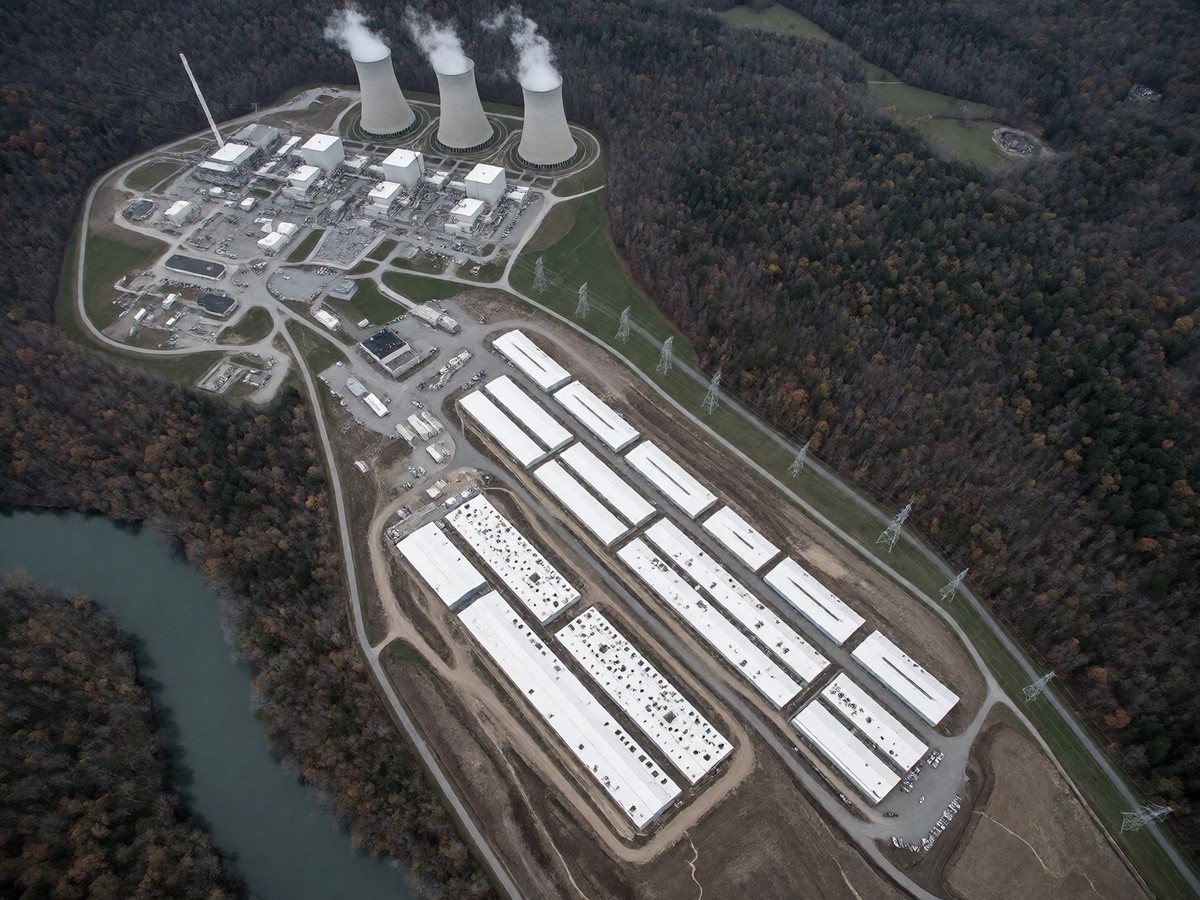
Mining operations can respond to grid fluctuations faster than traditional power plants. When grid operators need to adjust generation, they use Automatic Generation Control (AGC) to manage load. Bitcoin mining machines can shut down in less than a minute. This capability allows miners to act as a load sink during periods of high energy supply. At the Nautilus facility, the 200 megawatt capacity once drew power directly from the Susquehanna plant without entering the grid. The site sits in Salem Township, Luzerne County. Electricity costs at the site average below $0.02 per kilowatt-hour. The Cayuga site will include 67 MW of solar power and 800 MWh of storage. The grid’s response time via AGC is 15 minutes, but the mining fleet responds in seconds. Nazar Khan noted that the response time of a mining fleet is unheard of for grid operators. A typical top-of-the-line Application-Specific Integrated Circuit (ASIC) can be turned off in less than a minute. This makes a fleet of machines more responsive than a nuclear generator. In New York, a two-year moratorium on fossil-fuel-powered Bitcoin miners provides a regulatory context for the company’s renewable focus. Will the shift toward dedicated AI data centers reduce the availability of these flexible loads for local grid operators?