 Bitcoin News
Tether’s $125 billion USDT supply reacts to Cantor Fitzgerald restructuring


The Cantor Fitzgerald restructuring of the 5% Treasury yield custody fee creates new economic pressures for the $125 billion USDT supply managed by Tether. This shift forces a direct application of macroeconomic principles to the digital asset market. Macroeconomics examines how production, distribution, and consumption interact within economic systems, including how savings and investment expenditure interact. Because the management of reserves affects the total liquidity of the market, the interaction between the treasury yields provided by Cantor Fitzgerald and the operational costs of Tether dictates the economic equilibrium for the hundreds of millions of users who rely on USDT for their daily financial transactions. Microeconomics focuses on the behavior of individual agents like households and firms. This field studies human behaviour as a relationship between ends and scarce means which have alternative uses. These agents make decisions based on the interest they earn and the costs of maintaining their positions. Analysts may use positive economics to describe the actual market conditions or normative economics to advocate for how the market should function. The total supply remains dependent on these yield-driven behaviors.
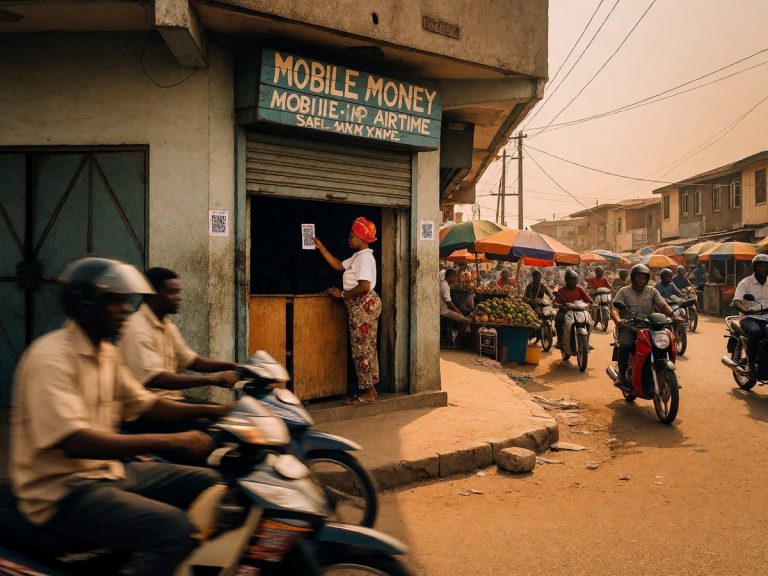
The 340% surge in emerging market remittance corridors changes the demand for digital assets. This expansion follows a period where Tether reported a market cap of $186 billion in February 2026. During the Plan BTC Forum in San Salvador, the company showed how USDT is critical infrastructure for payments and liquidity. The Tether Directory, which launched in February 2026, maps how USDT is utilized across exchanges and wallets. This directory was built in collaboration with The Grid, an API-first ecosystem intelligence platform. The demand for such assets extends to tokenized commodities. Tether Gold holdings increased 73% since the start of 2026. Physical gold backing for XAUT reached $3.44 billion during the third quarter of 2026. This rise in demand for XAUT shows how users seek to diversify their holdings using digital tokens. The influx of money through remittance channels relies on the availability of various transport protocols. These include Algorand, Celo, Cosmos, Ethereum, EOS, Liquid Network, Solana, Tezos, Ton, and Tron.
| Metric | Value or Detail |
|---|---|
| USDT Supply | $125 billion |
| Cantor Treasury Yield Fee | 5% |
| Remittance Corridor Surge | 340% |
| XAUT Physical Gold Backing | $3.44 billion |
| XAUT 2026 Growth | 73% |
| USDT Freeze (October 29) | $1.5 billion |
Circle’s USDC institutional prime rate competes with PayPal’s PYUSD merchant settlement integration. The distinction between these two products centers on the different economic needs of their users. Institutions focus on the prime rate to maximize returns. Merchants prioritize the speed of settlement to facilitate retail transactions. Rational choice theory suggests that these users act to maximize their utility when faced with scarce means and alternative uses. In this context, the "scarce means" include the liquidity available in each specific network. You should understand that the competition between these stablecoins creates a divide between yield-seeking institutions and volume-seeking merchants. Users manage network fees through the Paymaster. If a user sends tokens via a blockchain address, they must select the correct network. Tether Wallet also allows users to send assets via a Tether.me username. As an ERC20 token, USDT remains available in Ethereum smart contracts. Does the increased efficiency of merchant settlement eventually outweigh the yield advantages of institutional prime rates?
Security protocols and liquidity expansion define the operational environment. On November 5, 2026, Tether collaborated with RedStone to expand the pricing and settlement rails for assets tokenized through Hadron. RedStone provides the price and NAV feeds necessary for these issuers. This follows a period of volatility where Tether froze $1.5 billion in USDT within 30 minutes of the October 29 Binance attack. The FBI attributed the attack to North Korea. This event cut off a major source of funding for weapons programs. The platform remains fully reserved as long as the sum of all tokens in circulation stays below the value of the reserves. Every transaction requires a signature on the device. Users must also protect their 12-word recovery phrase to maintain control. Tether Wallet provides a way to restore the wallet through an encrypted cloud backup on iCloud or Google Drive.