 Ethereum News
The biggest trends in Ether.fi’s liquid restaking token economy

Ether.fi changed its business model by separating restaking exposure from its main liquid staking token. The protocol moved restaking into a separate token, weETHs, which uses Symbiotic. The original weETH now acts as a plain liquid staking token. This change follows a move away from EigenLayer, where less than 1% of assets remain restaked as of late 2026. This transition targets a full exit from EigenLayer by Q3 2026. I see this as a pivot from a restaking protocol to a consumer DeFi banking platform. The protocol integrates with Aave V4 on OP Mainnet through a whitelisted hub. This Aave V4 deployment replaces the bespoke Debt Manager and utilizes $25 million in active borrows across 16 collateral assets. The project targets $500 million in assets by the end of 2026 and includes a 20% revenue share to the Aave DAO. While the protocol captured $41 million in gross revenue in Q2 2026, it only distributed $30,000 to ETHFI holders via buybacks during that same period. I find this massive gap between $41 million in revenue and $30,000 in holder rewards troubling.
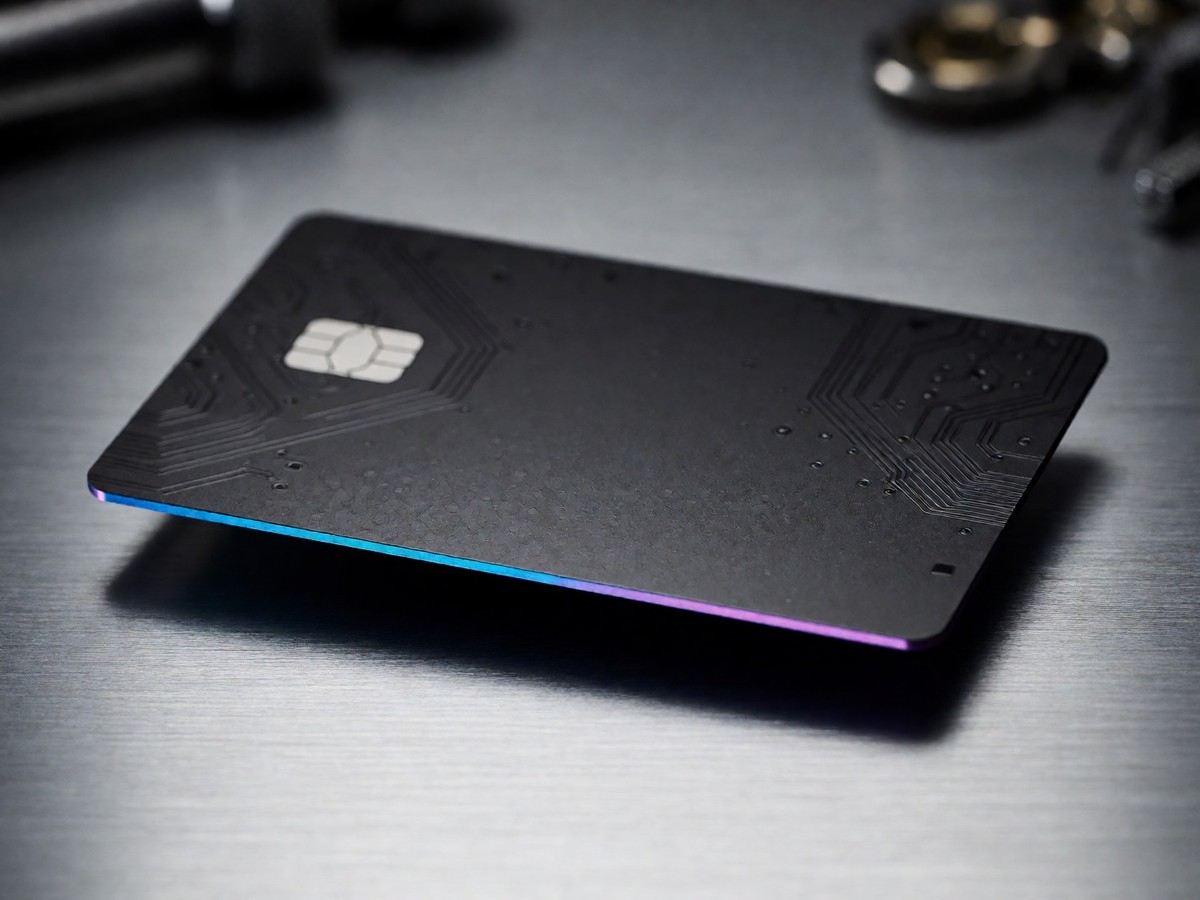
The Ether.fi Card is a non-custodial system that provides premium perks. Users receive 3% cashback on the base tier and 4% on higher tiers. It provides lounge access, hotel discounts, and purchase protection. You know the basics of liquid restaking, so I will focus on the structural shifts. I compare this to other options in the 2026 market. The Bybit Card gives 2% to 10% cashback and has a 0.9% conversion fee. The MetaMask Card has a 0.875% swap fee for WETH conversions. The Kast Card gives 3% to 9% rewards. The Wirex Card gives up to 8% in WXT tokens but has a 1% to 2% conversion fee.
| Card Name | Type | Cashback | Conversion/Fee |
|---|---|---|---|
| Ether.fi Card | Non-custodial | 3% to 4% | Not specified |
| Bybit Card | Prepaid | 2% to 10% | 0.9% conversion / 1% FX |
| MetaMask Card | Visa Debit | Up to 4% | 0.875% swap fee |
| Kast Card | Prepaid/Credit | 3% to 9% | Zero conversion fees |
| Nexo Card | Dual Mode | 0.5% to 2% | 0.2% to 2% FX fee |
The protocol uses programmatic buybacks to increase ETHFI demand. These buybacks pull from revenue generated across Stake, Liquid, and Cash products. I observe that the market treats ETHFI as a revenue-router token instead of a staking proxy. Will the card volume ever match the massive staking revenue?
Validator safety remains a concern after a recent slashing event hit 39 validators tied to the SSV Network. This incident involved operator-side infrastructure issues from third-party providers. One slashing cluster linked to Ankr triggered the event during routine maintenance. Another cluster, which migrated from Allnodes, suffered from duplicate validator setups. One validator with 2,020 ETH lost 0.3 ETH because of these errors. Ether.fi attempts to reduce such risks by using Distributed Validator Technology (DVT) through the SSV Network. This setup uses a cluster of seven node operators including Finoa, PierTwo, Allnodes, DSRV, a41, P2Porg, NodeMonster, and Chainnodes. This configuration allows two out of seven operators to go offline without affecting validator performance. I note that Ether.fi has already moved over 1,960 validators worth approximately $200 million to the SSV Network. This integration uses different clients and geographic locations to reduce failure points. One SSV cluster used by Ether.fi recently earned an 11 ETH MEV block reward. However, the proposed EIP-8363 could reduce validator rewards from 2.6% to 1.2% over 18 months. This reduction directly impacts platforms like Ether.fi that rely on staking yields. Since the Beacon Chain launched in 2020, fewer than 500 validators out of 1.2 million active validators have been slashed.
ETHFI price is $0.5542 as of November 14, 2026. The 24-hour price movement showed a 9.89% decrease. Technical indicators show 13 bullish signs and 23 bearish signs. The daily RSI rests at 47.90. I see a bearish short-term scenario where the token is 36% bullish and 64% bearish. The EMA50 is $0.63406, while the EMA200 is $0.57958. These moving averages show a weaker mid-term outlook.
| Year | Low Case | Mid Case | High Case |
|---|---|---|---|
| 2027 | $0.3534 | $0.4738 | $0.6913 |
| 2028 | $0.334 | $0.5786 | $0.8971 |
| 2029 | $0.4117 | $0.6951 | $1.10 |
| 2030 | $0.5359 | $0.8699 | $1.39 |
| 2031 | $0.6757 | $1.09 | $1.75 |
Long-term forecasts show potential growth. One model predicts ETHFI could reach $1.61 per token by 2031. Another model expects a price of $0.78877 by next year. The combination of the Ethereum staking reward cut proposal, the structural split between weETH and weETHs, and the growing awareness regarding limited revenue capture for ETHFI holders has created a lasting overhang that the market is still digesting. The total supply is 1 billion ETHFI, and 965.35 million tokens are already in circulation. The price at launch was $4.4, and it reached a high of $8.53.