 Bitcoin News
The economics of Hut 8’s Ontario power portfolio and AI race

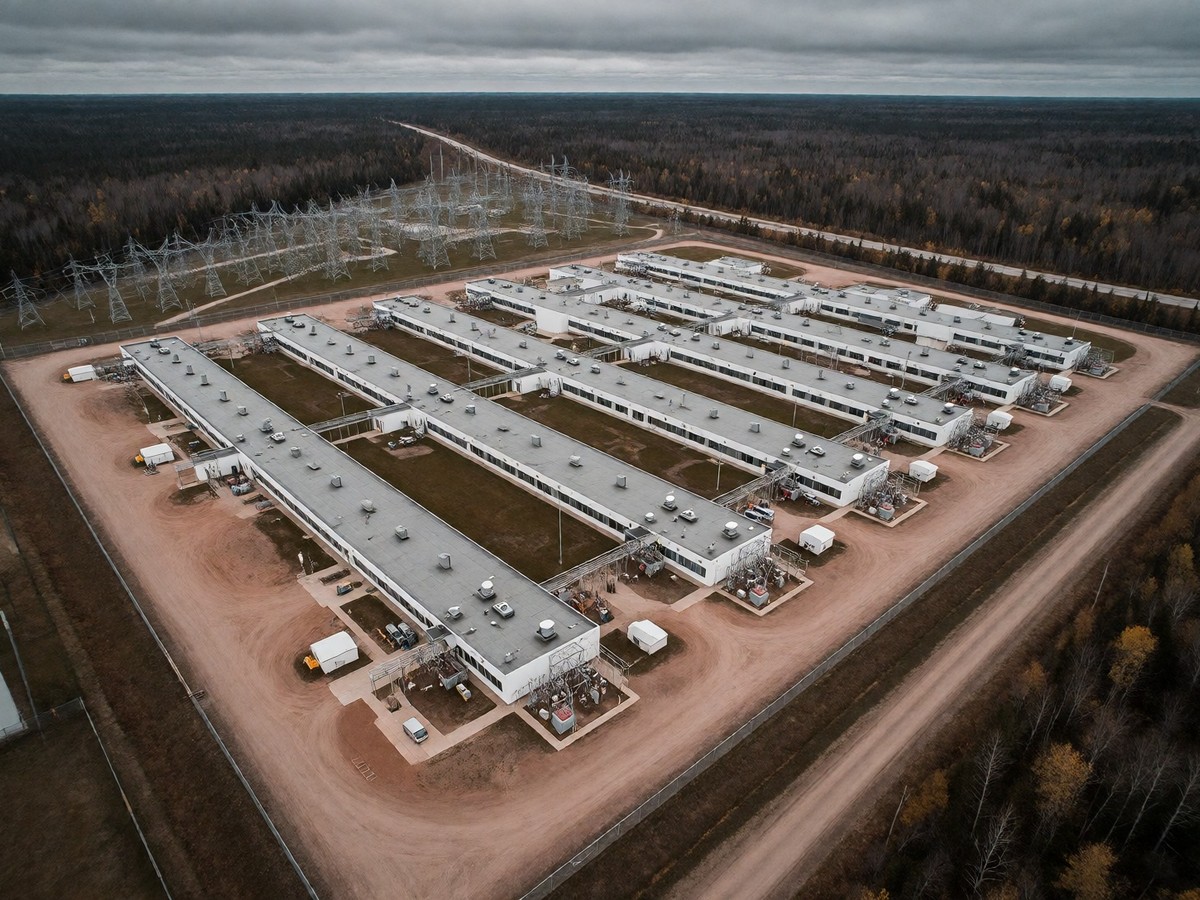
Hut 8’s Ontario power portfolio sale
Hut 8 transferred its 310 MW portfolio of four natural gas-fired power plants in Ontario to TransAlta on November 17, 2025. These assets, located in Iroquois Falls, Kingston, Kapuskasing, and North Bay, belong to Far North Power Corp, a joint venture between Hut 8 and Macquarie Equipment Finance Ltd. The sale followed successful bids in the Ontario IESO Medium-Term 2 capacity auction, which secured five-year contracts for the plants starting May 1, 2026. These contracts provide a weighted average capacity payment of approximately CAD $530 per MW-business day in the first year. The IESO projects a 75% increase in electricity demand by 2050 and a capacity shortfall of up to 5.8 GW by 2030, which supports the value of these dispatchable assets. The government-backed counterparty holds an AA3 (Positive) rating from Moody’s. This transaction allowed Hut 8 to redirect capital toward its 1,530 MW expansion plan in the United States, which targets sites in Louisiana (300 MW), Texas (1,180 MW), and Illinois (50 MW). The company expects this expansion to push its total platform capacity above 2.5 gigawatts across 19 sites. This strategic move focused on high-return opportunities within the development pipeline. You might note that the company already manages 1,020 megawatts of energy capacity across 15 sites.
Nuclear stability and refurbishment costs
Bruce Power delivers price reductions to Ontario ratepayers through an upside sharing arrangement tied to reactor refurbishment performance. The Unit 3 Major Component Replacement finished safely ahead of cost and schedule targets in June 2026. This performance results in approximately $150 million in savings that Bruce Power will return to ratepayers via a price reduction starting in April 2027. This follows the $50 million in savings shared in April 2024 after the Unit 6 refurbishment finished early in September 2023. The company expects to begin the Unit 5 Major Component Replacement in late 2026. To prevent excessive costs, the IESO maintains economic off-ramps that allow the province to terminate future refurbishments if expenses exceed 30% of the base-case estimate. These off-ramps also provide an option to halt work if alternative electricity sources become more economic. The FAO provides independent financial analysis to the provincial legislature and previously concluded that no alternative generation portfolios could provide the same supply of low-emissions baseload electricity at a comparable price. The 2013 Long Term Energy Plan established the policy framework for these refurbishments. Nuclear fuel costs remain more stable than natural gas prices because the company uses a long-term procurement strategy. These fuel costs represented about 12 percent of the 2016 Bruce Nuclear price. Bruce Power manages radioactive and hazardous waste in partnership with OPG, using the Ontario Nuclear Fund Agreement to cover decommissioning and fuel life cycle costs. The Asset Management Plan for Units 3-8 ensures safe operation until 2064.
Mining efficiency and break-even thresholds
The profitability of Bitcoin mining depends on the relationship between machine efficiency and electricity costs. A record-low hashprice in the first quarter of 2026, ranging from $28 to $30 per PH/s per day, squeezed margins for many operators. Miners with higher energy requirements must secure lower electricity rates to remain profitable. Hashprice is the revenue a miner earns per unit of computing power per day. The following table shows the break-even electricity prices for various hardware models based on a hashprice of $0.0398 per TH/s per day.
| Machine Model | Efficiency (J/TH) | Break-even Electricity Price ($/kWh) |
|---|---|---|
| Antminer S19k Pro | 23.0 | $0.096 |
| Antminer S21 | 17.5 | $0.112 |
| Antminer S21 Pro | 15.0 | $0.112 |
| Antminer M79S | 14.8 | $0.124 |
| Antminer S23 | 11.0 | $0.176 |
| Antminer S23 Hyd | 9.5 | $0.176 |
The break-even rate is the exact price where electricity costs equal the revenue earned per machine. A miner using an Antminer S21 at 17.5 J/TH can afford electricity up to $0.112 per kWh, while an Antminer S23 Hyd at 9.5 J/TH handles costs up to $0.176 per kWh. If a user pays $0.135 per kWh, as one Reddit poster reported, the Antminer S21 becomes unprofitable because its break-even point is only $0.112. Increasing network difficulty also lowers the break-even point; for instance, the S21 break-even drops from $0.112 to $0.075 if difficulty rises to 140T. This occurs because more competition means less Bitcoin is earned per machine each day. Miners must buy hardware with a high enough margin to survive these difficulty adjustments. Each block currently pays 3.125 BTC to the winner, plus transaction fees.
The AI power race and grid constraints
Large-scale computing needs have transformed the power market as AI companies race to secure reliable energy. AI tenants pay higher rates per megawatt on contracts lasting 10 to 20 years. This demand creates a bottleneck because utilities often require years for feasibility studies and permits. Mining companies like Hut 8 and TeraWulf already hold approved grid connections and land, which provides a shortcut to serving AI customers. While Bitcoin mining revenue fluctuates daily with network difficulty, AI leases provide fixed revenue. Microsoft signed a 20-year agreement with Constellation Energy for 835 megawatts of nuclear power to support AI infrastructure. Amazon also signed a long-term agreement for 1,920 megawatts of carbon-free nuclear power. Bitzero maintains an all-in electricity cost around 3.5 cents per kWh, which helps it mine Bitcoin for $50,000 per coin. OneQode Networks recently signed a 15-year lease for 110 megawatts of capacity at Bitzero’s Norway campus, a deal worth roughly $2.6 billion. This deal follows the trend of miners like TeraWulf signing multi-billion-dollar AI and computing deals with firms like Anthropic, which recently signed a 20-year lease for 401 megawatts in Kentucky worth $19 billion. TeraWulf reported that computing leases made up 71% of its second-quarter revenue. Bitzero generates about $1 million in monthly EBITDA from its 40-MW Norway site. Will the current grid infrastructure support this massive increase in electricity demand?