 Bitcoin News
The legacy of the Bitmain Antminer S9

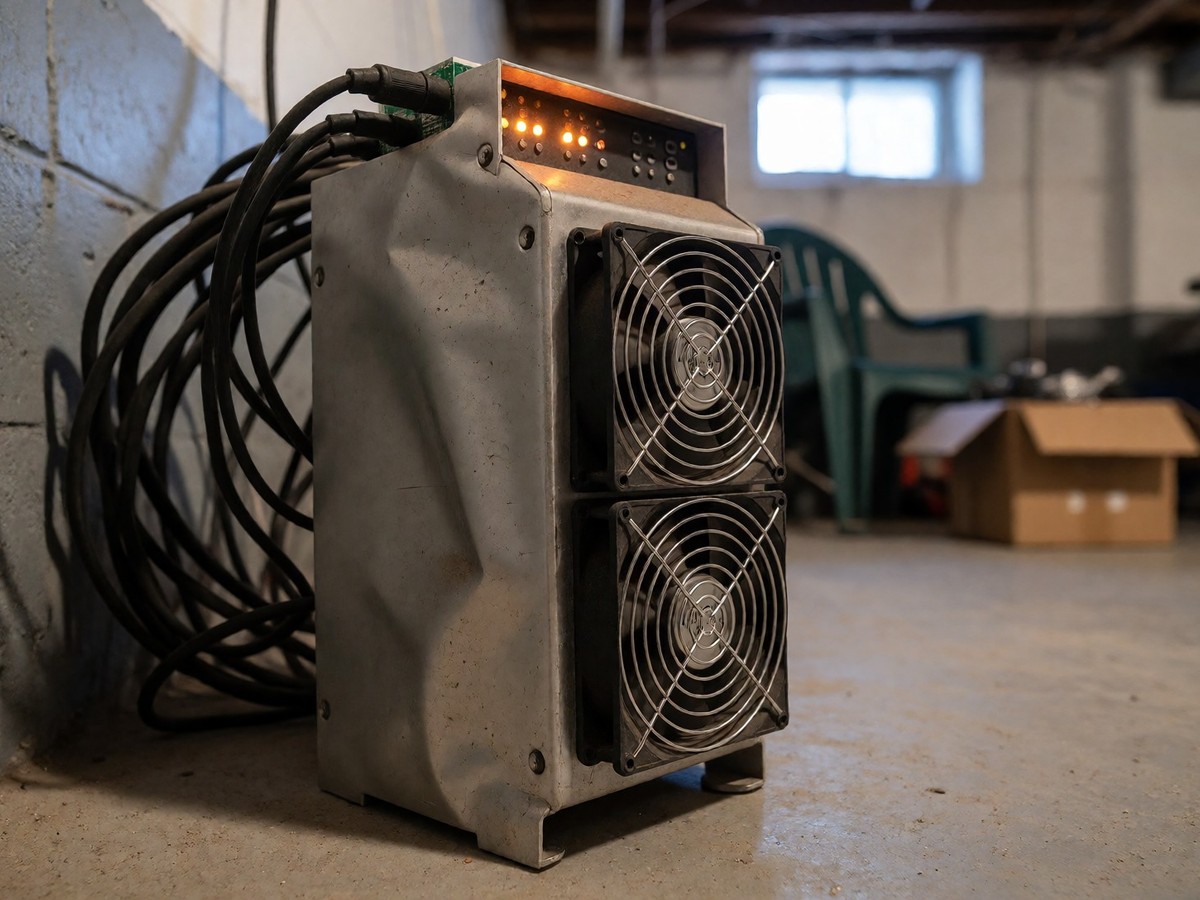
The Bitmain Antminer S9 launched in May 2016 with a 14 TH/s hash rate and 16nm chips. This machine dominated the market because it offered a three times improvement over existing models without decreasing energy efficiency. Each batch sold out within hours as miners sought the high ROI it provided. The S9 remains one of the most used miners today. I view the S9 as a machine that transitioned from a market leader to a specialized tool for hobbyists.
The S9 entered the market just as mining difficulty increased because many new miners joined the industry. In 2017, the Bitcoin bull run led to price highs of $19,783. During this period, the S9 provided 14 TH/s while demanding 100 J/TH. Bitmain engineers released the S9i in May 2018 and the S9j in August 2018, both reaching 14.5 TH/s with lower energy consumption. The S9 Hydro arrived in August 2018 with an 18 TH/s hash rate and a water-cooling system. Later, the S9k reached 13.5 TH/s at 85 J/TH, while the S9 SE reached 16 TH/s at 80 J/TH.
| Model | Hashrate | Power Efficiency |
|---|---|---|
| Antminer S9 | 14 TH/s | 100 J/TH |
| Antminer S9j | 14.5 TH/s | Improved |
| Antminer S9k | 13.5 TH/s | 85 J/TH |
| Antminer S9 SE | 16 TH/s | 80 J/TH |
| Antminer S9 Hydro | 18 TH/s | Improved |
Economic life vs physical life
An ASIC miner stops being profitable the moment the hashprice falls below the energy breakeven point. The formula for energy breakeven is hashprice divided by (24 multiplied by J/TH). A machine stays physically functional for five to seven years in a temperature-stable facility with professional maintenance. Dust, salt, and thermal cycles eventually kill the hardware. In a garage, a miner might only last eighteen months. The S9 remains in service today because many users repurpose it as a "Bitcoin Space Heater" to provide heat.
Electricity costs represent 75 to 85 percent of operating expenses for an ASIC. At a rate of $0.12/kWh, the S9 produces a daily loss of $2.80. The S9 requires electricity costs below $0.02/kWh to achieve a breakeven point. For those using the S9 for heat, the electricity cost is an energy expense they would pay regardless. Professional refurbishment can restore a miner to near-factory performance at 30 to 50 percent of the cost of a new unit. D-Central Technologies performs this by replacing MOSFETs, capacitors, and voltage regulators.
| Hardware Spec | Value |
|---|---|
| S9 Power Consumption | 1225 W to 1372 W |
| S9 Efficiency | 0.098 J/GH |
| S9 Noise Level | 77 to 80 dB |
| S9 Recommended PSU | 1600 W or more |
The shift to industrial scale
The mining industry moved from laptop CPUs in 2009 to megawatt farms today. Large facilities use hundreds of machines and require advanced cooling and security. HIVE Digital Technologies grew its Lachute facility in Quebec from 500 PH/s to over 1 EH/s. The Lachute team uses an immersion mining system and a heat-recycling system to warm a 200,000 square foot swimming pool manufacturing building. In 2016, that same facility operated 18,000 S9 miners.
Public companies now phase out older models to maintain margins. Bit Digital sold 4,509 Antminer S19 units at $1.9/TH/s to buy newer S21 models. Iris Energy sold 4.1 EH/s of S19j Pro miners in Q3 2024. CleanSpark began phasing out the S19, S19j Pro, and S19j Pro+ models following the April 2024 halving. Bitdeer auctioned S19j Pro and M30S++ miners to accommodate its Sealminer A1 units. These companies replace hardware because the efficiency gap between old and new generations makes old machines liabilities.
| Company | Action | Hardware Involved |
|---|---|---|
| Bit Digital | Sold 4,509 units | Antminer S19 |
| Iris Energy | Sold 4.1 EH/s | Antminer S19j Pro |
| CleanSpark | Phased out units | S19, S19j Pro, S19j Pro+ |
| Bitdeer | Auctioned units | S19j Pro, M30S++ |
Scarcity in the 2026 market
As of late 2026, the S9 has entered a period of museum-grade scarcity following the decommissioning of the last industrial farms using such legacy tech. The global network hashrate exceeds 800 EH/s, and the difficulty adjustment keeps block production at ten minutes. A single Antminer S21 XP delivers 270 TH/s at 13.5 J/TH, which dwarfs the 14 TH/s of the original S9. The S9 is 6x less efficient than the S21 series. Most commercial operators avoid the S9 because it cannot compete with modern 3nm silicon.
The S9 remains available on B2B platforms like Alibaba for $30 to $100. It functions as an educational tool for hobbyists or as a heat source for home miners. I find the S9 is a relic that provides thermal value where it no longer provides hash value. A miner with one dead chip on a healthy board gets a different treatment than a machine with a failed voltage domain controller. The S9’s high noise level, equivalent to a vacuum cleaner, prevents it from being a viable bedroom miner. Does the drop in hashprice eventually make all hardware obsolete?
The S9 is a machine that survives in the hands of those who prioritize low electricity rates and dual-purpose heating. Professional refurbishment shops can fix corroded hashboard connectors or blown MOSFETs to extend a machine’s life. This allows individuals to keep hardware in their hands rather than letting it pile up in landfills. The S9 paved the way for the massive scale of modern mining.