
 Ethereum News
The people shaping Ethereum’s September 2026 restaking boom

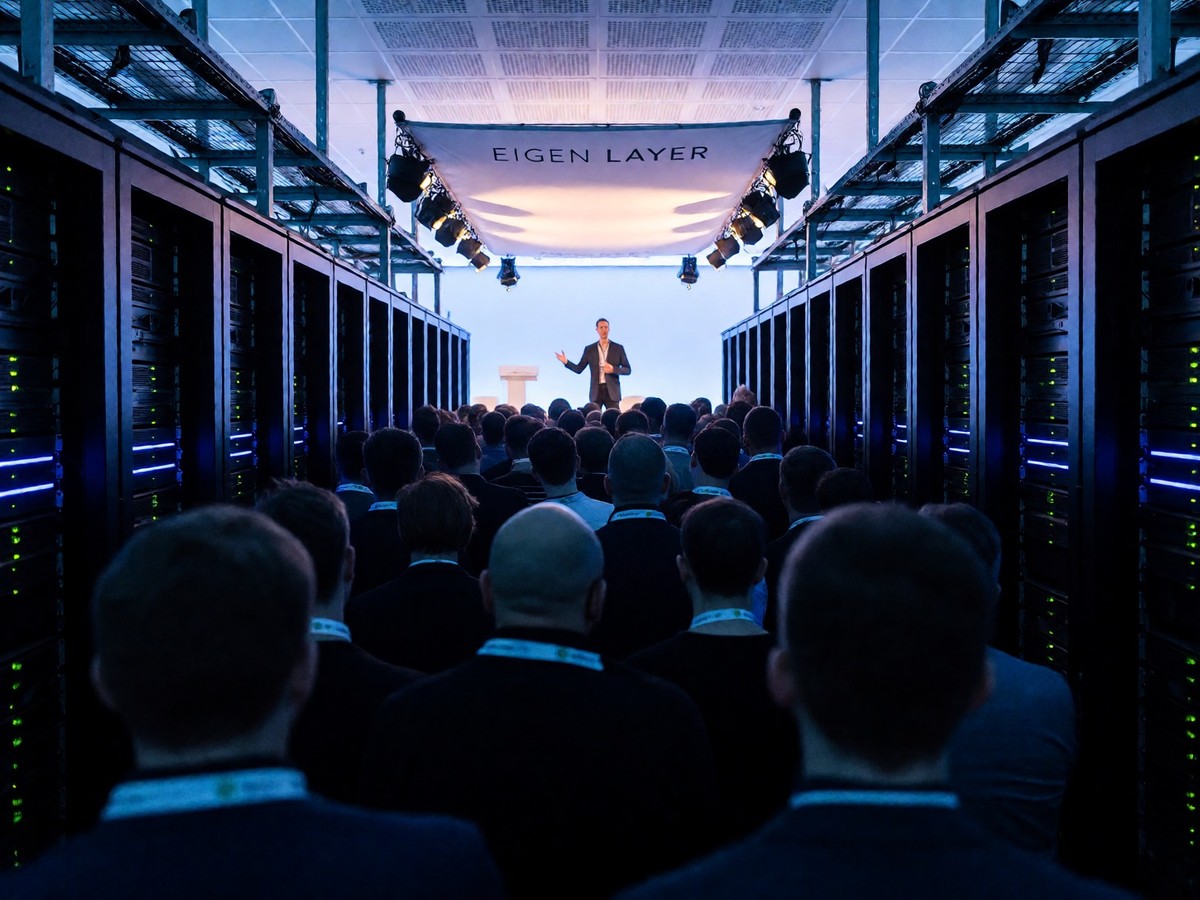
EigenLayer reached $18 billion in restaked ETH across 1,900 active operators in February 2026. Sreeram Kannan leads Eigen Labs, the team building this infrastructure. His academic background in information theory and wireless networks from the University of Illinois informs the protocol design. He previously served as an associate professor at the University of Washington. The company attracts significant capital, including a $100 million Series B from a16z crypto and a $70 million direct EIGEN token purchase from the same firm.
Vertical AVS specialization drives the market
Actively Validated Services (AVS) now specialize into "Vertical AVS" categories to meet specific technical needs. AI verification services represent a major category, as over 280 crypto-AI projects require model evaluation. EigenAI launched on mainnet in late 2025 to provide verifiable AI inference. EigenCompute followed with its mainnet alpha in January 2026 to handle off-chain execution verification. These specialized services allow operators to use hardware tailored to specific tasks like AI or data availability.
| AVS Category | Primary Function | Key Example |
|---|---|---|
| Data Availability | Data publication and availability | EigenDA |
| AI Verification | Verifiable model inference | EigenAI |
| Off-chain Execution | Verifiable computation | EigenCompute |
EigenDA remains the largest consumer of restaked security in the ecosystem. It achieves 100 MB/s throughput via its Data Availability Committee model. It bundles with Rollup-as-a-Service platforms like AltLayer, Caldera, Conduit, and Gelato. Competitors like Celestia use independent validator sets, while EigenDA uses restaked ETH and EIGEN token forkability. While EigenDA captures rollup demand, its fee revenue remains thin relative to the total restaked capital.
Liquid restaking tokens and the Pectra impact
Liquid restaking tokens (LRTs) provide a retail entry point by representing restaked positions as tradable assets. EtherFi leads the market with $5.6 billion in TVL, while Kelp DAO, Renzo, and Puffer Finance follow. These protocols facilitate the movement of ETH into EigenLayer. In April 2026, Kelp suffered a $280 million to $293 million exploit through a LayerZero bridge vulnerability. This incident shows how bridge dependencies create risks for LRT holders.
The Pectra upgrade, active since May 2025, changed restaking economics via EIP-7251. This upgrade raised the maximum effective validator balance from 32 ETH to 2,048 ETH. Following this, 11,000 validators consolidated, reducing the active validator set by approximately 16,000. Large operators use this to concentrate stake into fewer, larger validators for multiple AVSs. EIP-7002 also allows validator exits to trigger from execution layer contracts, including restaking protocols.
| Protocol | Leading Token | Market Position |
|---|---|---|
| EtherFi | weETH | Largest LRT by TVL |
| Kelp DAO | rsETH | Multi-chain focus |
| Renzo | ezETH | Algorithmic model |
| Puffer Finance | pufETH | Institutional focus |
The market sees competition from Symbiotic, which holds $897 million in TVL, and Karak, which manages $102 million. Symbiotic allows any ERC-20 token as collateral, while Karak supports LP tokens and stablecoins. EigenLayer maintains 93.9% of the market share. You should consider if the current yield levels from EIGEN emissions can sustain long-term growth if token emissions decrease.
The mechanics of security and slashing
Restaking reuses Ethereum’s economic security for additional services. A staker delegates their position to an operator, who then validates the AVS. If an operator fails, the AVS triggers slashing, which penalizes the restaked assets. Each AVS defines its own slashing conditions for behaviors like equivocation or liveness failure.
A restaker participating in five different AVSs faces five distinct slashing frameworks simultaneously. This creates a risk where a single operator error triggers multiple penalties from the same pool of ETH. EigenLayer uses a committee to review slashing, but these remain human-managed processes. The concentration of restaked assets in protocols like EtherFi and Renzo means governance decisions at these platforms affect many users. Puffer Finance saw its TVL drop from $1.3 billion to $62 million as incentive programs ended.