 Bitcoin News
Trezor Safe 5 security: hardware implants and vulnerability facts

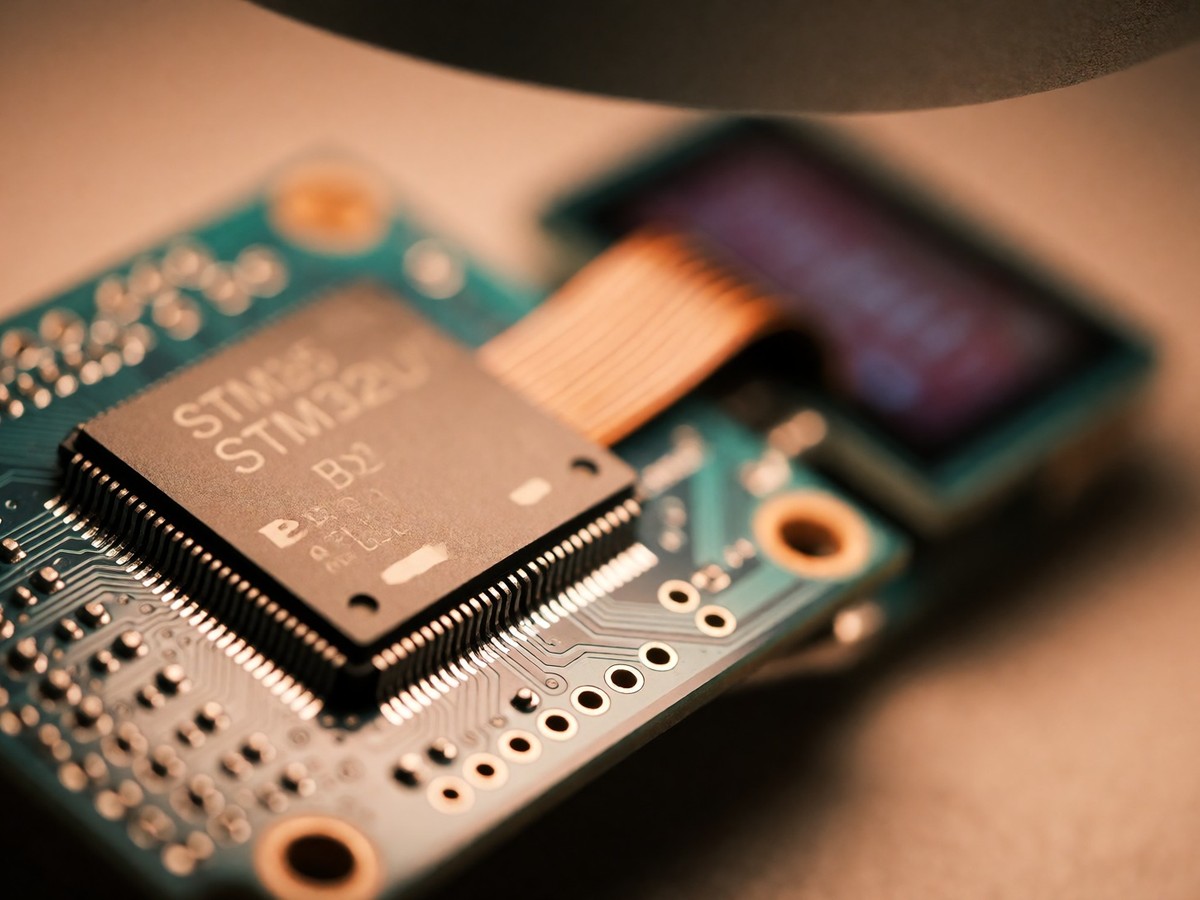
A hardware implant in a Trezor Safe 5 bought from the reseller CryptoBilis contains an extra circuit board that sends the recovery phrase over a mobile network. This report from a customer in Indonesia describes a board that sits between the main board and the screen. The module contains a cellular component and an antenna that reads the screen to transmit the recovery phrase out whenever a user plugs in the device to charge or interact with it. This customer purchased the device through the Tokopedia marketplace in August and noticed a weight difference. Trezor tells all buyers of devices from CryptoBilis since March 2026 to move funds to a new wallet with a new recovery phrase immediately. No reports of lost funds exist regarding this specific reseller, but the company dropped CryptoBilis as an authorized reseller in Southeast Asia on October 9. The Singapore Police Force also issued an advisory on October 28 regarding malicious components in hardware wallets bought from certain retail stores in Singapore. If you already know how to use a hardware wallet, you should focus on the specific hardware vulnerabilities in the supply chain. If an attacker can bypass countermeasures through voltage glitching on older models, what specific physical shielding does the STM32U5 use to prevent similar exploits?
Coldcard randomness and entropy
The Trezor Safe 5 is not affected by the Coldcard vulnerability disclosed on July 30, 2026. This issue affects wallets generated by certain Coldcard firmware versions because of how those devices generate randomness. Trezor generates wallets using multiple independent sources of randomness, including device hardware, the connected host, and the Secure Element chip. If a user generated a wallet on an affected Coldcard and later restored it on a Trezor, that user is still affected by the incident. Restoring a backup onto a Trezor does not fix weak randomness used during the original creation of the wallet. To stay safe, these users must generate a new wallet on the Trezor and migrate their funds to a completely new address. Trezor users do not need to regenerate wallets that were originally created on a Trezor device. Security events like this often lead to phishing attempts where scammers pretend to be the Trezor CEO or send unsolicited messages about wallet migration.
Microcontrollers and physical security
The Trezor Safe 5 uses an upgraded STM32U5 microcontroller which is resistant to voltage glitching. This resistance addresses a weakness in the Trezor Safe 3 microcontroller that Ledger Donjon demonstrated could allow an attacker to reveal flash memory contents via precise voltage changes. The Safe 5 also includes an EAL 6+ certified Secure Element to protect keys from extraction attempts. While Ledger devices reset after three incorrect PIN attempts, Trezor Safe devices use the Secure Element to enforce higher PIN attempt limits.
| Model | Secure Element | PIN Reset Limit | Display Type |
|---|---|---|---|
| Trezor Model One | None | 16 attempts | Monochrome |
| Trezor Safe 3 | EAL6+ | Higher than 3 | Monochrome |
| Trezor Safe 5 | EAL6+ | Higher than 3 | Color Touch |
| Trezor Safe 7 | EAL6+ | 10 attempts | Color Touch |
The Trezor Safe 5 provides high-level security through its EAL 6+ Secure Element and upgraded microcontroller.
PIN encryption and recovery protocols
Trezor uses PBKDF2 with HMAC-SHA512 to transform a user PIN into a strong cryptographic key. This process uses a salt derived from hardware identifiers and a random salt from flash storage, running the hash function for at least 10,000 iterations. This produces a 256-bit KEK and a 96-bit KEIV. The KEK decrypts the EDEK to provide the DEK, which is the actual key used to encrypt protected data in flash storage. To verify the PIN, the device compares a 64-bit PVC to a tag value derived during decryption. The chance that a wrong PIN produces the same PVC is less than 1 in 10^19. The KEK is a 256-bit key, while the KEIV is a 96-bit value used as an initialization vector for the ChaCha20Poly1305 encryption algorithm.
The Trezor Safe 5 supports various recovery methods including the BIP-39 standard and the SLIP-39 Shamir Backup. BIP-39 uses 12, 18, or 24 words. The Shamir Backup splits the recovery data into multiple parts, or shares, and requires a threshold number of these to restore the wallet. On the Safe 5, users enter words using a T9 predictive keyboard by tapping letter tiles on the color touchscreen. If a user loses some shares but meets the threshold, they can still access their assets. A 20-word SLIP-39 share is the standard for the newer Safe models, and users can also add a passphrase as a 25th word to create a hidden wallet. If a user enters a wrong passphrase, the device simply generates a new, empty account, which may look like a syncing issue.
Users can verify their seed by using the Check wallet backup option in Trezor Suite, which connects the device to a computer and requires the user to enter their words on the device itself. The device compares the entered words with the backup it holds and reports whether they match, helping to confirm that the words are written correctly. Because the Safe 5 uses a T9 predictive keyboard, users tap each letter tile once to select the suggested word, and this method avoids the risk of typing sensitive words into a computer. Trezor implements the BIP-44 standard, which allows for managing multiple cryptocurrency accounts from a single seed phrase. The derivation path follows a structure including the purpose, coin type, account, change, and address index. The address index allows for several different addresses for the same account, which is not possible with Ethereum.