 Ethereum News
Appchain expansion and sequencer shifts in the Cairo ecosystem

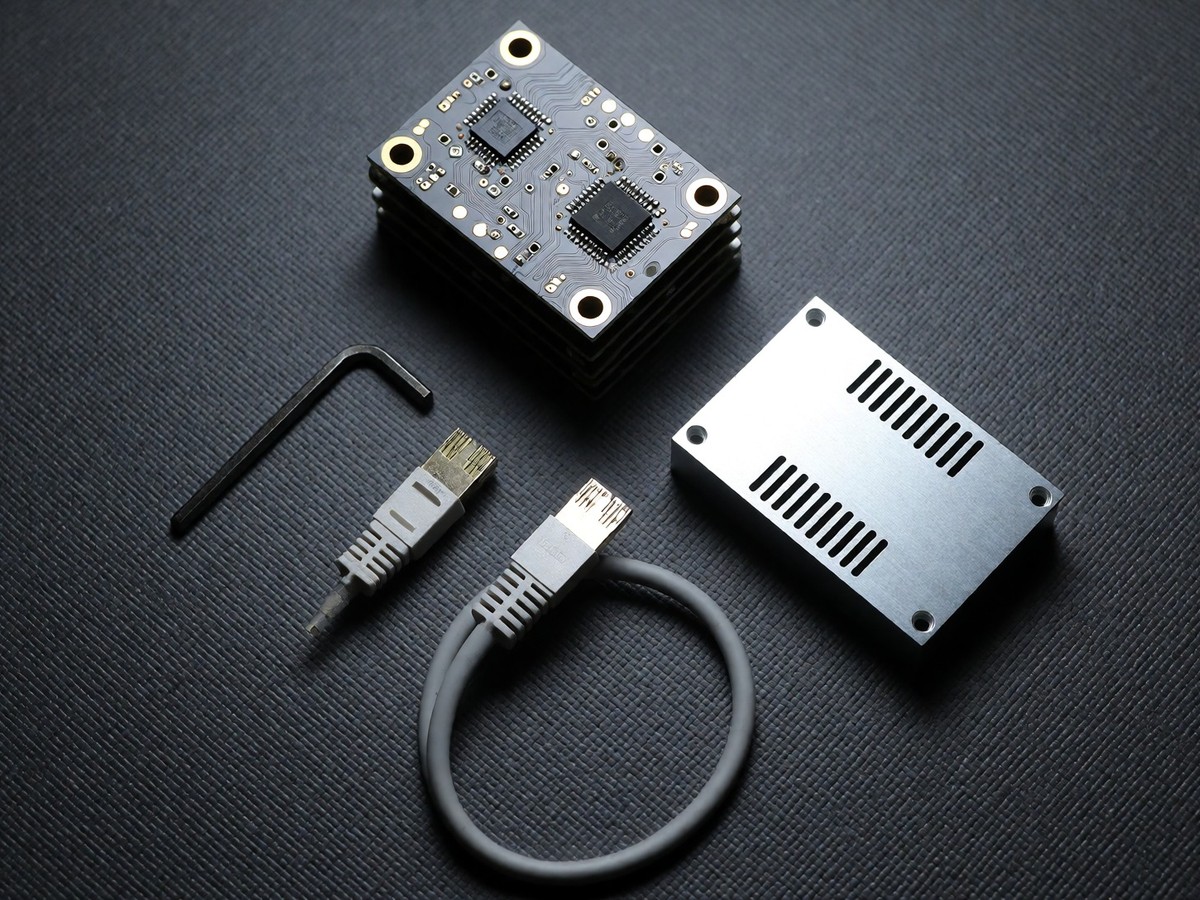
StarkWare reallocated 45% of developer tooling grants toward app-chain deployments. This move follows the rollout of the SN Stack, which allows developers to build blockchains tailored to specific crypto use cases. StarkWare, founded in 2018, originally announced in July 2023 that it would build a customizable stack for developers to create their own blockchains. This deployment follows releases from several of StarkWare’s competitors that scale Ethereum’s capacity by offering users side lanes to transact quickly and cheaply. The SN Stack provides options including the Madara framework, the Dojo framework, the StarkWare Sequencer, and other modules. Eli Ben-Sasson, StarkWare co-founder and CEO, stated that projects can build app-chains using gold-standard ZK-STARK cryptography with the ease and low cost previously possible with optimistic rollups. While optimistic rollups serve as the technology for most Ethereum scaling chains, ZK-based chains like StarkWare provide more advanced security despite being more difficult to build and harder to scale to generalized use cases. The expansion into app-chains clearly targets a specialized developer base.
Sequencer decentralization and staking mechanics
The 2.0 sequencer decentralization testnet launch follows logic discussed during previous decentralization workshops. These workshops brought together 29 attendees, including 15 StarkWare members and 14 externals ranging from builders to academics. Participants included experts from LambdaClass, Nethermind, Equilibrium, and Maker. The groups focused on protocol design, including consensus and proofs. The workshop, which ran from 10:00 to 16:00 and included a division into five work-groups, aimed to strengthen community involvement and gain insight on designing a decentralized Starknet protocol with a focus on proofs in the protocol. To maintain optimal performance, researchers suggested having open competition for jobs with backup mechanisms. They proposed that a system should stop the backup as soon as a winner emerges from the open competition. One idea involves using a Proof-of-Stake committee with a Sybil-resistant race to provide backups. To defend against underpaid transactions, the protocol can use an algorithmic base fee to set a lower bound for prover resource prices. The protocol can also mint new tokens to cover the difference when user fees fail to cover the full proving cost. To prevent provers from hiding proofs with maliciously timed reveals, the team discussed a proof-mempool protocol to ensure data availability without ordering. Stakers can also participate in securing the network by locking up STRK tokens. This process allows delegators to assign tokens to operators like Kiln. There is a 21-day locking period without earning rewards upon exiting a staking position.
| Staking Percentage of Stakable | Staking Percentage of Total Supply | Annual Minting Rate | Annual Rewards Rate |
|---|---|---|---|
| 10% | 1.4% | 0.19% | 13.52% |
| 20% | 2.8% | 0.27% | 9.56% |
| 30% | 4.2% | 0.33% | 7.80% |
| 50% | 7% | 0.42% | 6.04% |
| 75% | 10.5% | 0.52% | 4.94% |
Programming upgrades and security services
Cairo 1.0 provides a major upgrade to the Starknet programming language. This version includes Sierra, a Safe Intermediate Representation designed to ensure that every Cairo program remains securely verifiable. This design improves reliability regarding attack resistance. The current developer ecosystem includes 354 active developers, with 54 working full-time and 22 acting as consistent contributors, showing growth rates of 74.8% and 86.2% over the last year. The number of established developers reached 89, showing a 62.3% increase over one year. You should note that the network’s security depends on various specialized firms. Companies such as Immunefi and OpenZeppelin provide security solutions, including bug bounty programs and audit competitions. FuzzingLabs and Zellic also provide research and vulnerability assessments for various protocols, including EVM and Solana. Hypernative detects web3 security threats in real-time, while Alterscope creates risk agents for DeFi protocols using verified data models. ChainSecurity and CODESPECT provide audits and penetration testing, while Trail of Bits provides design assessment. Cairo Security Clan and ABDK also offer research and cryptography consulting. Does the increased focus on app-chains dilute the attention given to the main network?
Network activity and market volatility
The ecosystem experienced a significant user exodus following a revised airdrop policy in February. When the Starknet Foundation amended eligibility criteria for the 700 million STRK airdrop intended for 1.3 million addresses, the number of active accounts plunged 57% in seven days, dropping from 196,910 on February 13 to only 84,260 by February 19. This exodus occurred because the foundation introduced abrupt changes, such as distributing 6.9 million STRK to 1,000 solo stakers who faced mislabeling. The original eligibility criteria required a minimum holding of 0.005 ETH at the time of a snapshot on November 15, 2023. Large holders also liquidated positions after the February 20 airdrop, which caused the price of STRK to drop 60% from $4.40 to $1.90. The price currently trades at $1.88. While users left, the total value locked stayed near $186,767,078. Starknet processes up to 6 million transactions per week, a volume that exceeds the transaction count of Bitcoin. StarkWare also plans to launch a Bitcoin L2 to use Bitcoin liquidity, which will include an integration with the Xverse wallet by Q2 2025. This move will use ZK technology and STARK proofs to allow transactions per second to reach thousands. The team is also building a BitVM-powered bridge and federated bridges to ensure cross-operability between Bitcoin and Starknet. Bitcoin currently maintains 61% dominance, yet users only use 1% of its circulating supply for DeFi because of network limitations and expensive transactions.