 Ethereum News
Polygon’s MATIC to POL migration and Ethereum L2 concentration

The MATIC to POL transition
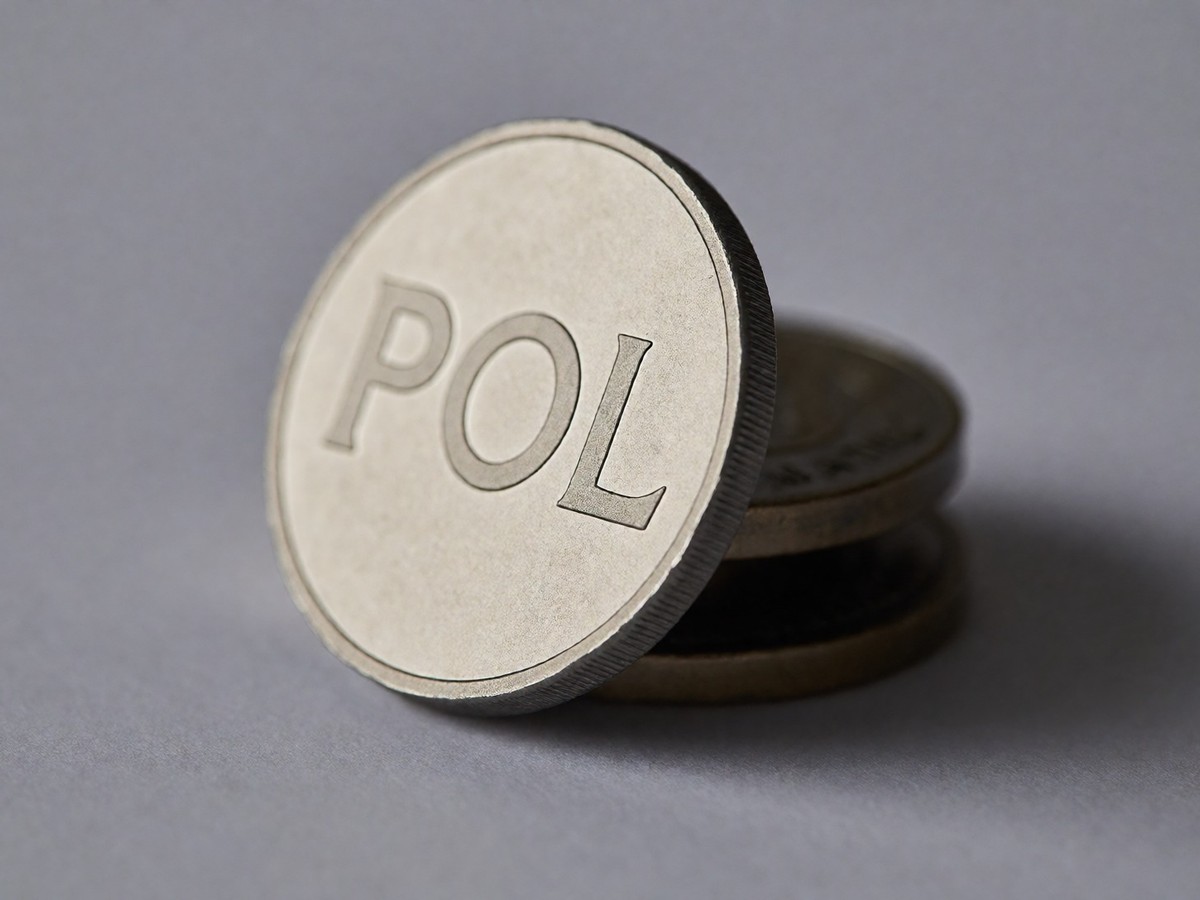
Polygon converted MATIC to POL on a 1:1 basis on September 4. This technical upgrade moves the network toward the Polygon 2.0 vision. POL functions as the native gas and staking token for the Polygon PoS network. The change follows the successful July 17 testnet implementation. The new token has an initial supply of 10 billion and includes 2% annual emissions for validator rewards and the community treasury. Marc Boiron, CEO of Polygon Labs, says the upgrade enables community participation in network growth. Prior to the full migration, the community grants program created emissions for community use. Unlike MATIC, POL earns fees from multiple sources including staking for data availability and decentralizing sequencers. Users holding MATIC on Polygon PoS receive the conversion automatically without action. Those holding MATIC on Ethereum must use the Polygon portal migration interface to swap tokens. If you hold MATIC on Polygon zkEVM, you bridge tokens to Ethereum first before using the portal. The transition follows three Polygon Improvement Proposals, specifically PIP-17, PIP-18, and PIP-19. PIP-17 introduces the POL token, while PIP-18 provides the framework for Phase 0. PIP-19 covers the update of the native gas token for the PoS blockchain. The network supports up to 105 active validators, with a minimum stake requirement of 10,000 POL. Polygon remains the 21st largest cryptocurrency with a $3.7 billion market capitalization.
The L2 market contraction
Most Ethereum scaling networks face collapse risks in 2026 as activity concentrates on Base, Arbitrum, and Optimism. 21Shares reports that the Layer-2 ecosystem reached a breaking point after two years of expansion. Smaller rollups became "zombie chains" with usage dropping 61% since June. By late 2025, three networks processed nearly 90% of all L2 transactions, with Base alone exceeding 60% of that volume. Several projects failed during this period. Kinto shut down entirely, Loopring closed its wallet service, and Blast saw its total value locked collapse 97%. The Dencun upgrade triggered aggressive fee wars by reducing fees by 90% via blob data, which pushed most rollups into losses and allowed Base to become the only L2 to turn a profit in 2025, earning around $55 million. The L2 environment is a graveyard for smaller rollups that cannot compete with the dominance of Base or the liquidity of Arbitrum. 21Shares expects a leaner, more resilient set of networks to define the scaling layer by the end of 2026. High-performance entrants like MegaETH target near-real-time execution, while exchange-backed networks like Mantle and Ink aim to onboard users. Stablecoins on track to reach $1 trillion in circulation as they gain ground in payments and corporate finance. DeFi’s total value locked should climb past $300 billion, and prediction markets may cross $100 billion in annual trading volume. Can the remaining independent rollups sustain liquidity without exchange backing?
Comparing POL and ARB revenue
Polygon outperformed Arbitrum in gas fee collection during the 90 days ending September 15, 2026. Polygon collected $7.03 million in gas fees, while Arbitrum collected $1.199 million. This 5.86 ratio represents a lead for Polygon despite having a lower total value locked. Polygon’s annualised gas take reached 2.86% of its $997.18 million market cap. In contrast, Arbitrum’s annualised gas take was only 0.48% of its $1,013.84 million market cap. This lead grew after January 2026 when Polygon’s monthly fees jumped from $0.69 million in December 2025 to $3.83 million. This surge followed high activity from Polymarket’s prediction markets, where fees reached $1.7 million in mid-January alone. Arbitrum maintains a higher total value locked at $1,403.8 million compared to Polygon’s $808.1 million. You might find that navigating these fee differences requires looking past simple market caps.
| Metric | Polygon (POL) | Arbitrum (ARB) |
|---|---|---|
| Type | Ethereum scaling network | Ethereum rollup network |
| Market cap (15 Sep 2026) | $997.18M | $1,013.84M |
| Gas fees (18 Jun – 15 Sep 2026) | $7.031M | $1.199M |
| Annualised fees/cap | 2.86% | 0.48% |
| TVL (15 Sep 2026) | $808.1M | $1,403.8M |
| Stablecoins (15 Sep 2026) | $3,364.6M | $4,015.3M |
The comparison reveals that a dollar of POL buys a claim on a network earning six times as much gas as a dollar of ARB. Arbitrum leads in capital, with stablecoin holdings at $4,015.3 million against Polygon’s $3,364.6 million. Arbitrum’s TVL stays 1.74 times higher than Polygon’s. On Phemex, ARB has a perpetual market, while POL only has a spot pair available.
AggLayer and scaling architecture
Polygon 2.0 introduces the AggLayer to connect sovereign chains through a common bridge and ZK mechanism. This layer aggregates liquidity, users, and state to prevent fragmentation. The AggLayer combines monolithic chain reliability with modular chain scalability. POL acts as the lifeblood of this system by allowing validators to secure multiple chains via one stake. Holders earn rewards from multiple chains at once. This makes POL a third-generation token compared to BTC or ETH. The network structure uses ZK rollups like Polygon zkEVM and Polygon Miden. Optimistic rollups like Arbitrum and Optimism rely on fraud proofs and a 7-day challenge period. ZK rollups use mathematical proofs to verify transactions, which enables faster finality. Users who want DeFi on Ethereum often choose Arbitrum for its $15.2 billion in TVL. Consumers looking for easy onboarding via Coinbase choose Base. Bitcoin L2s use different architectures like the Lightning Network for state channels or Spark for statechains. Lightning uses bidirectional payment channels, while Spark uses FROST threshold signatures for free, instant transfers.