 Bitcoin News
Bitcoin’s Difficulty Adjustment Algorithm Explained in Plain Terms


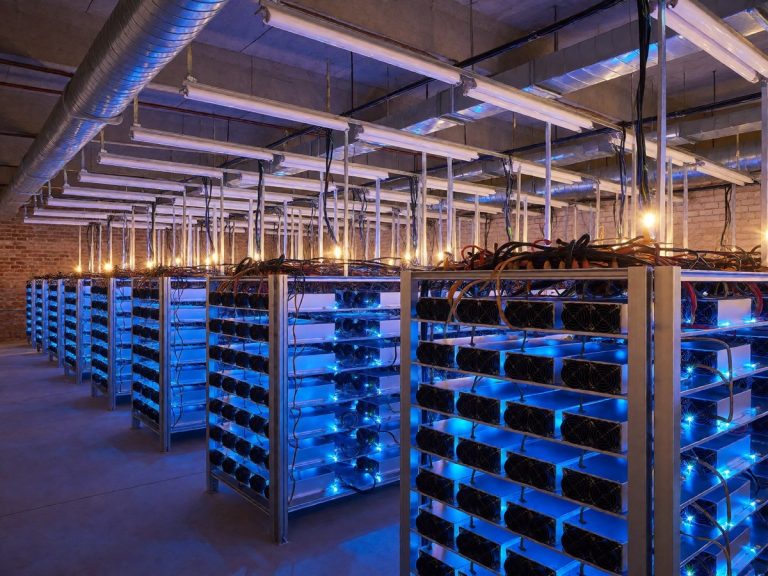
Bitcoin’s mining difficulty recently hit an all-time high of 142.3 trillion, marking a 29.6% increase since the beginning of the year. This figure represents the average number of hash functions miners must calculate to mine one block, with a rising value indicating that mining is becoming more computationally intensive. The network recalibrates this metric every 2,016 blocks to ensure a ten-minute block time, adapting to any increases or decreases in the Bitcoin network’s hash power. Consequently, Bitcoin’s hashrate also set a new record high, moving to 1.09 ZH/s, or 1,090,000,000,000,000,000 hashes per second. These peaks are taken as a hugely positive sign for the health of Bitcoin and its network, with industry leaders calling difficulty adjustment one of Bitcoin’s "most elegant and underappreciated" features. It allows the network to recalibrate itself, almost making it akin to a living organism that self-regulates.
The Mechanism Behind the Number
The protocol operates on a target threshold rather than a direct hardness dial. In a technical sense, the Bitcoin network sets the target, and all valid Proofs-of-Work must be below this target. The difficulty is simply the inverse of the target; if the target is raised, it makes it easier for miners to find a hash below the target, so the difficulty has been lowered. This target is encoded as part of each block header and is called the ‘bits’ of a block, allowing nodes to directly verify whether the Proof-of-Work provided for a block is lower than the target. Every full node independently runs the same calculation at every 2,016-block boundary, with no coordinator or signalling involved. The formula multiplies the old target by the ratio of actual time to expected time, where the expected time is 1,209,600 seconds. If the last 2,016 blocks took 1,000,000 seconds instead of 1,209,600, the new target becomes 0.826 times the old target, causing difficulty to rise by approximately 21%.
This adjustment period is chosen for statistical reasons. Bitcoin’s block production follows a Poisson process, meaning individual block intervals vary significantly even at constant hashrate. At 2,016 blocks, the variance on the average block interval is roughly 2.2% of the mean, which is tight enough that the retarget reflects genuine hashrate trends rather than noise. A shorter window would produce wild false signals, while a longer window would take months to react to real changes. The system includes a safety rail that clamps the result to a 4x swing in either direction, preventing extreme events from locking out existing hardware or over-correcting in a single move. In Bitcoin’s entire history, this clamp has never fired, though the largest actual drop was roughly -27.94% in July 2021 after China’s mining ban.
Why the Network Needs This Autopilot
Without this mechanism, block times would be unpredictable and potentially dangerous for the monetary system. If many miners join, blocks would be found much faster, leading to supply inflation and network congestion. Conversely, if many miners drop out, the network would become slow, as happened after the mining ban in China in 2021. The difficulty adjustment ensures that the network adapts flexibly to changes in hash power without user or developer intervention. This stability is critical because the 21-million supply cap unfolds on a schedule insulated from how many machines are plugged in at any given moment. Confirmation-time expectations stay near 10 minutes across booms, bans, bull markets, and bear markets.
A higher difficulty usually indicates an increase in the number of active miners and therefore a stronger, more secure network. For investors, this signals confidence in the ecosystem, as miners only invest if they expect a return. An increasing difficulty level also makes it harder for malicious actors to manipulate the network through a 51% attack, where a single party attempts to control more than half of the computing power. The higher the difficulty, the more resources are required to successfully carry out such an attack. However, this security comes with a trade-off: the adjustment occurs with a delay. The new difficulty is only determined after 2,016 blocks, meaning the network can temporarily operate faster or slower in the event of sudden hash power changes.
Impact on Miner Economics
Rising difficulty often forces less efficient miners to go offline, while professionalized miners with strong infrastructure and low-cost energy can thrive. While there are concerns that rising difficulty can make mining less cost-effective, a high and rising Bitcoin price usually offsets any increase in operating costs. Improvements in hardware efficiency can weaken any correlation between difficulty and electricity consumption, thereby keeping costs down for miners. As new generations of mining equipment come online, the amount of electricity consumed per unit of computation goes down, making it possible for hashrate to keep rising while overall electricity consumption remains constant.
When difficulty drops, however, the economics shift dramatically in favor of remaining miners. The expected amount of bitcoin from the same hashrate is inversely proportional to difficulty. Dividing the old difficulty by the new one reveals the gain; for instance, a drop from 155.97 trillion to 132.76 trillion means miners earn 17.5% more bitcoin for the same computing power. This creates a double effect when combined with recovering hash prices, providing significant relief to operations that might otherwise struggle. Yet, these windows are temporary. As price heats up and more machines come online, competition increases, and difficulty often trends back up. Do you calculate this specific percentage difference for your own farm before the next adjustment?