 Bitcoin News
Block expands Lightning payments to 4 million merchants

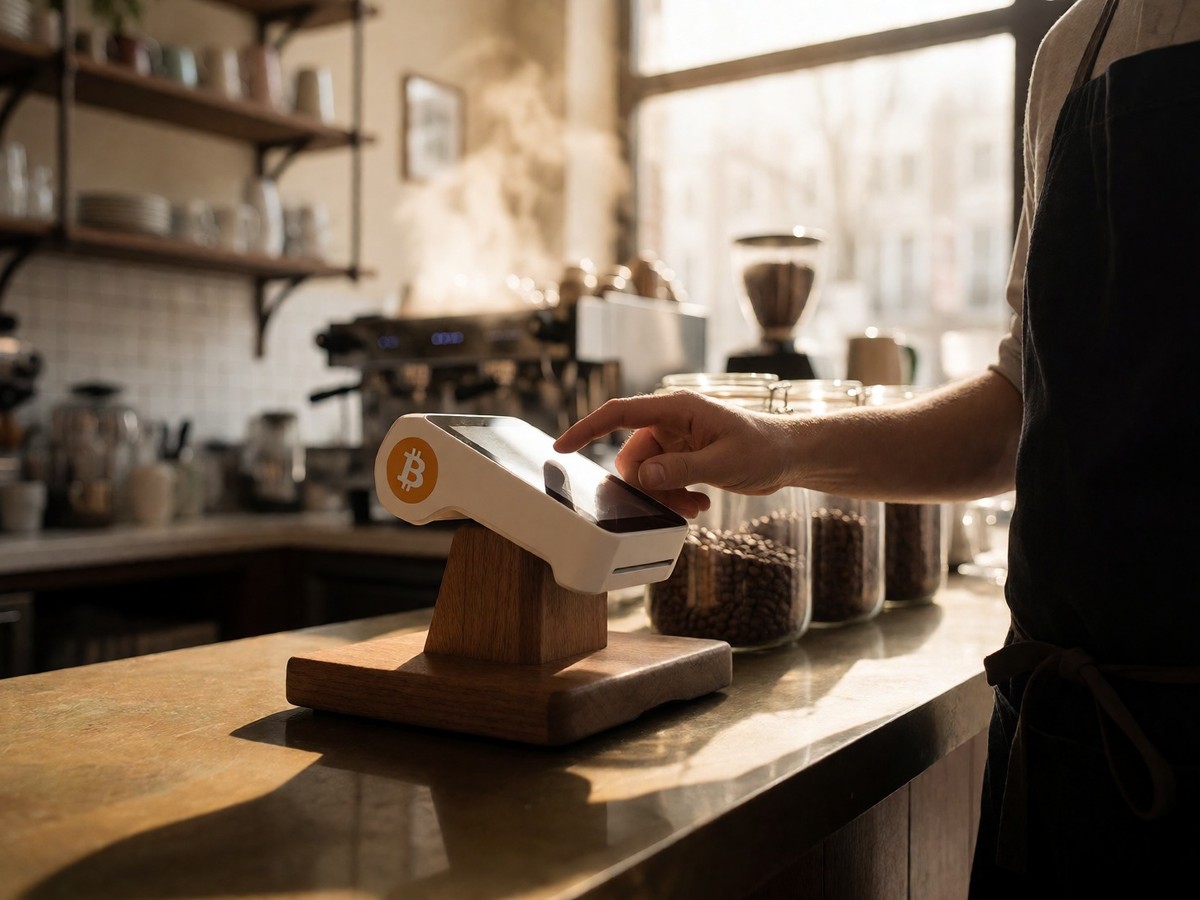
Block’s expansion of Lightning payments to its 4 million US point-of-sale hardware merchants changed the commercial utility of the protocol. This shift follows November 2025 data that showed Lightning processed $1.17 billion in monthly volume across 5.22 million transactions. While Bitcoin holds 42% of global merchant crypto transactions in 2025, the Lightning Network captures the movement of these funds. Most crypto-friendly businesses, specifically 93% of them, accept Bitcoin as their primary currency. Retail transactions account for 60% of all crypto payments in 2025. You already know that merchants prefer speed over complex settlement processes. US crypto payment adoption forecasts an 82.1% increase between 2024 and 2026. As of September 2025, approximately 18,000 businesses worldwide accepted Bitcoin. In the United States, roughly 2,300 companies currently accept Bitcoin. Although adoption remains modest, with only 10% of merchants overall accepting crypto at checkout, the momentum builds. Many US retailers view crypto acceptance as a way to attract younger, tech-savvy customers. This view drives the 75% of merchants who plan to accept crypto within two years. The global population of crypto owners reached over 560 million by 2024, expanding the potential consumer base for merchants. In the United States, Bitcoin accounts for 40% of all crypto purchases, while Litecoin holds a 13% share of US crypto shopping orders.
Technical upgrades and network limitations
The Lightning Network delivers technical upgrades to manage increasing merchant demand. Core Lightning enabled splicing in 2026 to let nodes resize channels without reopening them. LND’s v0.20 release migrated the channel graph to SQL; this migration reduced graph query execution time by 95% to 99% and improved pathfinding speed. Phoenix Wallet introduced Taproot channel support; this update reduced on-chain fees for channel opens and closes by roughly 20%. Three of the four major implementations now support BOLT12 natively: Core Lightning, LDK, and Eclair. However, the network faces deep structural issues. Inbound liquidity remains the number-one operational challenge for node operators. Phoenix Wallet users lost access to the US app store because regulatory pressure removed the app in May 2024. LND commands the vast majority of public Lightning nodes because it ships bundled with popular node packages like Umbrel and RaspiBlitz. Eclair added support for simple Taproot channels with dual funding and splicing combined. LND remains the most common implementation, but its lack of native BOLT12 support creates friction as the ecosystem moves toward offers. The network reached an all-time capacity high of 5,637 BTC in December 2025; this peak came from institutional capital from Binance, OKX, and Coinbase integrations before the capacity settled to the current level in May 2026.
| Metric (May 2026) | Value |
|---|---|
| Public Channel Capacity | 4,898 BTC |
| Total Channels | 41,080 |
| Active Nodes | 17,438 |
| Average Transaction (Nov 2025) | $223 |
Stablecoin integration and transaction trends
Taproot Assets v0.7 released in December 2025 allows for reusable addresses and auditable asset supplies. Tether added USDT support to Lightning in March 2026. This integration moves stablecoins across existing Lightning rails to mitigate volatility. US merchants use stablecoins as a hedge against crypto volatility. The US has seen growing stablecoin transactions among merchants as a way to manage risk. In 2024, stablecoin circulation more than doubled over an 18-month period. USDC payments surged by 337% compared to 2024. Lightning transaction volume crossed $1.17 billion monthly in November 2025. This total showed 266% year-over-year growth in publicly measured volume. The average Lightning transaction in November 2025 reached $223, up from $118 the previous year. This shift reflects a move toward larger transfers between exchanges rather than everyday small purchases. Stablecoins comprise 76% of all crypto payments across industries. B2B stablecoin volumes surged 30x to $3 billion monthly in 2025. Latin America firms use stablecoins for 71% of cross-border payments. How will the network maintain liquidity as stablecoin volume scales?