
 Ethereum News
Ethereum futures market transitions from backwardation to contango

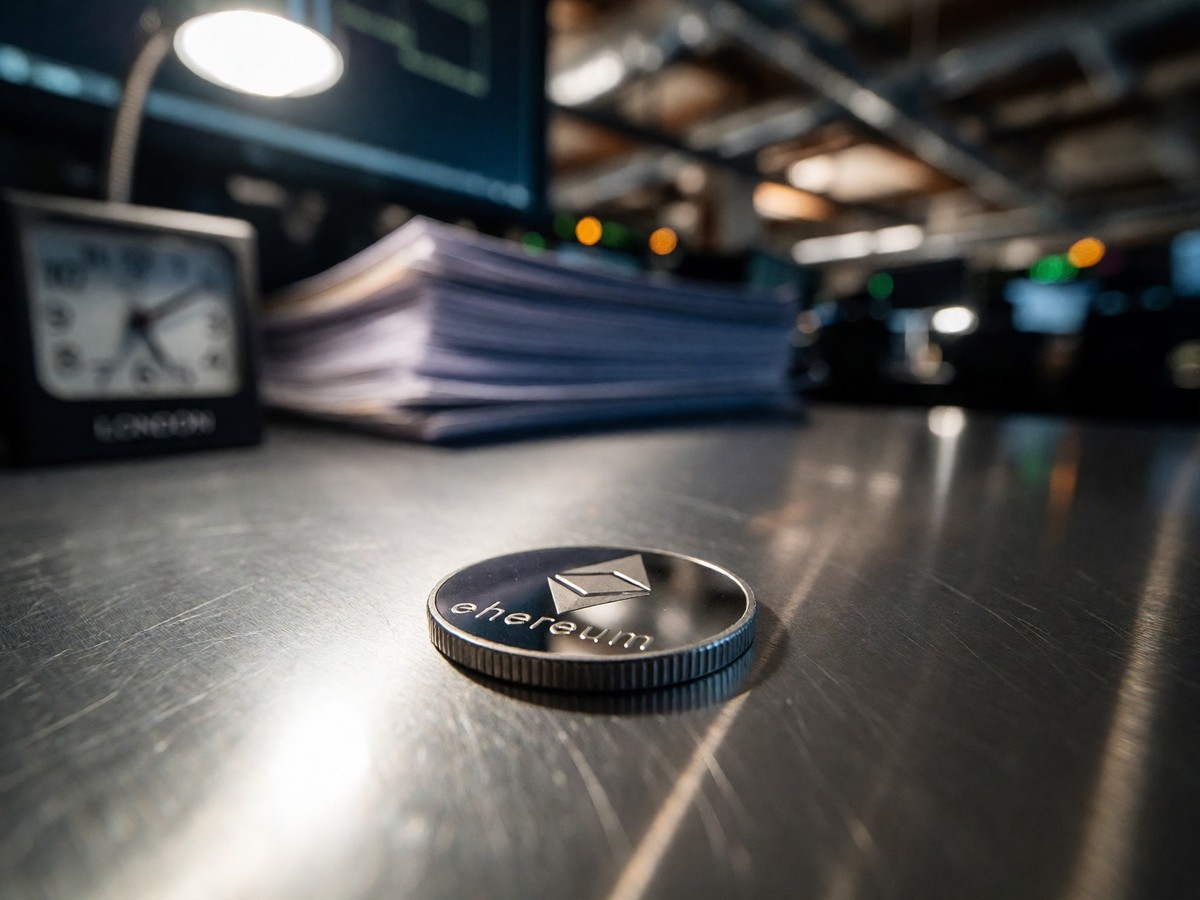
The Ethereum futures market transitioned from three months of backwardation to contango. This change follows a period where futures traded below the spot price, which signaled strong spot demand or bearish conviction. I view this flip to a positive basis as a change in market structure. Ethereum trades near $2,089, following a 14.9% decline over the last seven days. This price action coincides with a shift in how institutional funds manage their portfolios. The market price of Ethereum moved within a range of $2,908 to $2,997 during recent sessions. The basis equals the difference between the futures price and the spot price. When the basis is positive, the market is in contango, which means futures trade at a premium to spot. This state is normal in bull markets because demand for leveraged long exposure exceeds the supply of sellers. Backwardation, where futures trade below spot, is much rarer and often signals extreme fear or heavy short demand. The annualized basis is calculated by dividing the raw basis by the spot price and scaling it to a yearly rate. This formula helps traders compare different contract expiries. A high positive basis indicates heavy demand for leveraged long exposure.
Why carry trades lost their edge
Institutional allocators are abandoning delta-neutral strategies because basis yields are compressing. In August 2026, Bitcoin basis yields sat at 2.08%, a massive drop from the 20% seen during the 2021 bull market. These funds no longer find the cash-and-carry trade profitable when compared to two-year Treasury yields. Traders used to buy spot and short futures to lock in a risk-free profit, but they are now repositioning into directional bets. Many funds unwound their arbitrage to capture different returns. This repositioning happens because the annualized premium no longer covers funding costs and execution risk. The market structure shows that when aggregate basis trade capital is saturated, the basis collapses. The profitability of the basis trade has vanished for many institutional players. I see this as a transition from market-neutral overlays to pure directional bets. In the past, institutional traders ran basis trades to harvest the premium between spot and futures. They would buy the physical asset and short the equivalent futures contract. As basis yields fell from 3.8% in February 2026 to 2.08% in August 2026, the incentive to maintain these positions disappeared. This shift aligns with a broader movement where crypto is treated as a portfolio allocation. As assets mature, implementation quality drives outcomes. The industry is moving from a narrative trade to a disciplined allocation model.
Divergent signals on BitMEX and Binance
The open interest on CME dropped to $5.03 billion, while Binance surpassed it with $8.24 billion in open interest. The migration of open interest from the CME to Binance shows how liquidity moves between venues as institutional interest shifts from regulated markets to larger, more liquid offshore exchanges that handle the bulk of the volume. I find the sudden concentration of liquidity on Binance tells a specific story about where the real volume resides. Funding rates on BitMEX hit 0.049%, which marks the highest level since October. On Binance, funding moved from -0.025% on February 5 towards neutral. You already know that high funding rates can lead to liquidations when prices move against heavily leveraged positions. Will this divergence between exchange funding and price stability lead to a massive liquidation event? The 2.76 million ETH in open interest on Binance provides a much larger liquidity pool than the 1.69 million ETH on CME. This shift in open interest reflects how traders seek better liquidity and higher funding. When funding is positive, longs pay shorts every eight hours to keep the perpetual price anchored to the spot price. A funding rate of 0.01% every 8 hours annualizes to roughly 10.95% APR. The Ethereum price needs to reclaim and hold $3,000 for upside momentum to continue. Current trading volume sits at $37.39 billion.
Micro Ether contract specifications
Micro Ether futures use the CME CF Ether-Dollar Reference Rate to settle trades financially. These contracts do not involve the exchange of ether. They provide a way to gain exposure to the price of ether through the daily reference rate.
| Parameter | Specification |
|---|---|
| Contract Unit | 0.10 ether |
| Trading Hours | 24/7 from May 29, 2026 |
| Minimum Price Fluctuation | $0.05 per contract |
| Settlement Method | Financial |
| Final Settlement | CME CF Ether-Dollar Reference Rate |
The minimum price fluctuation for an outright contract is 0.50 index points, which is $0.05 per contract. For calendar spread contracts, the minimum fluctuation is 0.10 index points, which equals $0.01 per calendar month spread contract. Trading terminates at 4:00 p.m. London time on the last Friday of the contract month if that day is a business day in either the U.K. or the U.S. The daily settlement of the Ether futures contract is based on the volume-weighted average price of CME Globex trades between 3:59:00 p.m. and 4:00:00 p.m. ET. BTIC trading for an expiring futures contract terminates at 4:00 p.m. London time on the business day immediately preceding the day of Final Settlement Price determination.