 Bitcoin News
Hardware efficiency and energy strategy define the mining cycle

The Bitcoin network reached 1,160 EH/s in early October 2025, but the subsequent price correction forced many miners to seek more stable revenue via AI contracts. I observe this trend through the massive capital reallocation toward high-performance computing. Riot Platforms intends to dedicate 600 MW toward AI-focused cloud joint ventures. Hut 8 launched five dedicated HPC data centers and an advanced GPU cloud platform. CoreWeave signed an $11.9 billion contract with OpenAI to supply computing power. The market transition toward high-performance computing became obvious when Bitcoin hashrate peaked at 1,160 EH/s in early October 2025 before the subsequent price correction forced many miners to seek more stable revenue via AI contracts. This shift makes sense because AI infrastructure provides more stable returns than mining when hash prices sit near cyclical lows. The weighted average cash cost to produce one bitcoin among publicly listed miners rose to $79,995 in Q4 2025. Hash prices fell to $28 to $30 per PH/s/day in early March 2026. I see the divergence between pure mining and AI-focused infrastructure growing every month. Miners like Riot and Hut 8 move toward AI data centers. Riot’s 750 MW Whinstone facility in Rockdale, Texas, remains its flagship. The company also runs a 95 MW site in Limestone, Texas, and a 42 MW site in Paducah, Kentucky. Riot aims to surpass 1 GW of capacity. Hut 8 inherited US Bitcoin’s assets, such as the 220 MW King Mountain site in Texas.
CleanSpark scales in Georgia despite environmental scrutiny
CleanSpark manages 1.8 GW of contracted power capacity. The company negotiates with a hyperscale tenant for its 250 MW Sandersville, Georgia site. Revenue for Q2 2026 reached $136 million, which shows a 25% decline from the previous quarter. Power costs for the company fell to 5.2¢/kWh. CleanSpark targets a hashrate of 55 EH/s by the end of the year through immersion miner deployment. The company produced 1,799 Bitcoin in the second quarter. I find the company’s environmental claims problematic. Greenpeace reports that the Sandersville site uses 91% fossil fuels from Georgia Power, even though CleanSpark claims a 90% non-carbon energy mix. You probably know that regulatory scrutiny in Georgia will intensify as these facilities grow. The company operates other sites in Washington, GA (86 MW), Jackson, TN (60 MW), and Brazoria (600 MW in two phases). CleanSpark’s 2023 fleet refresh used discounted Bitmain S19 XP units to reach 17 J/TH efficiency. The company also works in Dalton and Norcross. I note that the 20 MW Norcross site uses immersion cooling, while other sites use air-cooled rigs. CleanSpark also purchased an 86 MW site in Washington, GA, and a 60 MW site in Jackson, TN. The company also manages a 285 MW site in Sealy and a 600 MW site in Brazoria.
Marathon tests immersion cooling in the desert
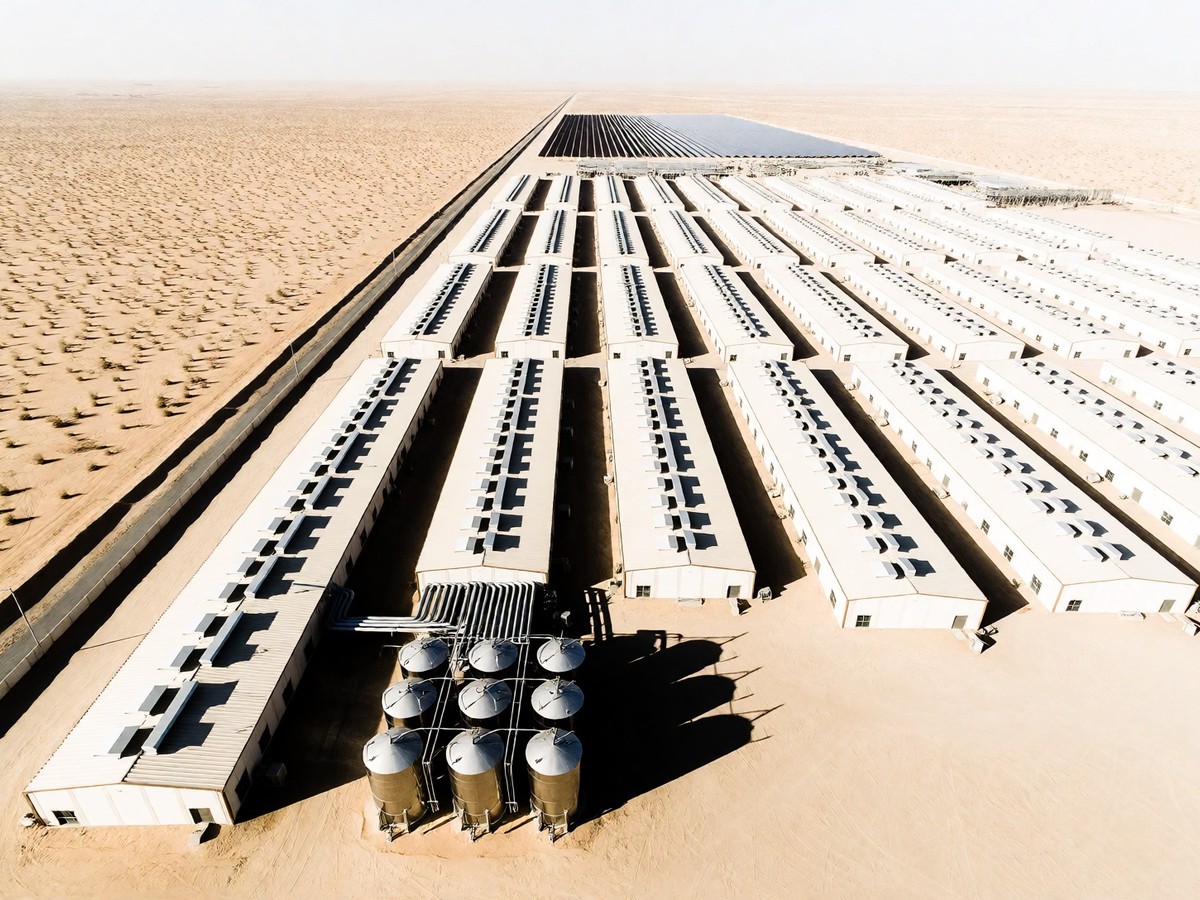
Marathon and Zero Two lead the development of 250 MW of immersion mining sites in Abu Dhabi. The project includes a 200 MW site in Masdar City and a 50 MW site in Mina Zayed. Zero Two holds 80% equity in the joint venture. Marathon uses the MARA 2PIC700 system to provide dual-phase liquid chip cooling. This system operates in temperatures from minus 20 to 50 degrees Celsius. The technology can reduce cooling costs by 60% and data center requirements by 75%. The pilot program showed that the custom-built immersion solution reduces maintenance for ASIC miners. Marathon maintains a 600 MW capacity and a 40 EH/s hashrate. The MARA 2PIC700 system replaces traditional server racks with cooling tanks. Does the extreme heat in the UAE eventually outpace even these dual-phase cooling advancements? Marathon acquired a 114 MW wind farm in Texas to link data centers to green power. The company also has sites in North Dakota. The Abu Dhabi project uses excess energy to increase the base load of the Abu Dhabi grid. Marathon works with Zero Two to leverage regional expertise and blockchain infrastructure development. The project seeks to support the UAE power grid.
Hardware efficiency and capacity comparison
The current mining landscape relies on high-efficiency hardware and diversified energy. I compare the primary hardware and capacity metrics for major players below.
| Company | Capacity | Hashrate | Primary Cooling |
|---|---|---|---|
| CleanSpark | 1.8 GW | 55 EH/s (target) | Immersion/Air |
| Marathon | 600 MW | 40 EH/s | Immersion |
| Riot | 700 MW+ | 31.5 EH/s | Air/Immersion |
| Hut 8 | 675 MW | N/A | Air/Immersion |
| Bitfarms | 437 MW | 15.2 EH/s | Air/Evaporative |
The industry relies on machines like the Bitmain Antminer S19 and S21. Riot uses over 95,000 Bitmain Antminer S19 units. Bitfarms reaches 15.2 EH/s using its 13 facilities in Canada, the U.S., Paraguay, and Argentina. I see a pattern where efficiency determines survival. The competition between air-cooled and immersion-cooled sites dictates which operators maintain margins during price drops. The global Bitcoin mining hardware market grows at an 8.8% annual rate. Bitfarms uses hydropower to power its facilities. I find that the most successful operators combine high-density hardware with low-cost energy contracts. Companies like Bitfarms and HIVE prioritize renewable energy to lower their operational costs. I recommend focusing on operators that maintain high hashrate efficiency through modular cooling solutions.