 Bitcoin News
Marathon Digital Abu Dhabi expansion and financial strategy

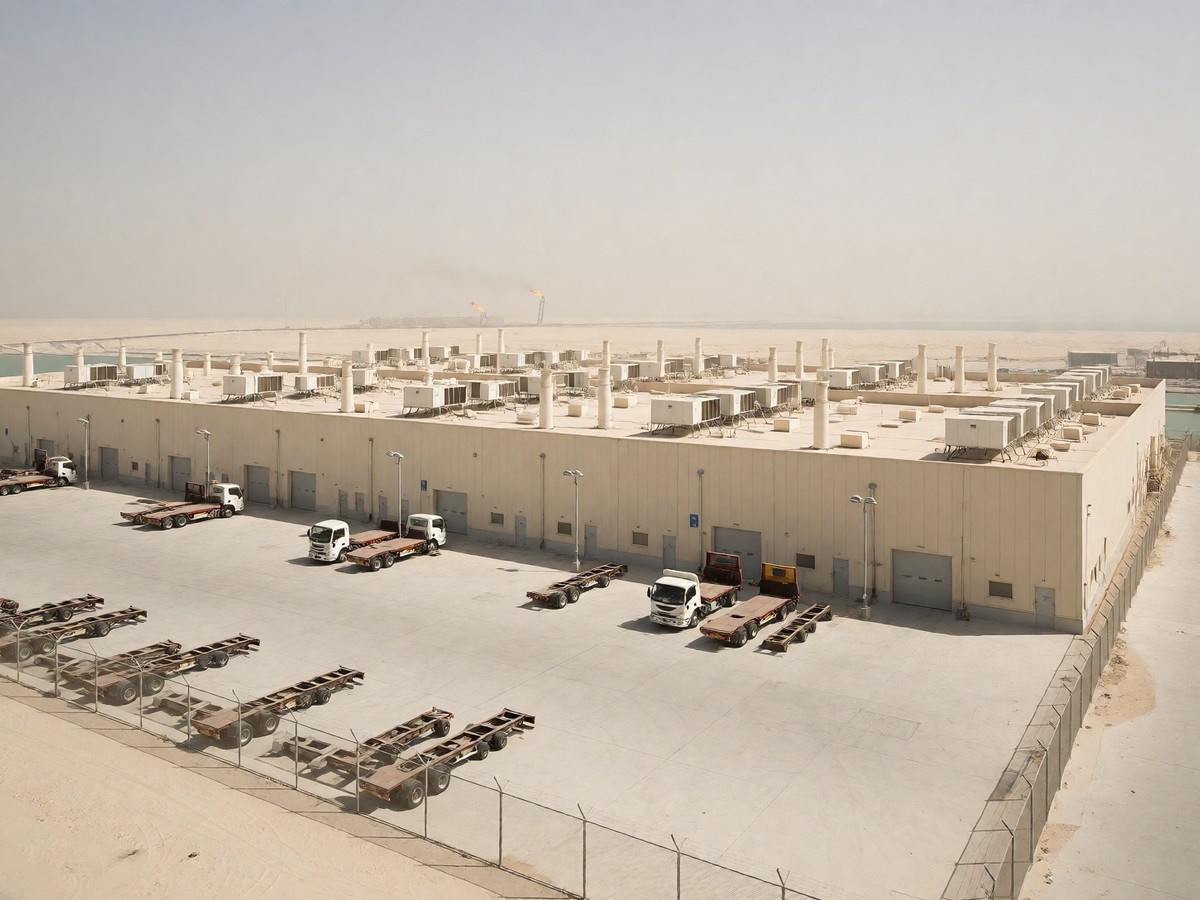
Marathon and Zero Two formed the Abu Dhabi Global Markets JV Entity to launch a 250MW Bitcoin mining operation in the Middle East. This joint venture includes a 200MW site in Masdar City and a 50MW site in the Mina Zayed port zone. Zero Two, a Web3 company launched in 2022 by the $160 billion sovereign fund ADQ, holds 80% ownership and provides 80% of the startup capital. This capital consists of cash or equipment and infrastructure. The companies expect the project cost to reach $406 million. They will distribute mined Bitcoin bi-monthly based on ownership stakes. Because the Middle East averages 28 degrees Celsius, the companies use a custom-built immersion solution to cool ASIC miners. This method submerges servers in dielectric fluid to manage heat. The pilot project for this cooling technology succeeded. The partnership uses excess energy and purchases clean energy certificates to offset non-sustainably produced power. This approach resembles how miners use natural gas flaring to mitigate methane. Burning methane to generate electricity reduces CO2-equivalent emissions by 31 times compared to venting or flaring. Such operations use enclosed natural gas generators that achieve 99% combustion efficiency, whereas flare stacks achieve only 92% to 95% efficiency. This capability allows miners to act as a mobile, compact, and interruptible load that can respond to changes in electricity generation.
Marathon completed a $1 billion sale of 0% convertible senior notes to fund Bitcoin acquisitions and operational expenses. This sale includes $150 million from an option exercised by initial purchasers, which creates net proceeds of $980 million. The company plans to use $212 million of these funds to repurchase existing 2026 convertible notes. These notes mature in 2030 and allow holders to convert into cash, stock, or both. Marathon can redeem these notes for cash starting in 2028 if the stock price exceeds 130% of the conversion price for a sustained period. The company also issued $700 million in convertible senior notes that begin accruing semi-annual interest in March 2025. Marathon holds 35,577 BTC, which is 0.169% of the total Bitcoin supply. The current value of these holdings equals approximately $2,891,647,329. The company previously acquired 11,774 BTC at an average price of $96,000 per Bitcoin. That purchase brought total reserves to 40,435 BTC, valued at approximately $3.9 billion based on a price of $96,500 per Bitcoin. Marathon reported a 12.3% Bitcoin yield for the quarter and a 47.6% year-to-date return. The company also secured an agreement to acquire a wind farm in Hansford County, Texas, with 240 MW of interconnection capacity and 114 MW of nameplate wind capacity. This expansion includes an adjacent data center that the wind farm will power.
The company improves its mining performance through the deployment of Bitmain ANTMINER S19 XP hardware. These miners use 30% less energy than the previous generation of servers. Marathon’s team also successfully increased the hash rate of an S19 J Pro by 20% while reducing power draw on a per terahash basis by 4%. They increased the S19 XP hash rate by 20%, which changed the joules per terahash from 21.5 to 23.7. Research into dual-phase immersion cooling suggests it can reduce capital expenditure on servers by 10% compared to air-cooled setups. This technology also reduces energy consumption by 7% compared to single-phase immersion systems. Dual-phase immersion increases heat density by 2.5 times, which lets companies rack more servers closer together. The company’s operating fleet consists of 69,000 active miners capable of producing 7.0 EH/s, while an additional 2.1 EH/s is pending energization after 1,000 S19 XPs were installed in Texas. Once all purchased miners are installed, approximately 66% of the hash rate will come from S19 XPs. This hardware efficiency supports the company’s goal to reach 23 EH/s of capacity by mid-2023.
The market for data center colocation will reach $105 billion by 2026. This industry faces pressure from the high power demands of artificial intelligence. In Texas, a fuel developer sold a site to a Bitcoin miner to provide power for mining and AI tenants. This deal in Matagred County could reach $600 million for 2,000 megawatts of interconnection capacity. ERCOT reports a 300% increase in connection requests in the Texas grid queue. While mining machines can power down in seconds to respond to grid demand, AI workloads require massive, steady power. The market includes hyperscalers like Amazon, Meta, and Microsoft, as well as colocation providers like Equinix and Digital Realty. These providers lease white space to enterprises. Neocloud operators like CoreWeave build GPU-dense environments for machine learning. As rack densities reach 1 megawatt per rack, companies use liquid-to-chip cooling and coolant distribution units to manage heat. Core Scientific and Compute North faced significant challenges during the bear market, including bankruptcy and legal battles. You know the volatility of this market. How will these diversifications impact long-term profitability?