 Bitcoin News
The GBTC history and the Bitcoin ETF fee hierarchy

The transition of the Grayscale trust
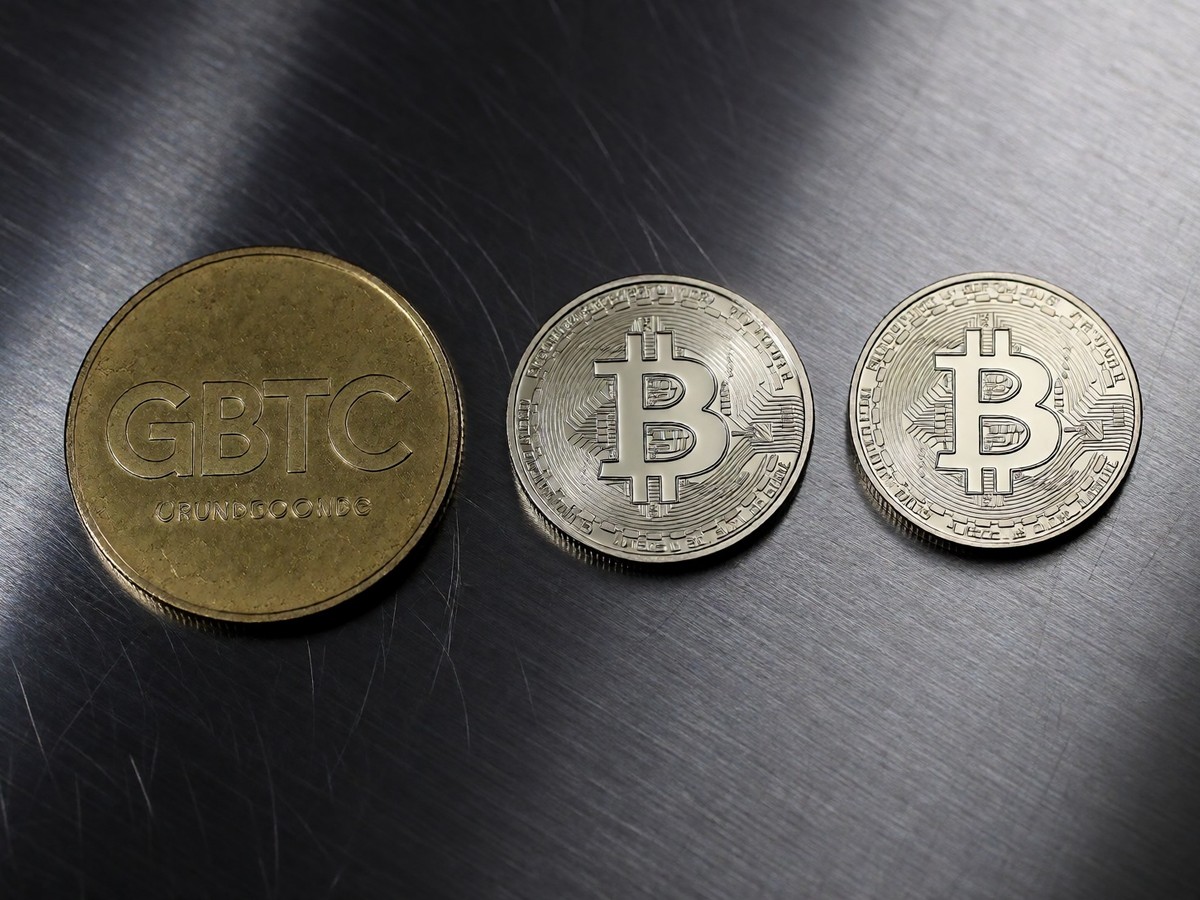
Grayscale’s GBTC saw $17.4 billion in cumulative outflows throughout 2024. The fund began in 2013 as a closed end grantor trust. Before the SEC approved spot Bitcoin ETFs in January 2024, the trust traded at discounts between 20% and 40% relative to its net asset value. The conversion to a redeemable spot ETF in early 2024 removed these discounts. However, the 1.50% management fee creates a compounding disadvantage for long term holders. Michael Sonnenshein, the Grayscale CEO, said that management fees would decrease as the market matures. The fund’s outflows slowed in 2026, though the remaining AUM base of $8.14 billion in June 2026 shows investors with higher price sensitivity. On the first day of trading, January 12, 2024, GBTC saw $222 million in outflows. This was part of a larger movement where spot Bitcoin ETFs recorded $936 million in net inflows on that same day. GBTC outflows totaled $17.8 billion since its launch by June 2024.
BlackRock’s IBIT market dominance
BlackRock’s IBIT leads the Bitcoin ETF market with $43.39 billion in net assets as of June 2026. This fund holds 734,261 BTC and maintains a 0.25% expense ratio. Because the 1.25 percentage point fee gap between GBTC and its peers compounds over time, the cost of holding Grayscale’s flagship fund increases significantly for every year an investor remains in the position. IBIT commands 60.7% of the $71.4 billion US spot Bitcoin ETF category. Many institutional buyers prefer IBIT because they already use iShares products. IBIT reached $20 billion in AUM by May 2024. The fund maintains a 30-day median bid-ask spread of 0.02% as of September 2026. Institutional ownership for IBIT is 60%. IBIT provided a 150% return over one year as of March 2025. On the first day of trading, January 12, 2024, IBIT attracted $217 million in inflows. For large trades exceeding $100,000 in shares, IBIT provides deep order book liquidity.
Custodial differences and FBTC
Fidelity’s FBTC holds $10.30 billion in assets as of June 2026. It maintains a 0.25% expense ratio. This fund provides an alternative because it uses Fidelity Digital Assets instead of Coinbase. Fidelity controls the fund sponsor, the custodian, and the clearing infrastructure. FBTC reached $15 billion in AUM by June 2024. The fund holds a 20% market share as of September 2025. Retail investors account for 40% of FBTC’s allocation. FBTC provided a 120% YTD return by June 2025. On the first day of trading, January 12, 2024, FBTC saw $235 million in inflows. In comparison, IBIT and FBTC have functionally equivalent net returns because they both charge a 0.25% fee. If you hold these assets for years, you see the compounding impact of these fees.
| ETF Metric | IBIT (BlackRock) | FBTC (Fidelity) | GBTC (Grayscale) |
|---|---|---|---|
| Expense Ratio | 0.25% | 0.25% | 1.50% |
| AUM (June 2026) | $43.39B | $10.30B | $8.14B |
| Custodian | Coinbase | Fidelity | Coinbase |
| Market Share (June 2026) | 60.7% | 14.4% | 11.4% |
The competitive landscape in 2026
The Bitcoin ETF market grew to $71.4 billion by June 2026. Total ETF Bitcoin holdings reached 1 million coins by 2026. Smaller funds compete for market share through lower expense ratios. On January 12, 2024, ARK/21Shares’ ARKB recorded $59 million in inflows, while Bitwise’s BITB saw $31 million. VanEek’s HODL had $9 million, Valkyrie’s BRRR attracted $5 million, and Invesco/Galaxy’s BTCO saw $26 million. WisdomTree’s BTCW saw $7 million, and Franklin Templeton’s EZBC saw $12 million. Franklin Templeton’s EZBC has a 0.19% expense ratio. Grayscale’s Bitcoin Mini Trust carries a 0.15% fee. This Mini Trust product acts as a spinoff from GBTC. BITB has a 0% fee for the first year. ARKB has a 0.21% fee. HODL had a 60% return in three months as of January 2026. BTCW showed a 130% return since inception as of April 2026. By March 2025, cumulative inflows for the category reached $18 billion. How will the Grayscale Bitcoin Mini Trust impact the remaining GBTC holders?