
 Bitcoin News
Zimbabwe’s ZiG currency collapse drives Bitcoin peer-to-peer adoption

The ZiG Devaluation
The Reserve Bank of Zimbabwe slashed the value of the ZiG by 43 percent on September 27. This action moved the exchange rate from 13.56 ZiG per US dollar at its April 2024 launch to 24.4 ZiG per dollar. The currency weakened to 27 ZiG per dollar this week. I view the statement from Governor John Mushayavanhu that this move was not a devaluation as a blatant lie. The government insists this was a manifestation of market reality, yet the currency loses value almost daily. Businesses and retailers previously warned they would close stores if the rate differences between the official and parallel markets remained. The gap between these rates forces people to seek alternatives. Most transactions in the country, roughly 85 percent, still use the US dollar because of this persistent instability. Zimbabwe has seen six different attempts at a local currency since independence in 1980. The country faced massive hyperinflation in 2009, which forced the abandonment of the Zimbabwean dollar. At the height of that crisis, the central bank issued a 100 trillion Zimdollar banknote. Even the 2019 RTGS dollar failed when inflation reached 800 percent. In January 2025, inflation surged to 14.6 percent after sitting at 2.5 percent in December 2024. This volatility makes the gold-backed promise of the RBZ feel hollow. The currency is a digital token backed by physical gold and other precious metals. In April, the central bank claimed it held 1.1 tonnes of gold worth $175 million. This attempt to fix the economy has failed as the exchange rate continues to slide. The drought in the region also worsened the inflation that the currency was meant to curb.
Bitcoin and Golix
Bitcoin prices reached $66,975 in October as the market moved toward previous highs. This surge coincides with the failure of the local gold-backed currency to stabilize the economy. Because the local currency continues to lose its value at an alarming rate, many Zimbabweans favor Bitcoin as a way to protect their hard-earned savings from the effects of hyperinflation. I see the Golix exchange as a primary example of where this demand manifests. The exchange previously saw Bitcoin prices reach $12,400, and other reports show Bitcoin trading at an 85 percent premium in Zimbabwe. You already know how quickly fiat loses value in Harare. People bypass the official system because the ZiG lacks the stability that the US dollar provides. The demand for Bitcoin grows because the country suffers from a shortage of hard fiat currency. In previous years, the Golix exchange recorded more than $1 million in transactions in a single month during political crises. This surge in demand demonstrates that citizens use digital assets to protect themselves against financial risk. While the US Treasury Secretary Scott Bessent intervenes in bond markets, Zimbabweans look to the blockchain. Bitcoin trading volumes reached $37 billion in a single week recently as the price of BTC rose 24 percent. I see a clear link between the ZiG’s failure and the surge in Bitcoin interest. The scarcity of Bitcoin, limited to 21 million coins, provides a contrast to the printing of local notes. Can the Zimbabwean government successfully force the informal sector to use the ZiG? Bitcoin prices in 2017 started between $600 and $1,000, but they have since moved beyond imagination. The Chicago Mercantile Exchange even plans to list Bitcoin futures contracts to meet client interest.
Regulatory Context
Finance Minister Mthuli Ncube approved a new registration framework to oversee the digital asset industry. Companies that buy, sell, or transfer crypto must register with the Financial Intelligence Unit. This agency operates under the Reserve Bank of Zimbabwe. The registration process costs $500 initially and requires a $400 annual renewal. These fees aim to bring the informal sector into a regulated space. The informal sector accounts for 80 percent of the economy. I find the attempt to regulate a market driven by survival to be ineffective. Most traders prefer the privacy of peer-to-peer transactions over official channels. The sentiment for cryptocurrency in Zimbabwe shows an adjusted score of 25, indicating a cautious perspective. This is despite the fact that coverage of the topic reached 70. Other African nations have different approaches. Nigeria requires crypto firms to maintain substantial capital reserves, whereas Zimbabwe sets lower entry costs. South Africa uses its Financial Sector Conduct Authority, and Kenya has its own dedicated legislation. Zimbabwe’s strategy focuses on bringing traders into the regulated ecosystem rather than limiting participation. In the first quarter of 2026, spot volumes on top platforms fell 39.1 percent to $2.7 trillion. This cooling follows the massive peaks seen in late 2025. I observe that the market is still far from the $105 billion US peak seen in October. The regulatory push comes as adoption in Sub-Saharan Africa grows. Demand for alternative financial tools and inflation hedges keeps the momentum high. Smaller exchanges saw volumes fall between 23 percent and 55 percent in early 2026. Even with these drops, the interest in digital assets remains a reality for the 16 million people in Zimbabwe. The regulatory framework was designed to bring businesses into the open, but the informal market is too large to control easily.
The Verdict
| Metric | Value |
|---|---|
| ZiG Devaluation | 43% |
| ZiG/USD Rate (This week) | 27 |
| US Dollar Usage | 85% |
| Crypto Registration Fee | $500 |
| Crypto Annual Renewal | $400 |
| Informal Economy Share | 80% |
| Highest ZiG Note | 200 ZiG |
| ZiG Gold Reserves | 1.1 tonnes |
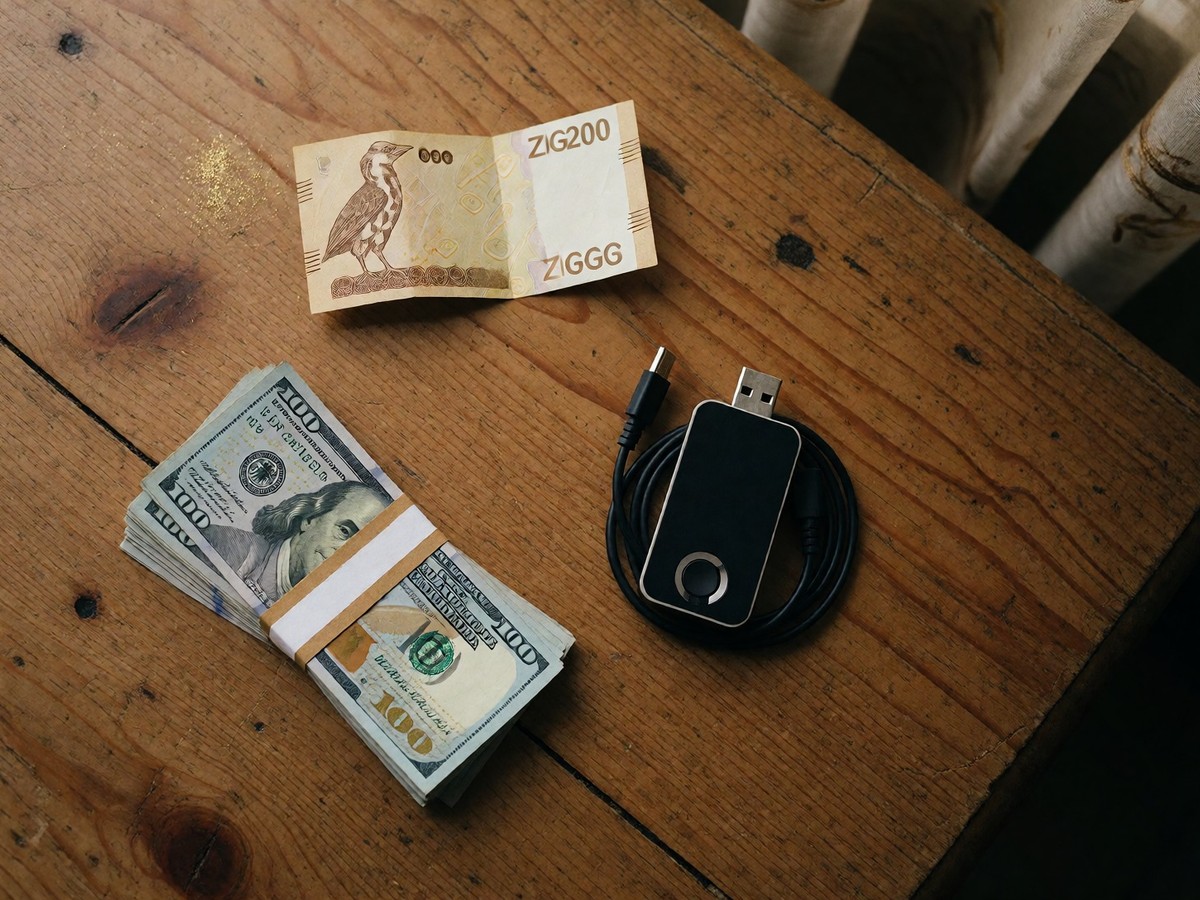
The ZiG was intended to use gold and precious stones to anchor value. The central bank claimed it held 1.1 tonnes of gold worth $175 million in April. However, inflation remains a massive problem. The Grain Marketing Board chose to pay wheat farmers entirely in US dollars this year. This decision shows that even state entities distrust the local currency. I believe the ZiG is a failed experiment. Bitcoin provides the scarcity that the gold-backed digital token cannot deliver. The ZiG comes in eight denominations, including the ZiG1 and ZiG2 coins. Some notes feature drawings of the Zimbabwe Bird or the Balancing Rocks at Matobo Hills. I see no way for the ZiG to regain the confidence lost during this September devaluation. The 200 ZiG note and the 50 ZiG note both exist, but they lack the trust of the US dollar. Bitcoin is a survival tool rather than a mere digital representation.


