 Bitcoin News
Riot Platforms’ Texas power arbitrage and infrastructure pivot

The economics of the TXU contract
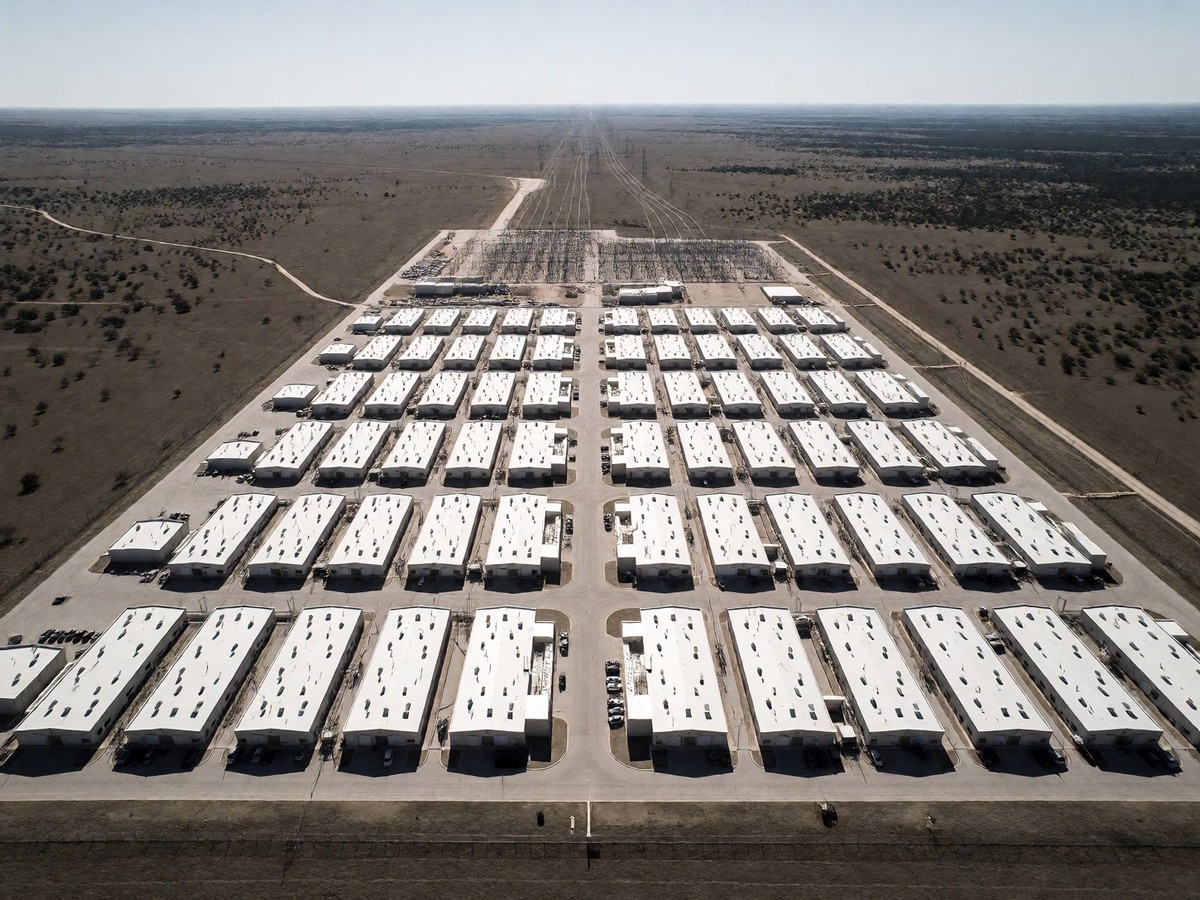
Riot Platforms secures electricity through a 345 MW Power Supply Agreement with TXU Energy Retail Company that runs through 2030. Nearly half of the Rockdale facility’s electricity needs come from this contract at a fixed price of $35 per megawatt hour. This setup allows the company to act similarly to a peaking generator. When electricity prices spike in the Texas market, Riot can sell its pre-purchased energy back to providers like TXU Energy to capture the spread between the spot rate and its fixed cost. During the August heatwave, Riot sold $24 million in pre-purchased energy back to its retail provider. The company provided 84,000 megawatt hours of power back to the grid to help reduce the strain on the system. Additionally, the company earned $7 million through the Electric Reliability Council of Texas ancillary services market during that period. These figures directly contradict headlines claiming the state paid the miner $31.7 million to shut down operations. While Bitcoin mining provides the primary revenue, the ability to trade energy provides a massive economic buffer. In September 2023, the company earned $24.2 million in credits for selling power back to the grid, which surpassed the $8.6 million it earned from Bitcoin sales. Riot’s strategy depends on the assumption that electricity price volatility in Texas will persist long enough to offset the high cost of its $35 per megawatt hour fixed price contract.
Diversifying megawatts into AI
The company strategy shifts toward maximizing the return on all available megawatts by diversifying into high-performance computing. Riot manages a 700 MW facility in Rockdale that handles both its own mining and third-party hosting. The company recently signed a 20-year, $9.1 billion deal for 191 MW of essential IT capacity with a leading AI frontier lab. This contract includes a delivery of 96 MW in December 2027, with full deployment by June 2028. To support this, Riot allocated 126 MW of the Rockdale facility to a core and shell data center for AI servicing.
| Location | Developed Capacity | Primary Use |
|---|---|---|
| Rockdale, Texas | 700 MW | Bitcoin Mining and data center leasing |
| Corsicana, Texas | 400 MW | Bitcoin Mining |
| Kentucky | 192 MW | Bitcoin Mining |
The company also maintains a 50 MW contract with AMD, which has already delivered 25 MW. This includes a scheduled 10 MW delivery in November 2026 and another 15 MW in May 2027. Management aims to turn the Corsicana site into a data center campus with 1 GW of total capacity. Because of the focus on AI, the company lowered its year-end 2025 hash rate target from 46.7 EH/s to 38.4 EH/s. This transition follows the $650 million acquisition of the Whinstone mining site in Rockdale from Northern Data AG.
Capital needs and dilution
Riot faces immense capital pressure to fund its mining equipment orders and infrastructure expansion. The company needs to find between $650 million and $750 million in cash this year just to pay for the miners it has on order. This financial burden forces the company to use diverse funding sources like bitcoin sales, credit lines, and stock issuances. In the second quarter, Riot increased its use of debt to $251 million after starting at zero in the previous quarter. The company also utilized a $200 million line of credit with Coinbase. However, Kerrisdale Capital criticizes the $3 billion miner for excessive management compensation and serial dilution. The firm notes that Riot issued over $507 million in stock through April, which resulted in 18% dilution for existing shareholders. Unlike Marathon Digital Holdings, which follows a 100% HODL policy and relies primarily on equity markets or convertible bonds to grow, Riot sold 96.5% of its production in the second quarter to finance operations. This liquidation of 1,377 bitcoin out of 1,427 mined provides immediate liquidity but carries the risk of devaluing the long-term holdings of the company. You, the investor, can see how this strategy favors short-term liquidity over long-term accumulation. Does the constant issuance of new shares ultimately prevent the company from creating real value for its investors?
Regulatory pressure and global competition
Regulatory scrutiny in Texas creates a challenging environment for expansion. In March, Navarro County commissioners voted against a tax abatement for Riot’s Corsicana project to signal local opposition. Environmental advocates like Mandy DeRoche from Earthjustice argue that the lucrative rewards for reducing power consumption are unfair to everyday consumers. While residential customers in Texas receive small credits ranging from $25 to $85, miners can earn millions using demand response programs. This creates tension as more miners arrive in a state that already hosts five of the ten largest Bitcoin mines in the US.
| Jurisdiction | Energy Source | 7-Year Fixed Rate |
|---|---|---|
| Nigeria | Natural gas | $0.0364/kWh |
| Ethiopia | Hydroelectric | $0.0399/kWh |
| Norway | Hydroelectric | $0.0448/kWh |
| Finland | Grid / Wind | $0.0448/kWh |
| UAE | Natural gas | $0.0420/kWh |
In the winter of 2021, extreme cold caused power outages where temperatures dropped to 25 degrees inside homes. During that period, the Whinstone facility Riot acquired received a $125 million windfall by selling power back to the grid. Global competition intensifies as operators in Nigeria and Ethiopia secure sub-$0.05/kWh fixed-rate contracts. These firms leverage low-cost natural gas and hydroelectricity to build structural advantages. As the energy market evolves, the company must manage the risk of intense competition from global operators who use low-cost natural gas and hydroelectricity to build permanent structural advantages.