 Bitcoin News
The economics of Tether’s Bitcoin reserve accumulation strategy

Resource allocation and Bitcoin mining
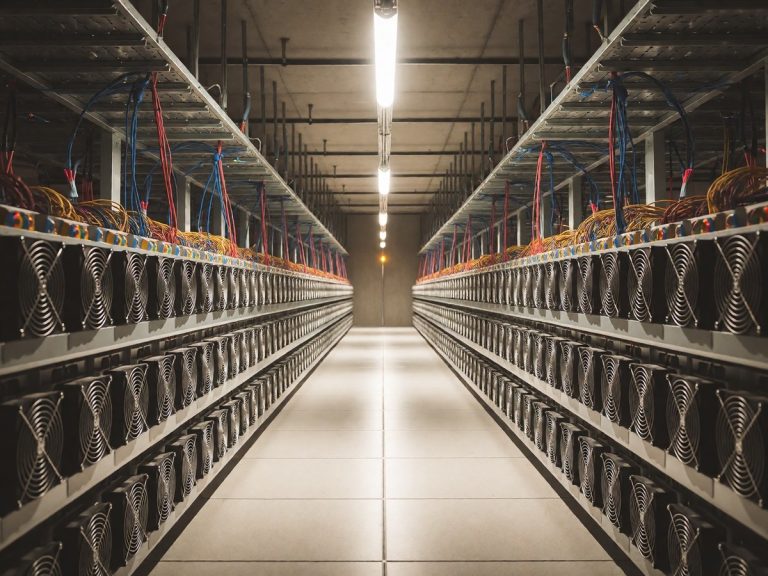
Tether manages its massive treasury by shifting from simple cash holdings to heavy investments in Bitcoin infrastructure. The company’s strategy follows the economic principle defined by Lionel Robbins that economics is the science which studies human behaviour as a relationship between ends and scarce means which have alternative uses. Tether seeks the end of Bitcoin mining dominance by using its excess profits to acquire mining capacity. In November 2023, Tether announced it would invest about half a billion dollars over the next six months to become a top Bitcoin miner, a plan that includes part of a $610 million credit facility for Northern Data AG. The company also holds a $100 million stake in the Bitcoin miner Bitdeer. This move toward production reflects the classical economic views of Jean-Baptiste Say, who defined the subject as the science of production, distribution, and consumption of wealth. In 2024, Tether reported a net profit of $13 billion. The company also profited from its positions in gold and bitcoin.
Market scale and liquidity metrics
The scale of the USDT market provides massive liquidity to the cryptocurrency ecosystem. The circulating supply of USDT reached 174,016,325,003 coins. In 2025, the supply of the token surpassed $140 billion. This dominance is far greater than its competitors. In 2022, Circle saw its $24 billion USDC value fall to a level that was barely a quarter of the Tether stash.
| Metric | Value |
|---|---|
| USDT Circulating Supply | 174,016,325,003 |
| Tether Market Cap | $173,801,735,352 |
| 24h Trading Volume | $66,747,224,615 |
| 2024 Net Profit | $13 billion |
The USDT market cap is $173,801,735,352. In the summer of 2018, Tether accounted for up to 80% of the Bitcoin volume. The 24-hour trading volume for USDT is $66,747,224,615.
Regulatory friction and compliance history
Tether faces continuous pressure from regulators regarding its reserve management and its role in the crypto market. The 2021 CFTC fine, which penalized the company for only maintaining full reserves during 27.6% of the days between 2016 and 2018, shows a failure in the company’s ability to manage its core responsibility. In October 2024, The Wall Street Journal reported that Tether is the target of a federal criminal investigation for possible violations of sanctions and anti-money-laundering rules. TRM Labs reported that Tether was the most used stablecoin for criminal activity throughout 2023, with $19.3 billion in illicit transactions. This figure was even higher in 2022, when $24.7 billion in transactions linked to criminal activity occurred. Following a security breach at Binance in October 2026 where thieves took $6.3 billion, Tether froze approximately $1.57 billion in related assets.
The company denies that its screening practices are inadequate. Tether stated it helped governments with criminal investigations and froze $835 million in assets linked to theft. In 2024, the company reported that it worked with more than 140 law enforcement offices across 45 jurisdictions.
Expansion into new markets and products
Tether is expanding its corporate footprint and product line to hedge against regulatory uncertainty. The company moved its global headquarters to El Salvador in January 2025. This relocation follows the company’s move to leverage the Salvadoran fintech ecosystem. You know the basics of stablecoins, so I will focus on how Tether manages its massive treasury. In August 2025, the firm disclosed it is developing a U.S.-domiciled stablecoin called USAT for U.S. residents. This project aims to operate under a regulated framework in the United States. Will the US-domiciled USAT token eventually cannibalize the USDT market share?
The company also pursues aggressive diversification in other industries. In December 2024, Tether announced a $775 million investment in Rumble, an alternative video hosting platform. In February 2025, Tether acquired a minority stake in Juventus F.C., and by October 2025, the company nominated an executive to the club’s board of directors. In November 2026, Tether announced an investment in Lemon, an Argentine digital asset fintech company, to expand the use of USDT and XAUT in Latin America. In November 2026, Tether also made a strategic investment in SCRYPT, a Swiss stablecoin trading provider. Tether continues to use its profits to fund these various ventures in finance, media, and sports.